Most business software starts with good intentions.
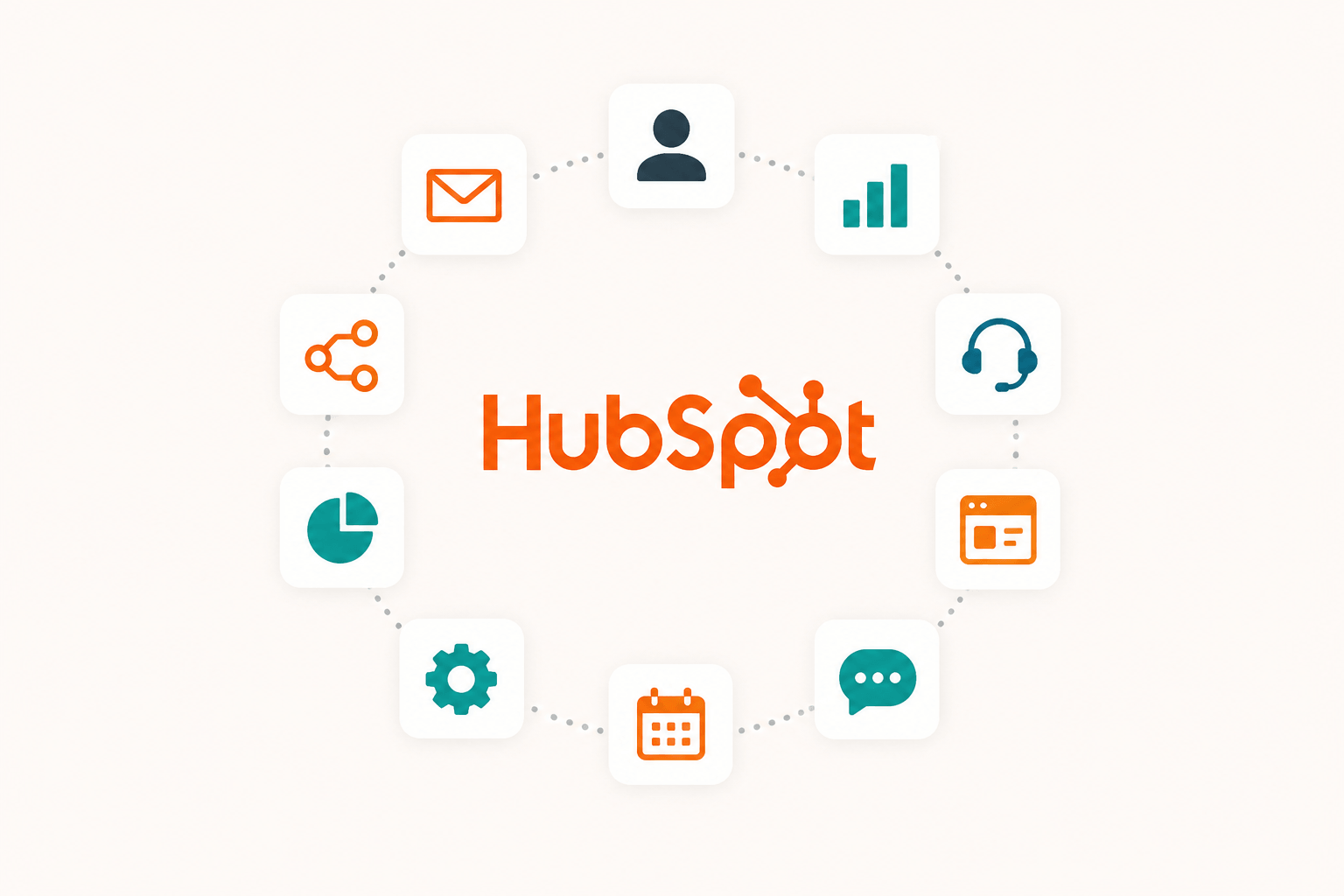
A CRM for sales.
An email platform for marketing.
A help desk for customer support.
Analytics somewhere else.
Landing pages on another platform.
Live chat from a different company.
Scheduling software.
Automation software.
Reporting software.
One purchase eventually becomes ten.
Then those ten tools need to communicate with each other.
Sometimes they do.
Often…
They don’t.
That’s the mindset we had before opening HubSpot.
We weren’t looking for another CRM.
We were wondering how one platform could possibly bring so many different business functions together without becoming overwhelming.
Surprisingly…
The opposite happened.
The more we explored, the more everything seemed to fit together.
Instead Of Features, We Started Following A Customer
Most software reviews begin with feature lists.
CRM.
Marketing.
Sales.
Automation.
Support.
We found ourselves thinking about something entirely different.
A customer.
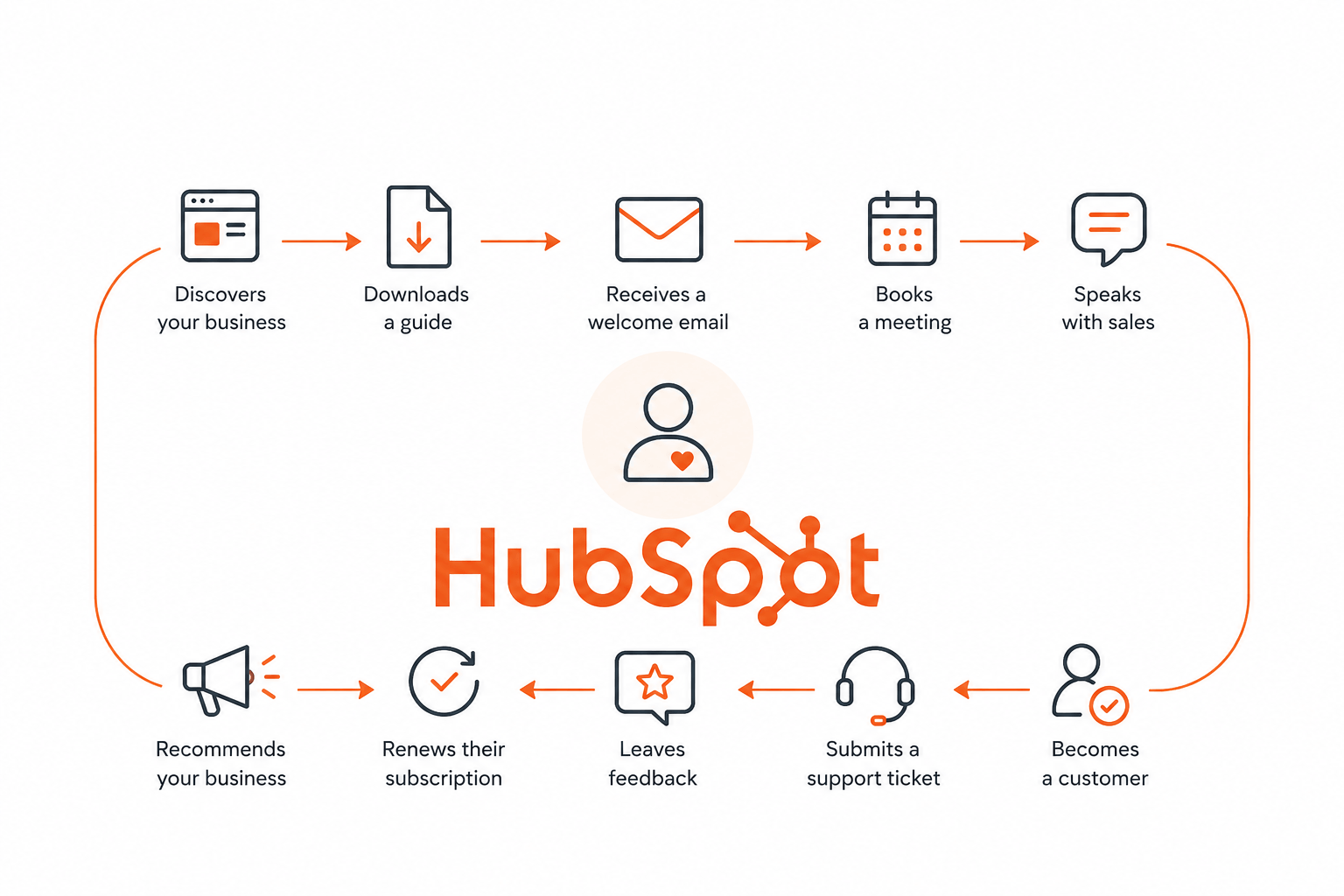
Imagine someone discovers your business for the first time.
They read a blog article.
Download a guide.
Receive a welcome email.
Book a meeting.
Speak with sales.
Become a customer.
Submit a support ticket.
Leave feedback.
Renew their subscription.
Recommend your company to someone else.
Every one of those moments lives somewhere inside HubSpot.
That changed the way we looked at the platform.
It wasn’t organized around software.
It was organized around relationships.
Every Department Was Looking At The Same Story
One thing immediately stood out.
Marketing wasn’t working inside one system.
Sales wasn’t using another.
Customer support wasn’t starting from scratch.
Instead…
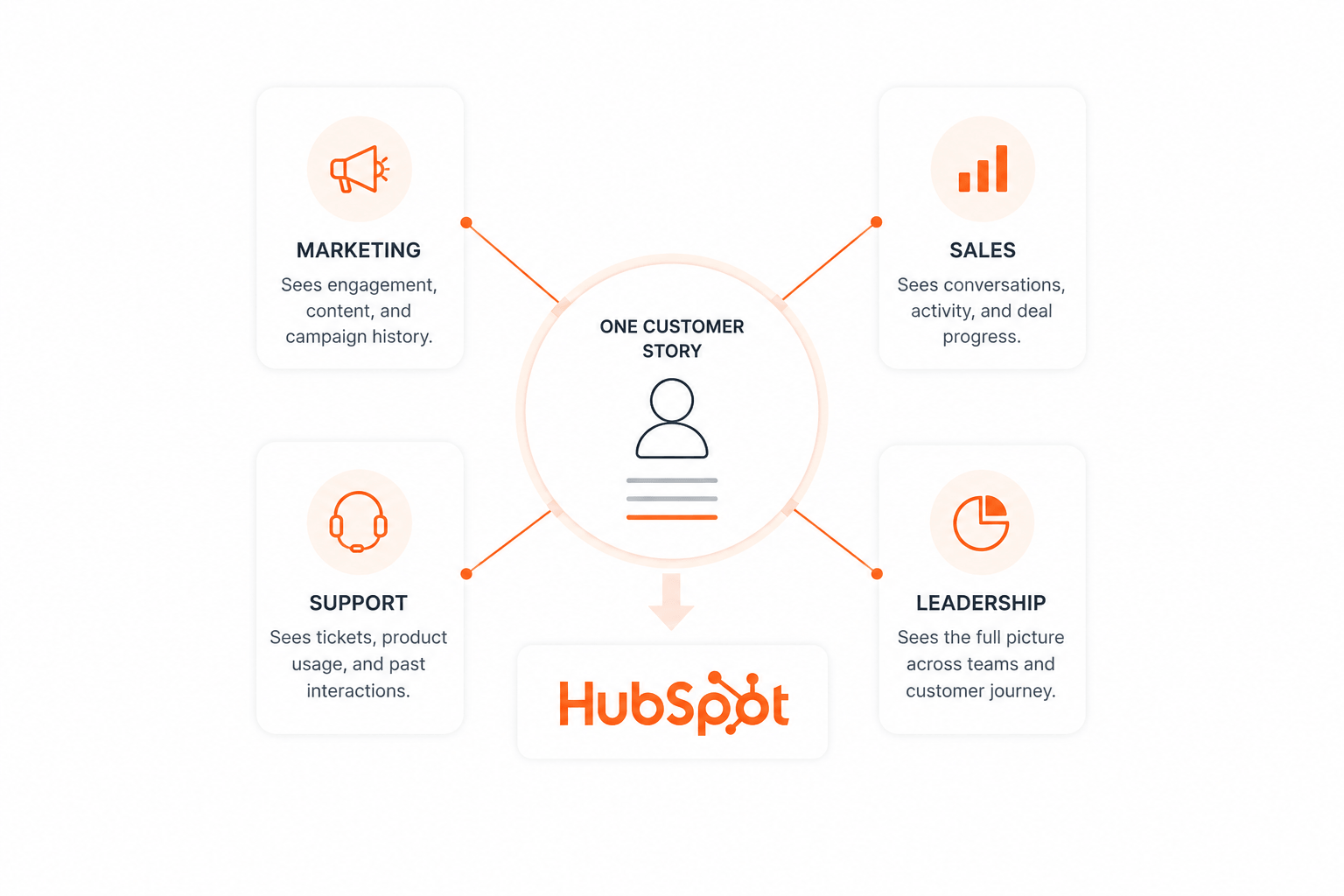
Everyone seemed to be looking at the same customer journey.
The marketing team could see which content someone downloaded.
Sales could understand previous conversations before making a call.
Support already knew what products the customer used.
Leadership could see how everything connected.
There were fewer handoffs.
Less duplicated work.
Fewer moments where customers had to explain themselves all over again.
It felt less like separate departments.
More like one connected business.
The Platform Never Asked Us To Leave
Normally, exploring software means opening browser tab after browser tab.
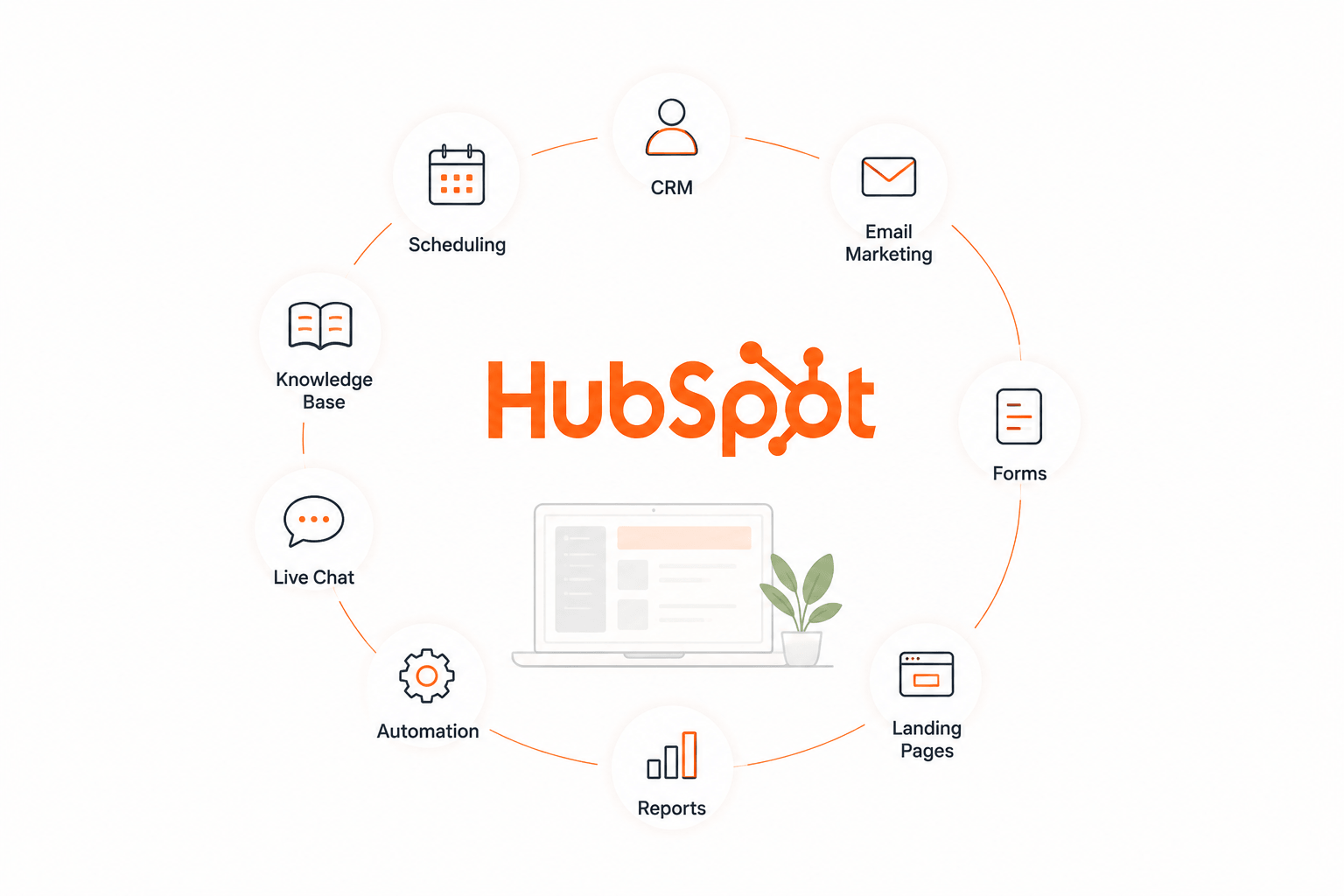
CRM.
Email marketing.
Forms.
Landing pages.
Reports.
Automation.
Live chat.
Knowledge base.
Scheduling.
This experience felt different.
Every time we expected to leave the platform and search for another tool…
Another solution was already waiting.
The ecosystem kept expanding without ever feeling disconnected.
It was less like installing new software.
And more like discovering another room inside the same building.
It Felt Like Building A Business Instead Of Buying Software
Halfway through our visit, something interesting happened.
We stopped comparing products.
Instead…
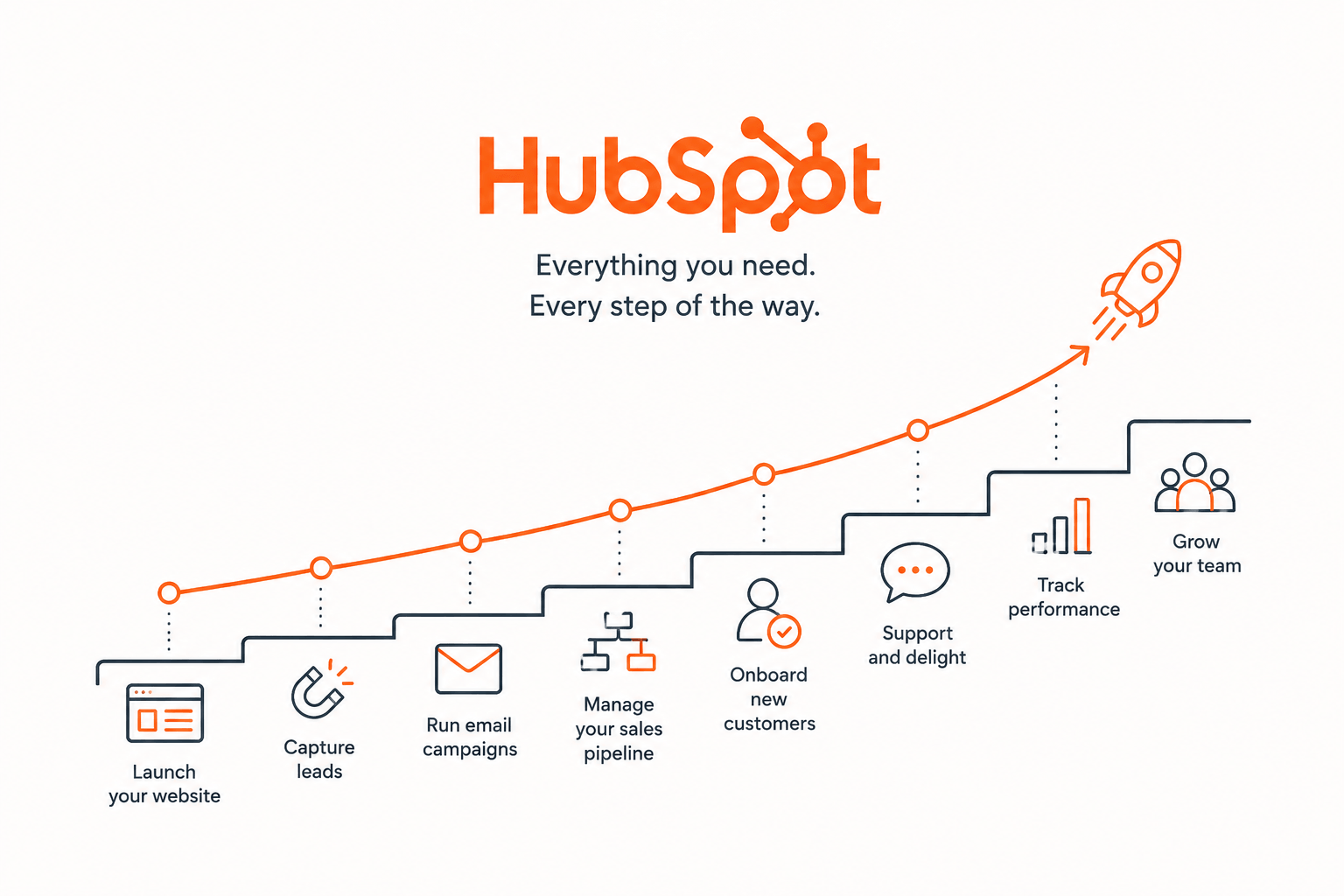
We imagined building an entire business.
Launching a website.
Capturing leads.
Sending marketing campaigns.
Managing a sales pipeline.
Onboarding new customers.
Providing ongoing support.
Tracking performance.
Growing the team.
Everything seemed designed to evolve alongside the business rather than forcing another software migration every few years.
That long-term thinking quietly became one of HubSpot’s biggest strengths.
Automation Started Feeling Surprisingly Human
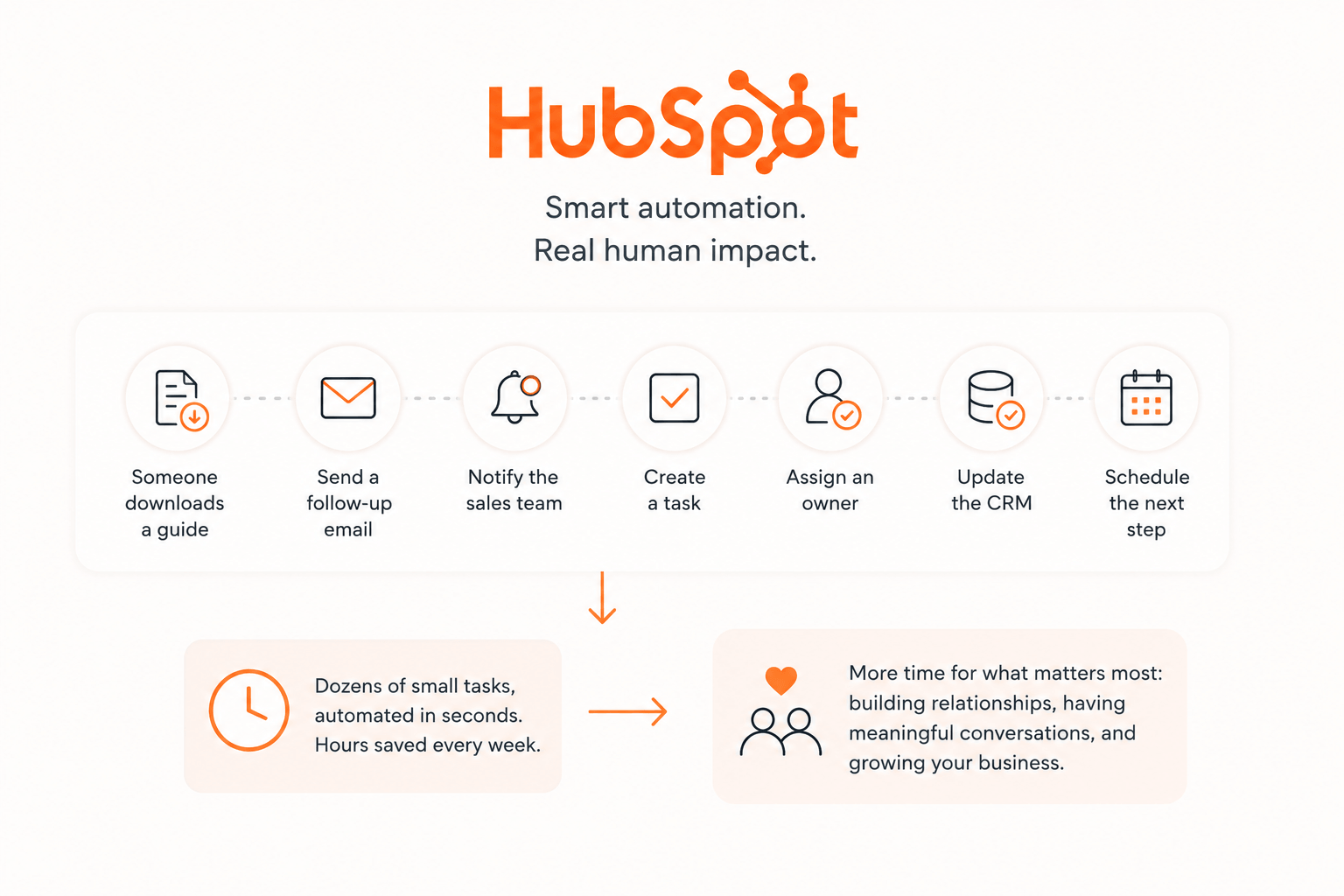
Automation often sounds technical.
Complicated.
Overwhelming.
HubSpot approached it differently.
Someone downloads a guide.
Send a follow-up email.
Notify the sales team.
Create a task.
Assign an owner.
Update the CRM.
Schedule the next step.
Individually…
None of these actions are difficult.
But together they remove dozens of tiny manual tasks that quietly consume hours every single week.
Rather than replacing people, the automation simply allowed people to spend more time having meaningful conversations instead of performing repetitive admin work.
We Started Paying Attention To The Handoffs
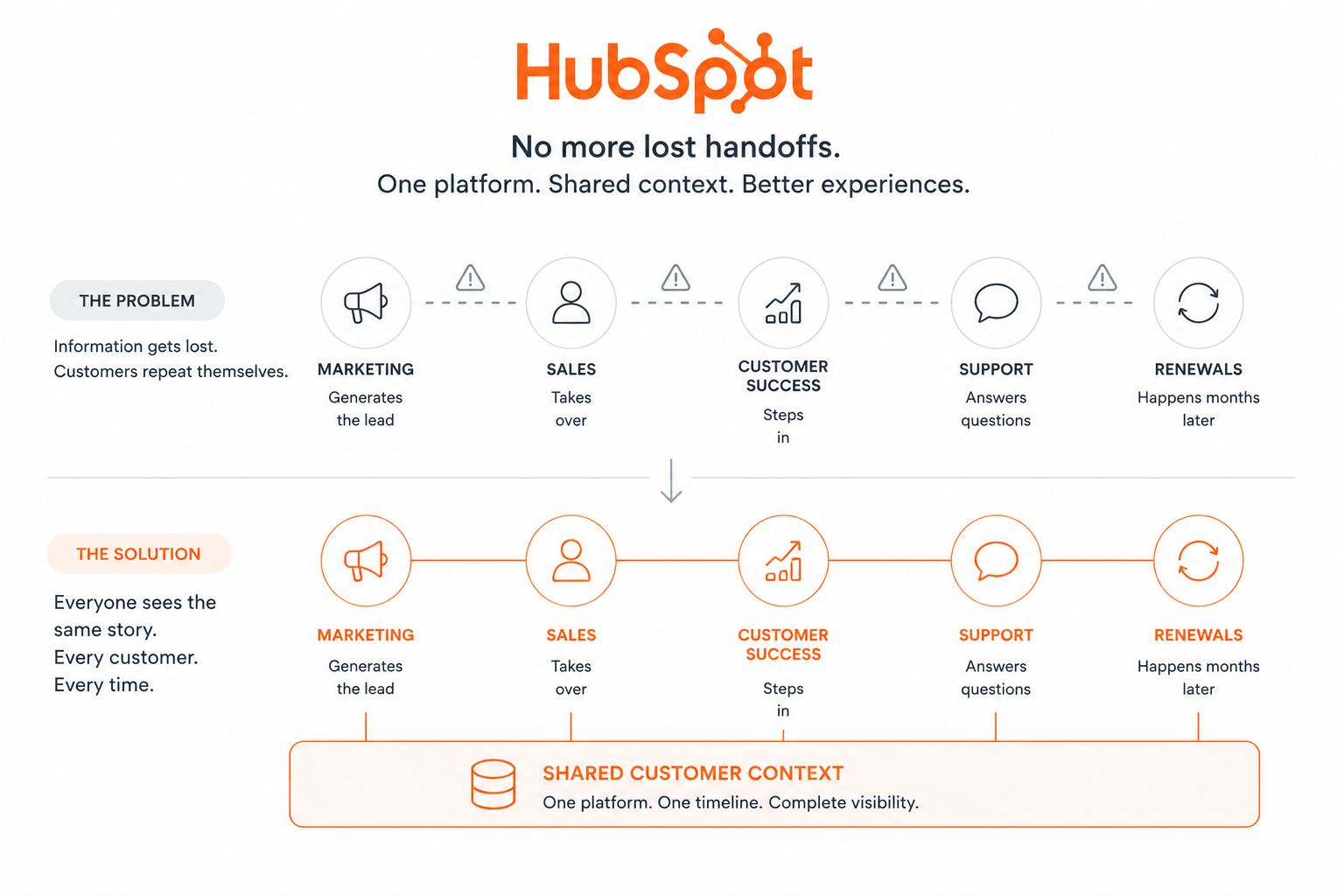
Businesses rarely struggle because people don’t work hard.
More often…
Momentum gets lost between departments.
Marketing generates the lead.
Sales takes over.
Customer success steps in.
Support answers questions.
Renewals happen months later.
Each transition creates opportunities for confusion.
Information gets missed.
Context disappears.
Customers repeat themselves.
HubSpot seemed built around preventing exactly that.
Instead of making every department work harder, it helped each department work from the same foundation.
That subtle difference felt incredibly valuable.
It Quietly Rewards Well-Run Businesses
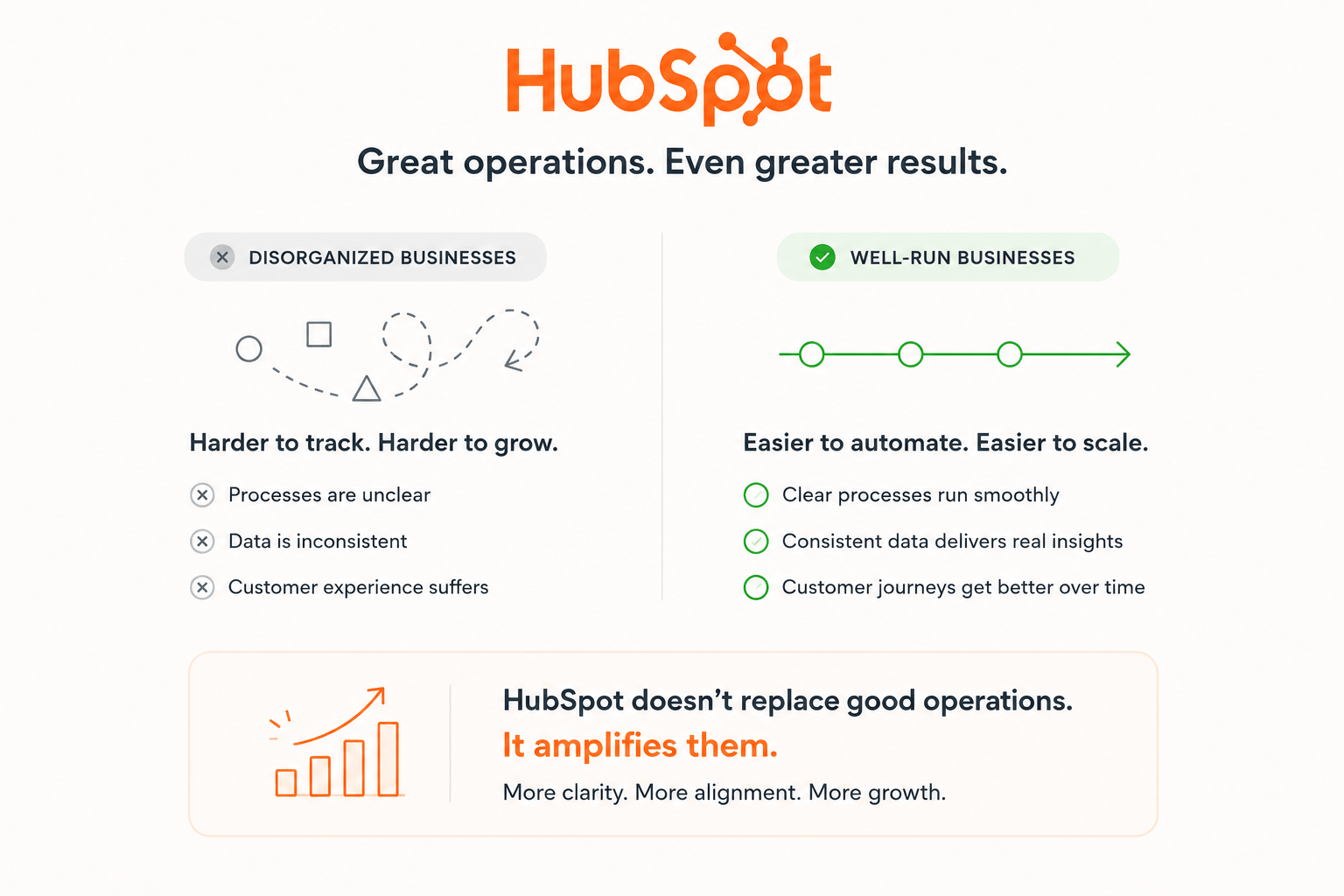
One realization stayed with us throughout the experience.
HubSpot doesn’t magically fix disorganized businesses.
Instead…
It rewards organized ones.
Clear processes become easier to automate.
Consistent data produces better reporting.
Well-defined customer journeys become easier to improve.
The platform doesn’t replace good operations.
It amplifies them.
That makes it feel less like software and more like an operating system for growing companies.
A Few Things Worth Knowing Before You Start
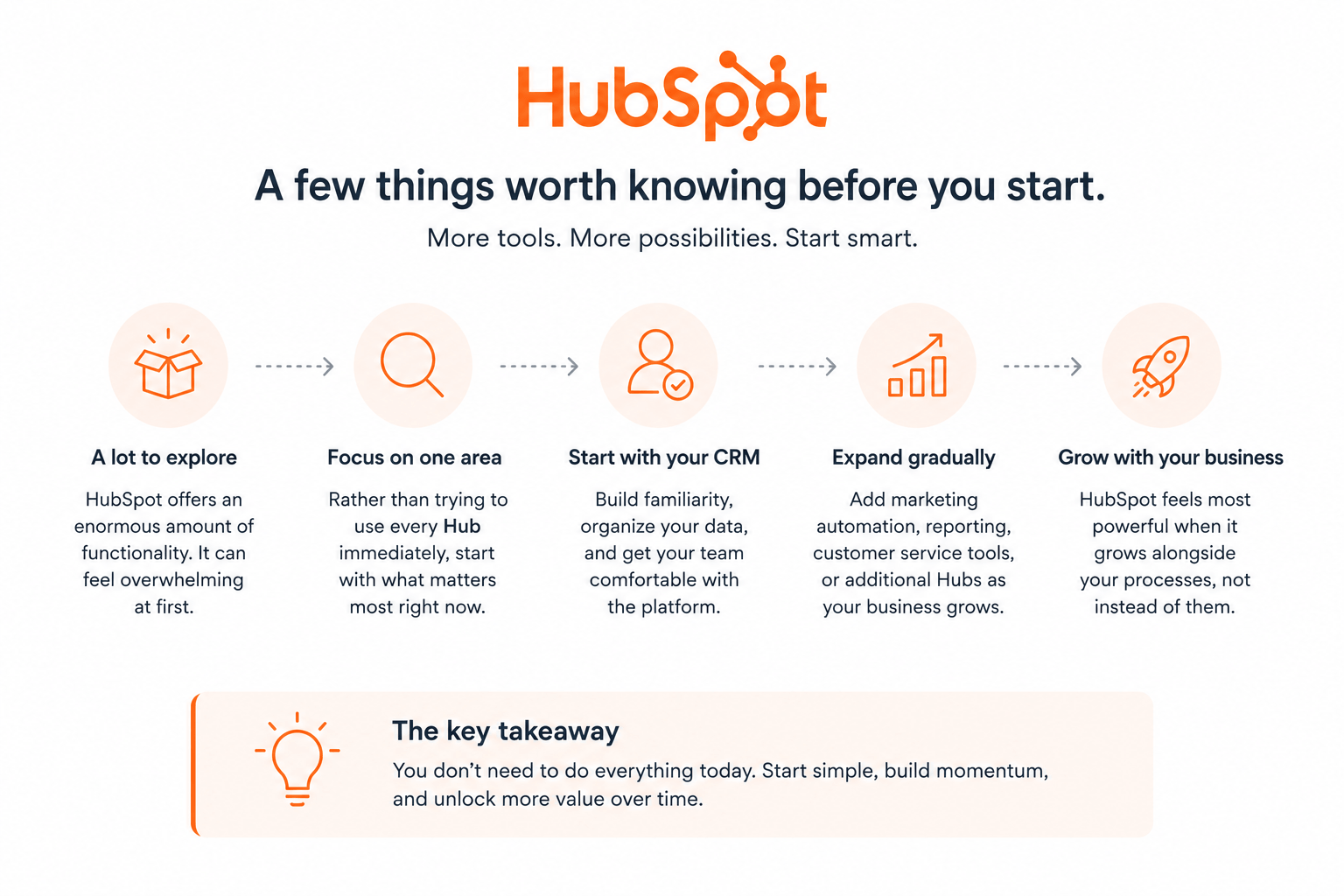
No platform is perfect for everyone.
HubSpot offers an enormous amount of functionality, which means new users may initially feel like there’s a lot to explore.
Rather than trying to use every Hub immediately, we’d recommend focusing on one area first.
Start with your CRM.
Build familiarity.
Then gradually introduce marketing automation, reporting, customer service tools, or additional Hubs as your business grows.
HubSpot feels most powerful when it grows alongside your processes instead of replacing everything overnight.
Who We Think Will Get The Most Out Of HubSpot
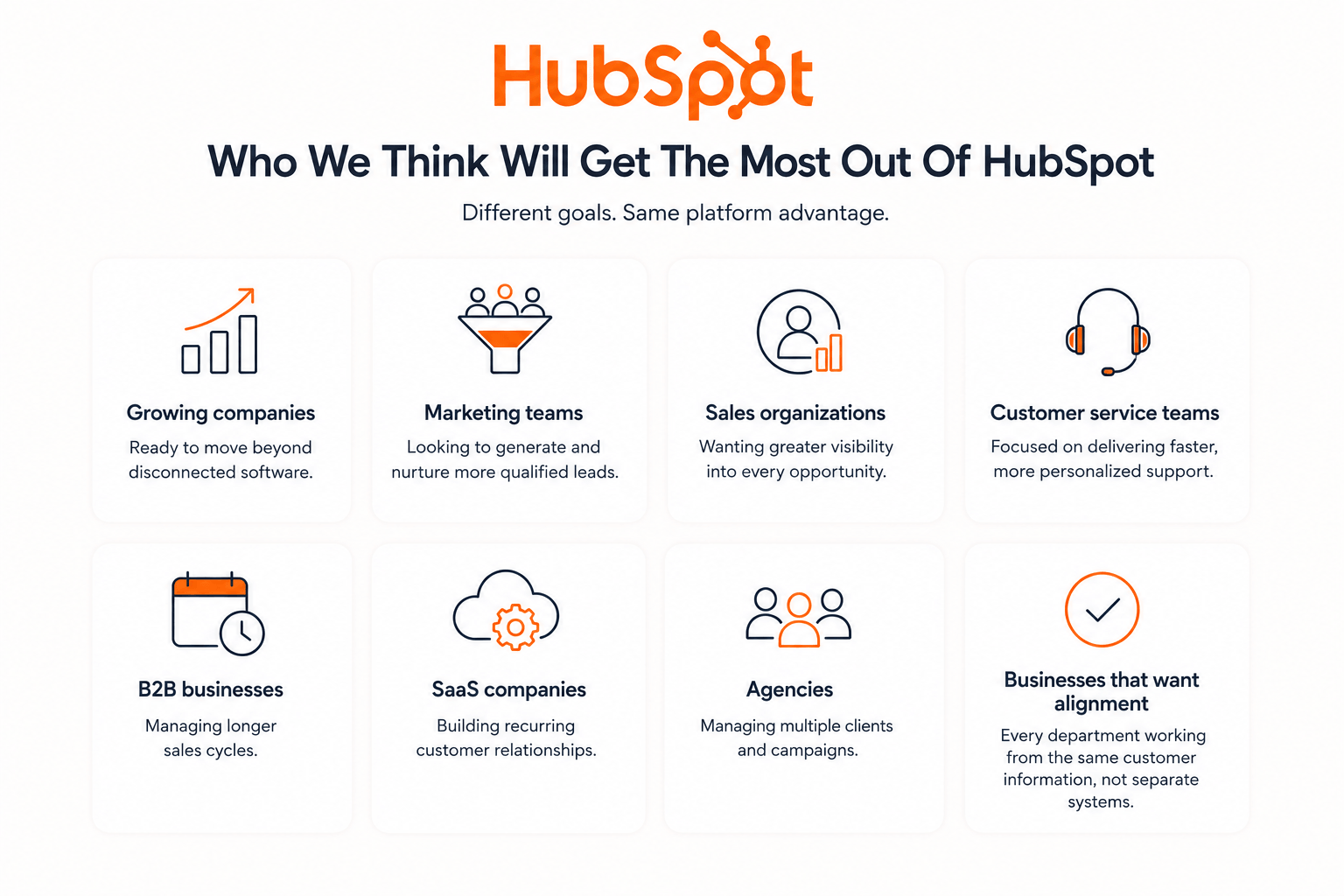
After spending time exploring the platform, a few businesses immediately came to mind.
Growing companies ready to move beyond disconnected software.
Marketing teams looking to generate and nurture more qualified leads.
Sales organizations wanting greater visibility into every opportunity.
Customer service teams focused on delivering faster, more personalized support.
B2B businesses managing longer sales cycles.
SaaS companies building recurring customer relationships.
Agencies managing multiple clients and campaigns.
Businesses that want every department working from the same customer information rather than separate systems.
Final Thoughts: It Felt More Like Exploring A Business Than Exploring Software
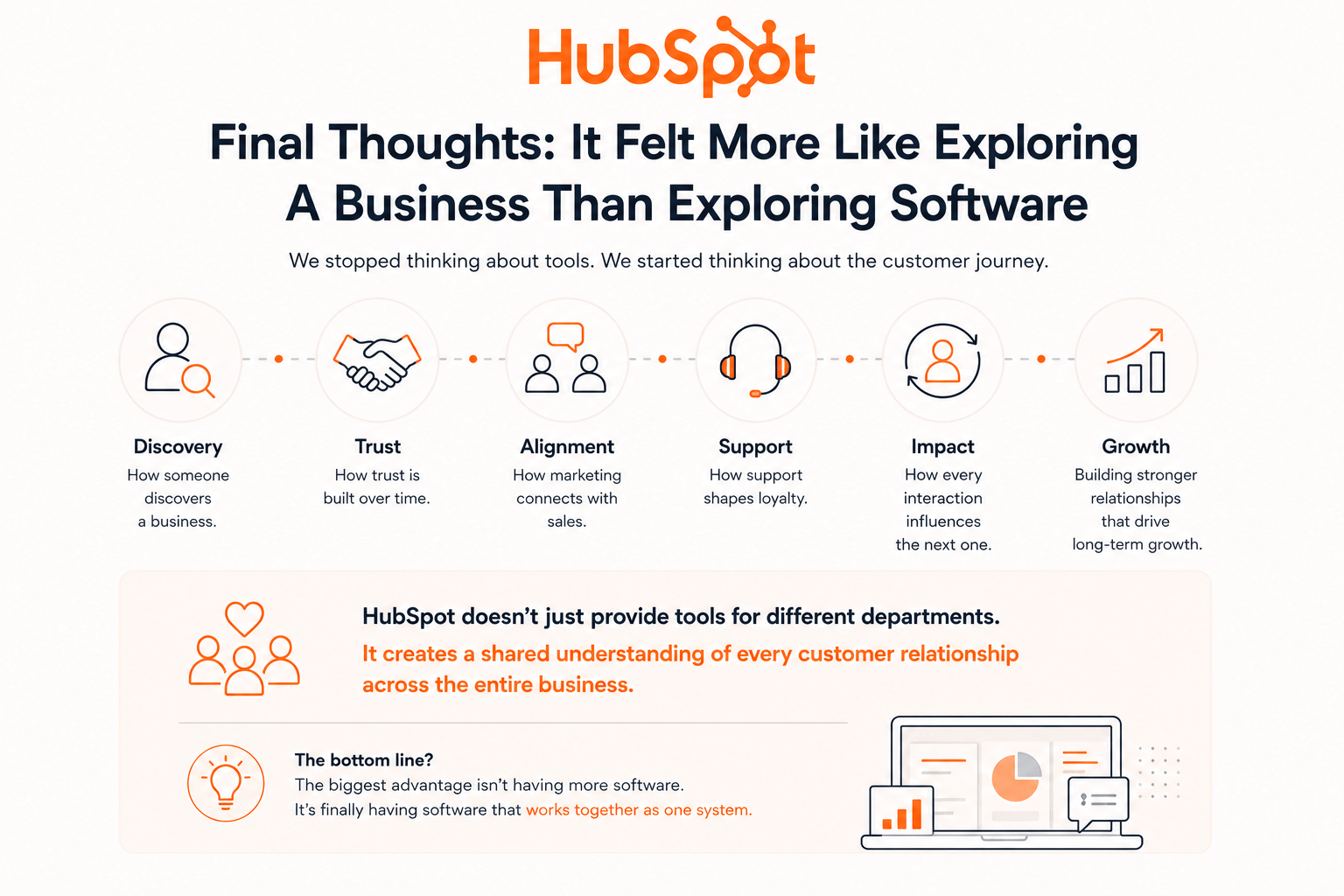
By the time we finished exploring HubSpot, we realized something.
We weren’t thinking about CRM software anymore.
Or email marketing.
Or automation.
Instead…
We were thinking about customers.
How someone discovers a business.
How trust is built over time.
How marketing connects with sales.
How support shapes loyalty.
How every interaction influences the next one.
That’s what ultimately stood out most about HubSpot.
It doesn’t simply provide tools for different departments.
It quietly creates a shared understanding of every customer relationship across the entire business.
And sometimes…
The biggest advantage isn’t having more software.
It’s finally having software that works together as one system.