
Every growing team reaches the same point eventually.
Projects are scattered across spreadsheets.
Important updates are buried in email threads.
Someone keeps the latest version of a document… but nobody remembers who.
Slack messages disappear before anyone acts on them.
Deadlines live in one place.
Conversations happen somewhere else.
We assumed monday.com would simply help organize all of that.
Instead, it completely changed the way we thought about managing work.
Rather than feeling like another productivity tool competing for attention, it felt like a place where everything finally started connecting.
We Thought We’d Find Another Project Management Platform
We’ve explored plenty of project management software over the years.
Most promise better organization.
Better collaboration.
More visibility.
So when we opened monday.com, we expected another collection of task lists, calendars, and project boards.
Those features were certainly there.
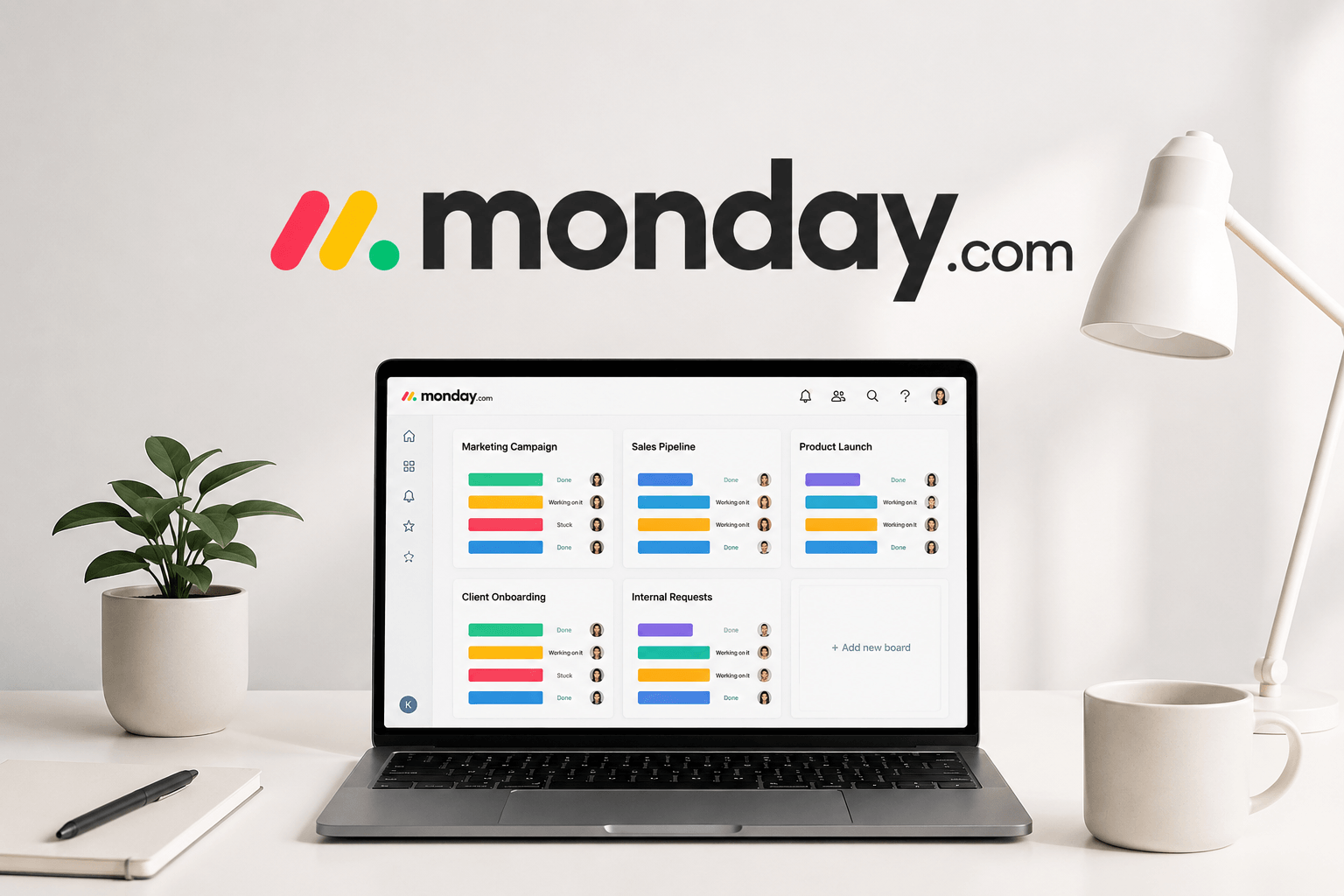
But what immediately stood out was how visual everything felt.
Instead of forcing us into one rigid workflow, the platform encouraged us to build workspaces that actually matched the way different teams operate.
Marketing campaigns.
Sales pipelines.
Product launches.
Client onboarding.
Internal requests.
Each one looked different because each team works differently.
That flexibility made the experience feel surprisingly natural from the very beginning.
It Didn’t Feel Like Software. It Felt Like Building A Workspace
As we spent more time exploring, we stopped thinking about individual features.
Instead, we started thinking about systems.
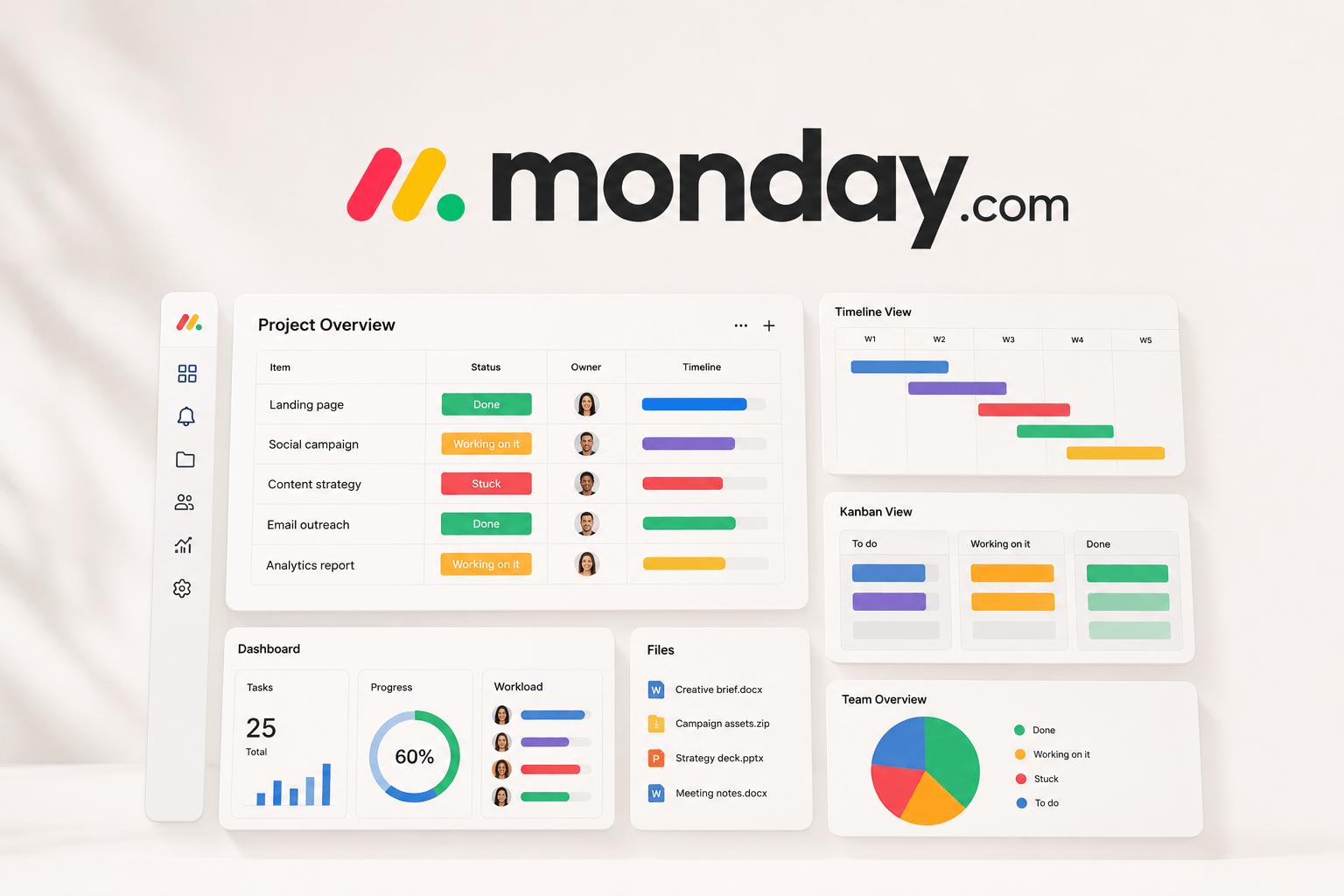
Projects lived alongside documents.
Dashboards pulled information together automatically.
Different views made the same information useful for different people.
One team could view work as a timeline.
Another preferred Kanban boards.
Leadership could monitor everything from a high-level dashboard without interrupting the people actually doing the work.
Rather than creating more places to check every day, monday.com seemed designed to bring everything into one connected workspace.
That subtle difference became more valuable the longer we browsed.
Every Click Solved Another Small Problem
Some software impresses you with one major feature.
monday.com impressed us with dozens of smaller ones.
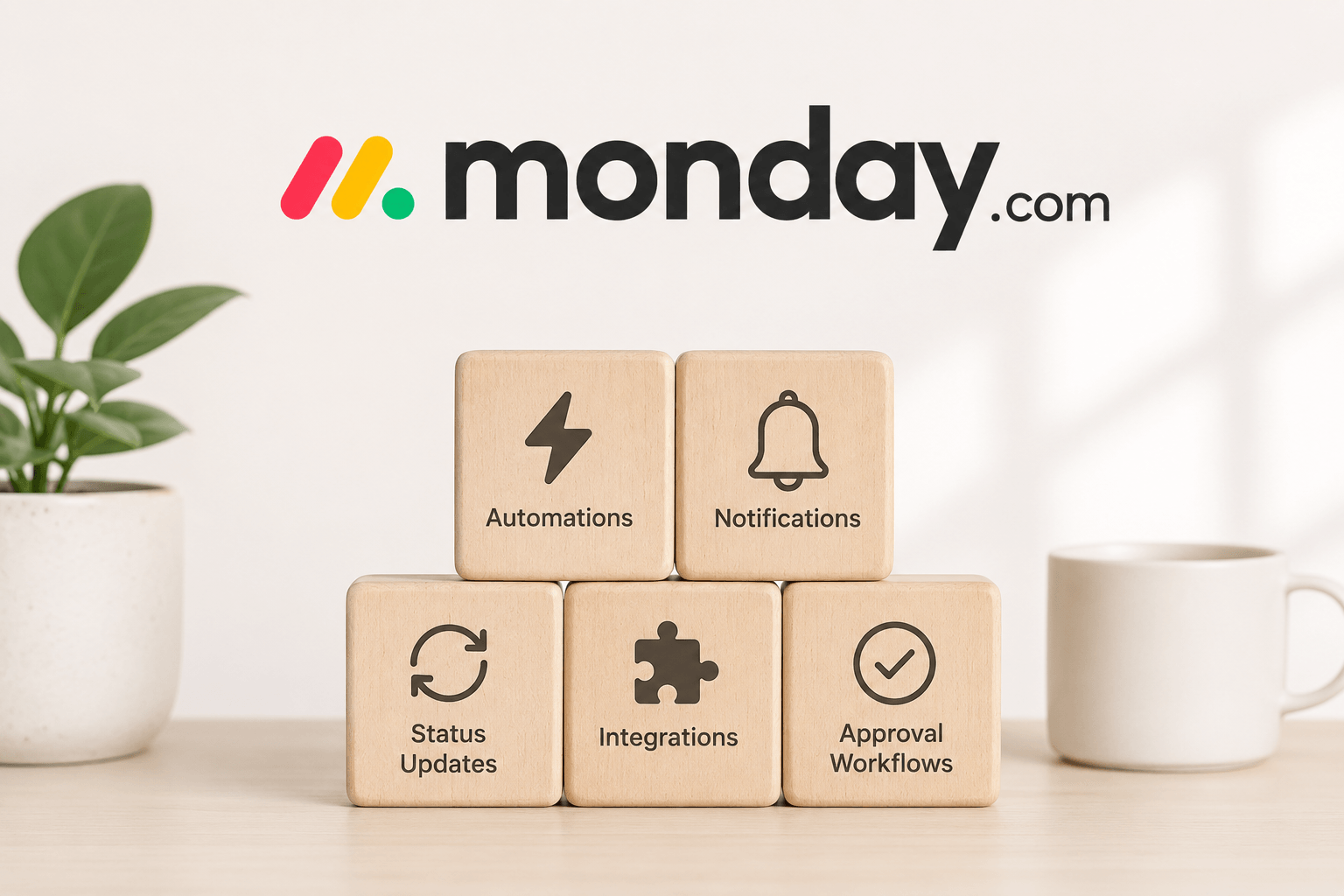
Automations that eliminated repetitive updates.
Notifications that kept everyone informed without endless follow-up messages.
Status changes that happened automatically.
Integrations that connected work already happening in other tools.
Approval workflows that removed unnecessary back-and-forth.
None of these features would completely transform a team’s productivity on their own.
But together?
They quietly removed hundreds of tiny interruptions that slow projects down every single day.
By the end of this section of our exploration, we weren’t discovering flashy features anymore.
We were noticing how much unnecessary work simply disappeared.
The Platform Started Growing In Our Heads
Something interesting happened halfway through our visit.
We stopped evaluating the software.
Instead…
We started imagining how we’d actually use it.
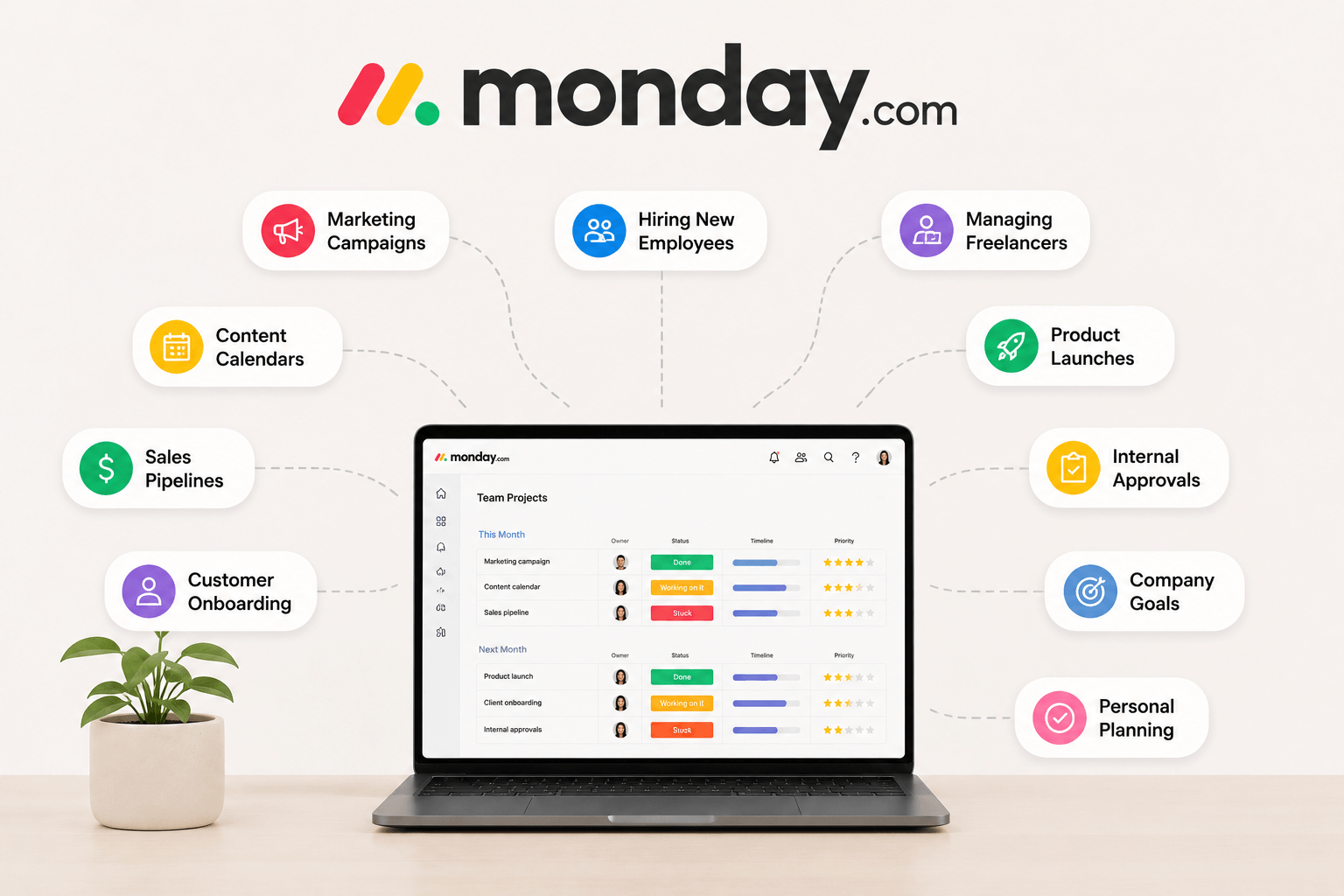
Marketing campaigns.
Content calendars.
Sales pipelines.
Customer onboarding.
Hiring new employees.
Managing freelancers.
Product launches.
Internal approvals.
Company goals.
Even personal planning.
Every new page made us think of another process that could probably live inside the same workspace.
That’s usually a good sign.
The platform had stopped feeling like software.
It had started feeling like infrastructure.
We Started Thinking About Everything That Happens Before The Work
Projects are only part of the challenge.
Most delays happen before the actual work even begins.
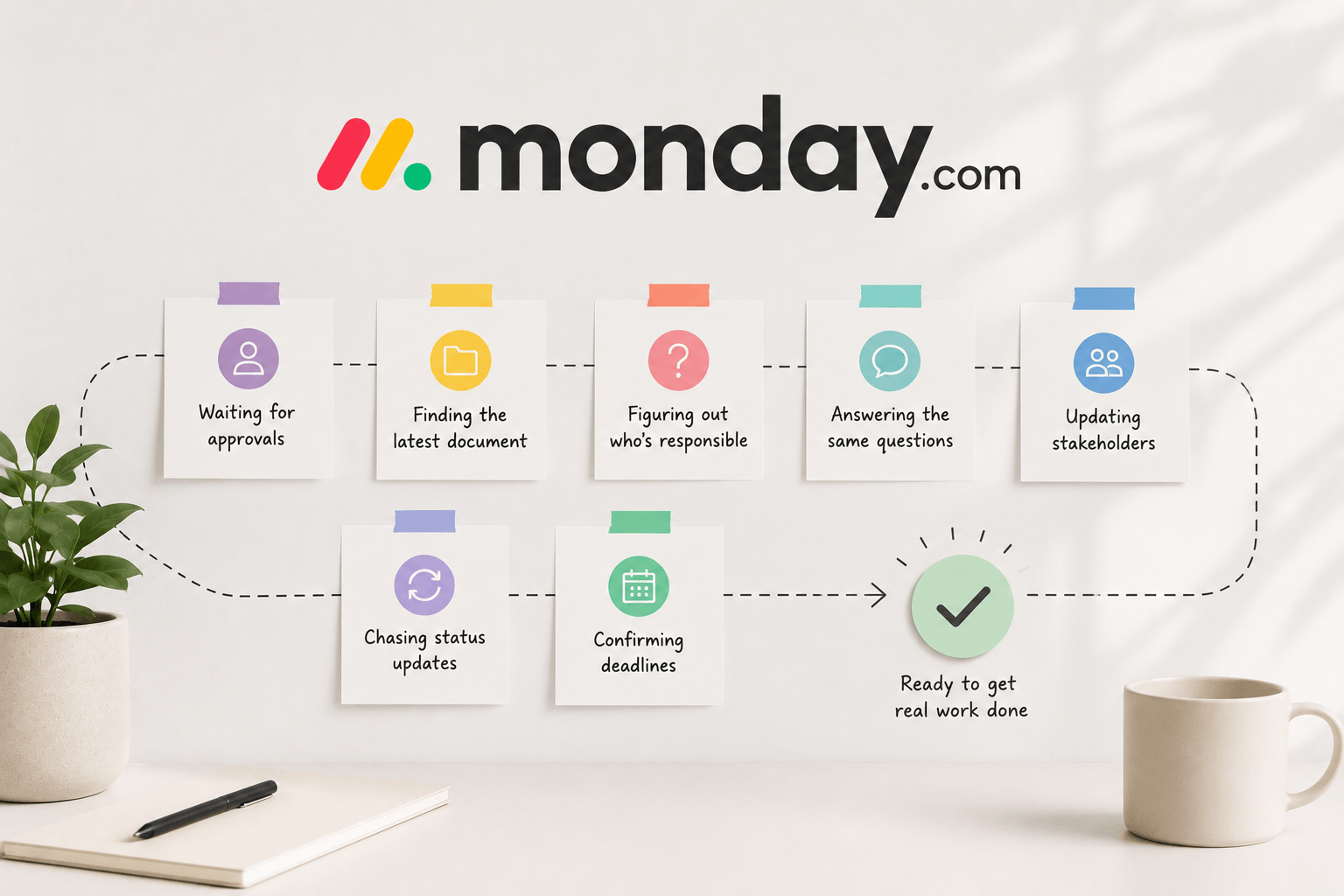
Waiting for approvals.
Finding the latest document.
Figuring out who’s responsible.
Answering the same questions repeatedly.
Updating stakeholders.
Chasing status updates.
Confirming deadlines.
These small moments rarely appear on project plans.
Yet they consume an incredible amount of time.
What impressed us most wasn’t simply that monday.com organized projects.
It organized everything surrounding those projects.
And that’s often where teams gain the biggest productivity improvements.
The AI Features Felt Surprisingly Practical
Artificial intelligence seems to be everywhere in software today.
Sometimes it feels genuinely useful.
Other times it feels like a feature added simply because everyone else is doing it.
Fortunately, monday.com’s AI capabilities felt much more practical.
Rather than trying to replace people, they focused on reducing repetitive work.
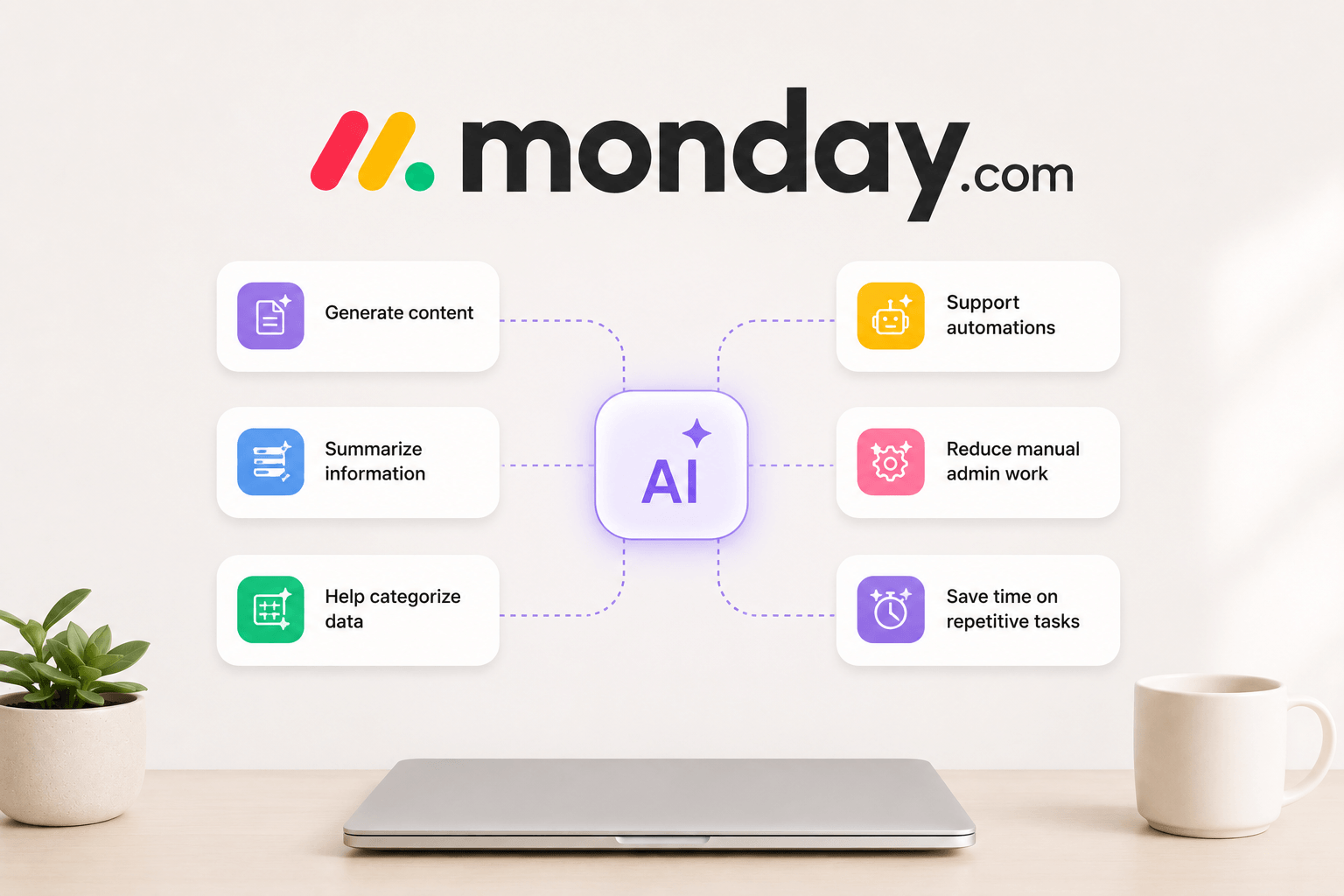
Generating content.
Summarizing information.
Helping categorize data.
Supporting automations.
Reducing manual admin work.
The result felt less like using an AI assistant and more like removing a collection of small daily tasks that nobody particularly enjoys doing in the first place.
The More We Explored, The Bigger The Platform Became
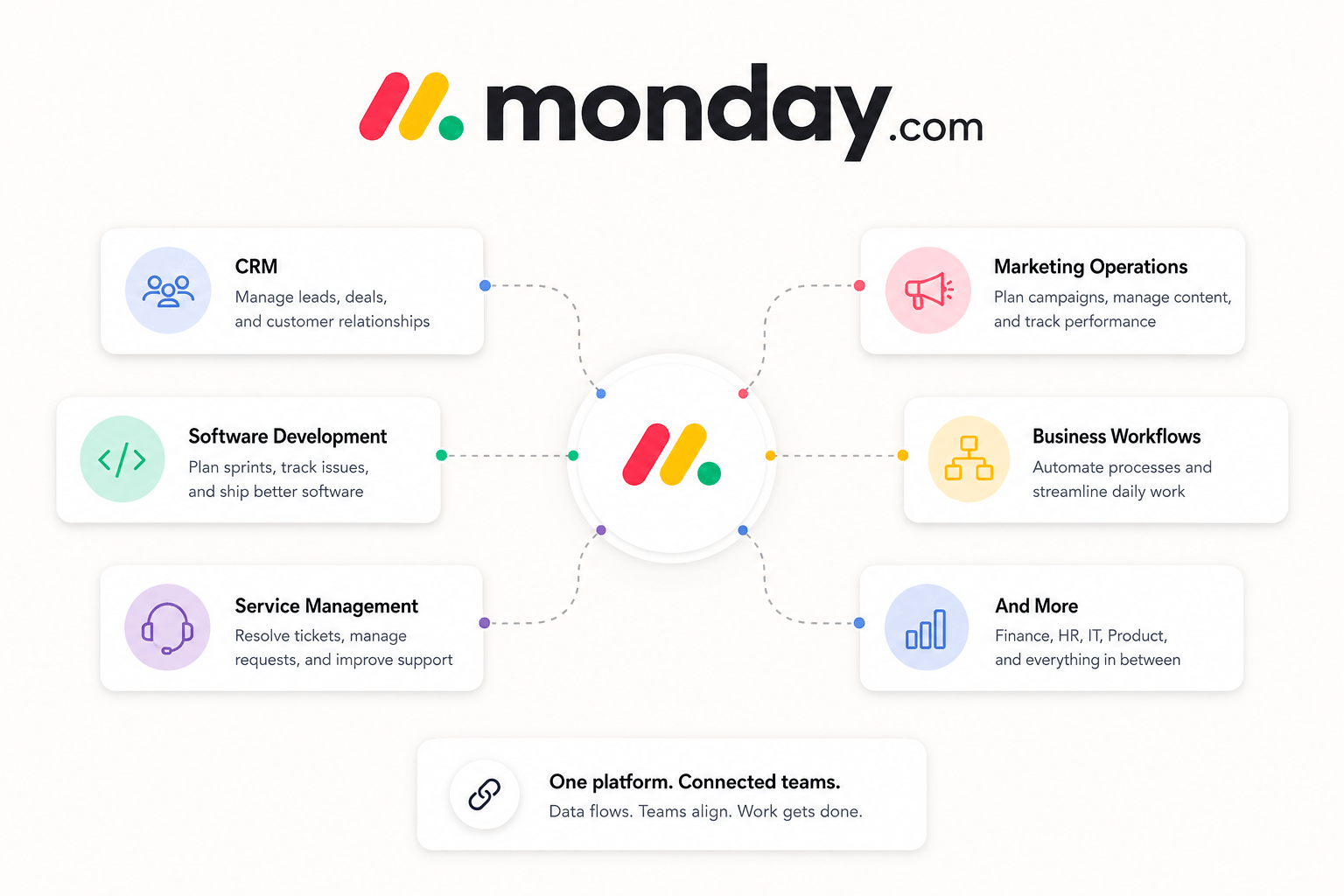
One thing that surprised us was how much existed beyond traditional project management.
As we continued exploring, we discovered solutions designed for:
Customer relationship management.
Software development.
Service management.
Marketing operations.
Business workflows.
Each product felt connected rather than isolated.
Information could move between departments without creating completely separate systems.
Instead of purchasing several unrelated tools, it became easier to imagine building much of the company’s operational workflow inside one connected platform.
That broader vision made monday.com feel far larger than we initially expected.
A Few Things Worth Knowing Before You Start
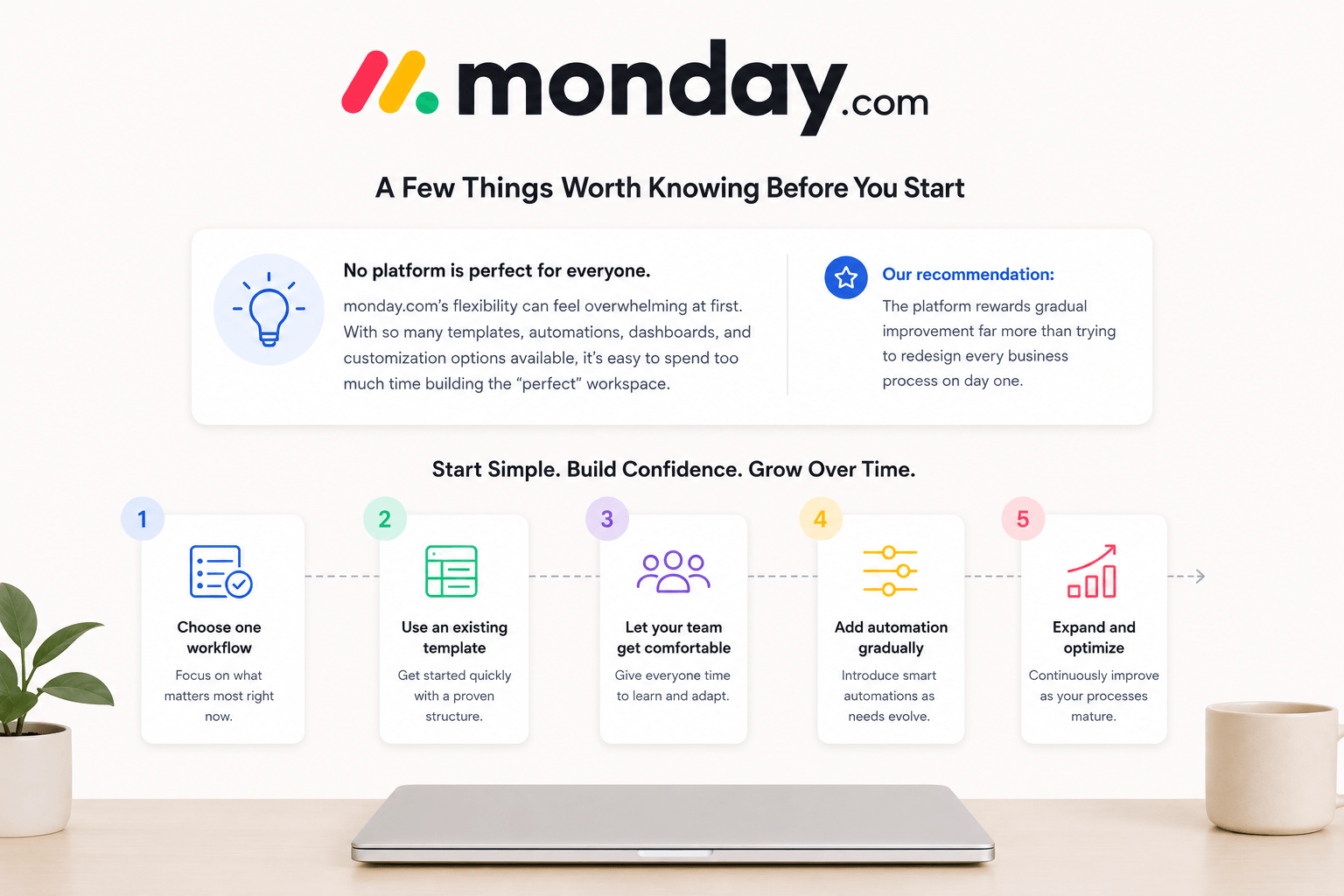
No platform is perfect for everyone.
One thing we noticed is that monday.com’s flexibility can actually feel overwhelming at first.
With so many templates, automations, dashboards, and customization options available, it’s easy to spend too much time building the “perfect” workspace.
We’d recommend starting simple.
Choose one workflow.
Use an existing template.
Allow your team to become comfortable before adding additional automation or customization.
The platform rewards gradual improvement far more than trying to redesign every business process on day one.
Who We Think Will Get The Most Out Of monday.com
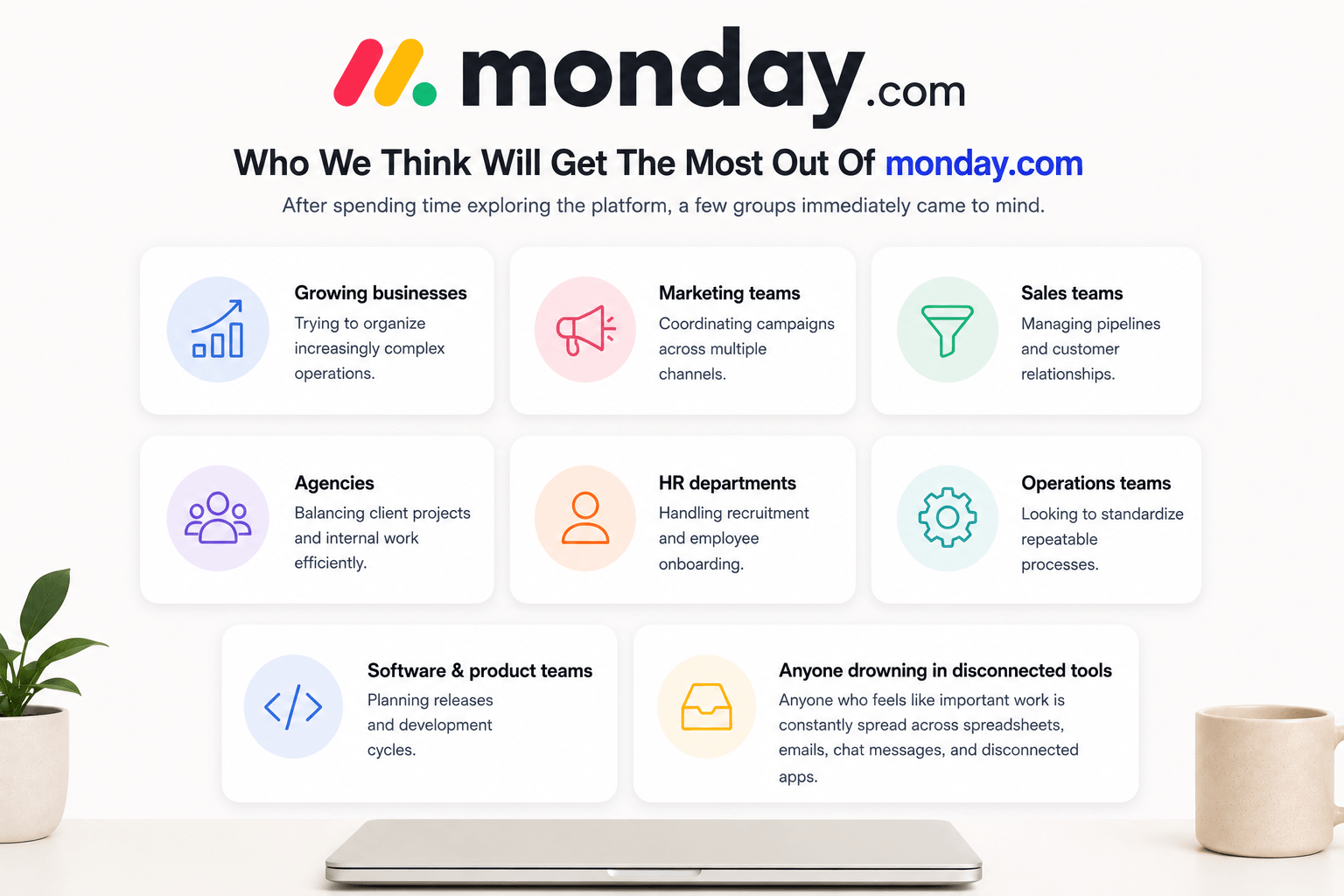
After spending time exploring the platform, a few groups immediately came to mind.
Growing businesses trying to organize increasingly complex operations.
Marketing teams coordinating campaigns across multiple channels.
Sales teams managing pipelines and customer relationships.
Agencies balancing client projects and internal work.
HR departments handling recruitment and employee onboarding.
Operations teams looking to standardize repeatable processes.
Software and product teams planning releases and development cycles.
Anyone who feels like important work is constantly spread across spreadsheets, emails, chat messages, and disconnected apps.
Final Thoughts: It Was Never Really About Managing Projects
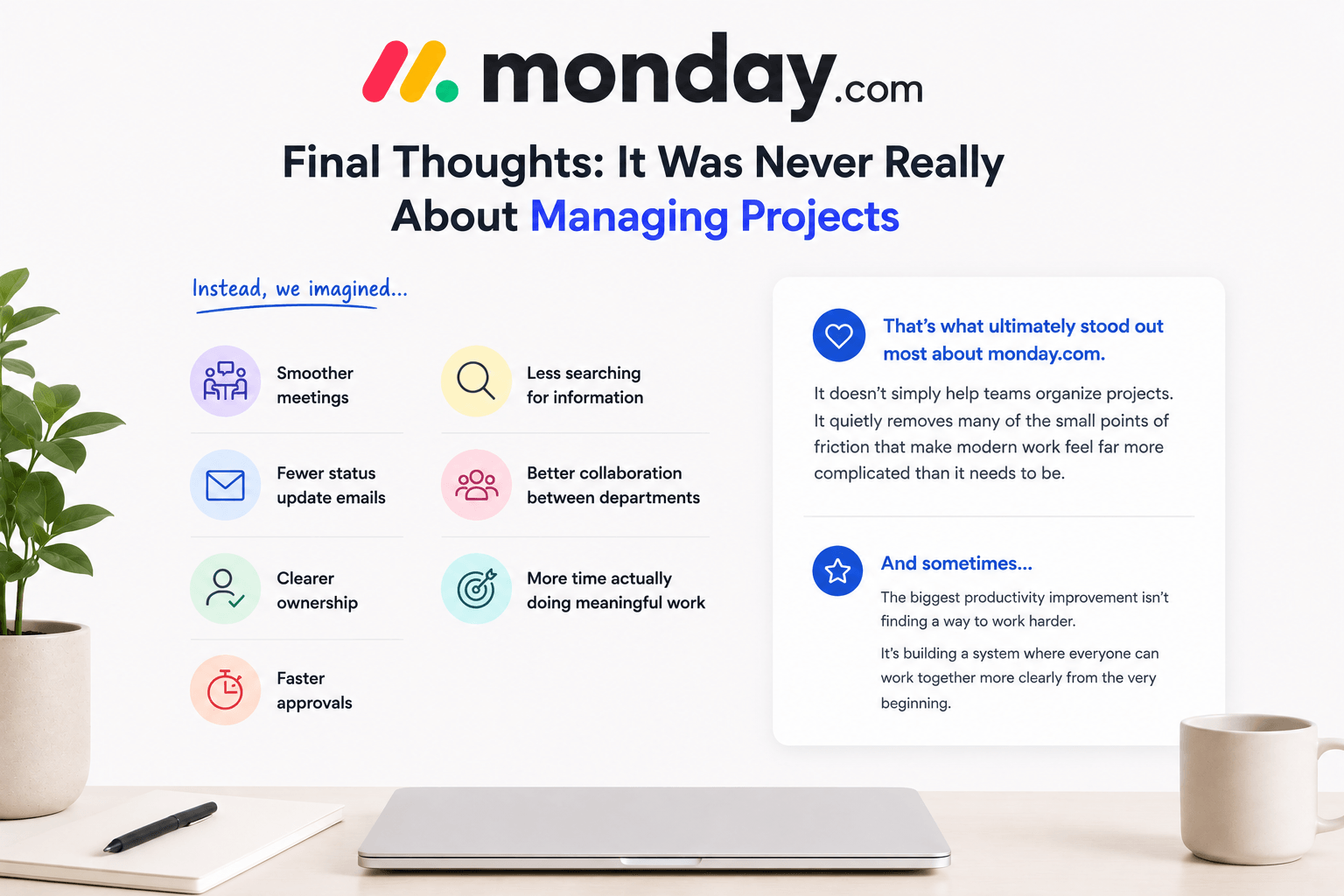
By the time we finished exploring monday.com, we realized something.
The projects had quietly become the smallest part of the experience.
Instead…
We were imagining smoother meetings.
Fewer status update emails.
Clearer ownership.
Faster approvals.
Less searching for information.
Better collaboration between departments.
More time actually doing meaningful work.
That’s what ultimately stood out most about monday.com.
It doesn’t simply help teams organize projects.
It quietly removes many of the small points of friction that make modern work feel far more complicated than it needs to be.
And sometimes…
The biggest productivity improvement isn’t finding a way to work harder.
It’s building a system where everyone can work together more clearly from the very beginning.