We don’t usually think about personal data.
We think about passwords.
Bank accounts.
Credit cards.
But not names.
Addresses.
Phone numbers.
Old email accounts.
Home ownership records.
Shopping habits.
Then we started reading about data brokers.
That was the moment the experience changed.
Incogni wasn’t introducing a new privacy problem.
It was showing us one that had quietly existed all along.
Incogni automatically contacts hundreds of data brokers on your behalf and requests the deletion of your personal information, while letting you track progress through a dashboard.
We Started Asking A Strange Question
Instead of asking,
“How does Incogni work?”
We found ourselves asking something else.
Who already has our information?
Not friends.
Not family.
Not companies we’d recently purchased from.
Companies we’d never even heard of.
That question quietly became the center of the experience.
It Felt Less Like Buying Software And More Like Hiring Someone
This is a fresh angle.
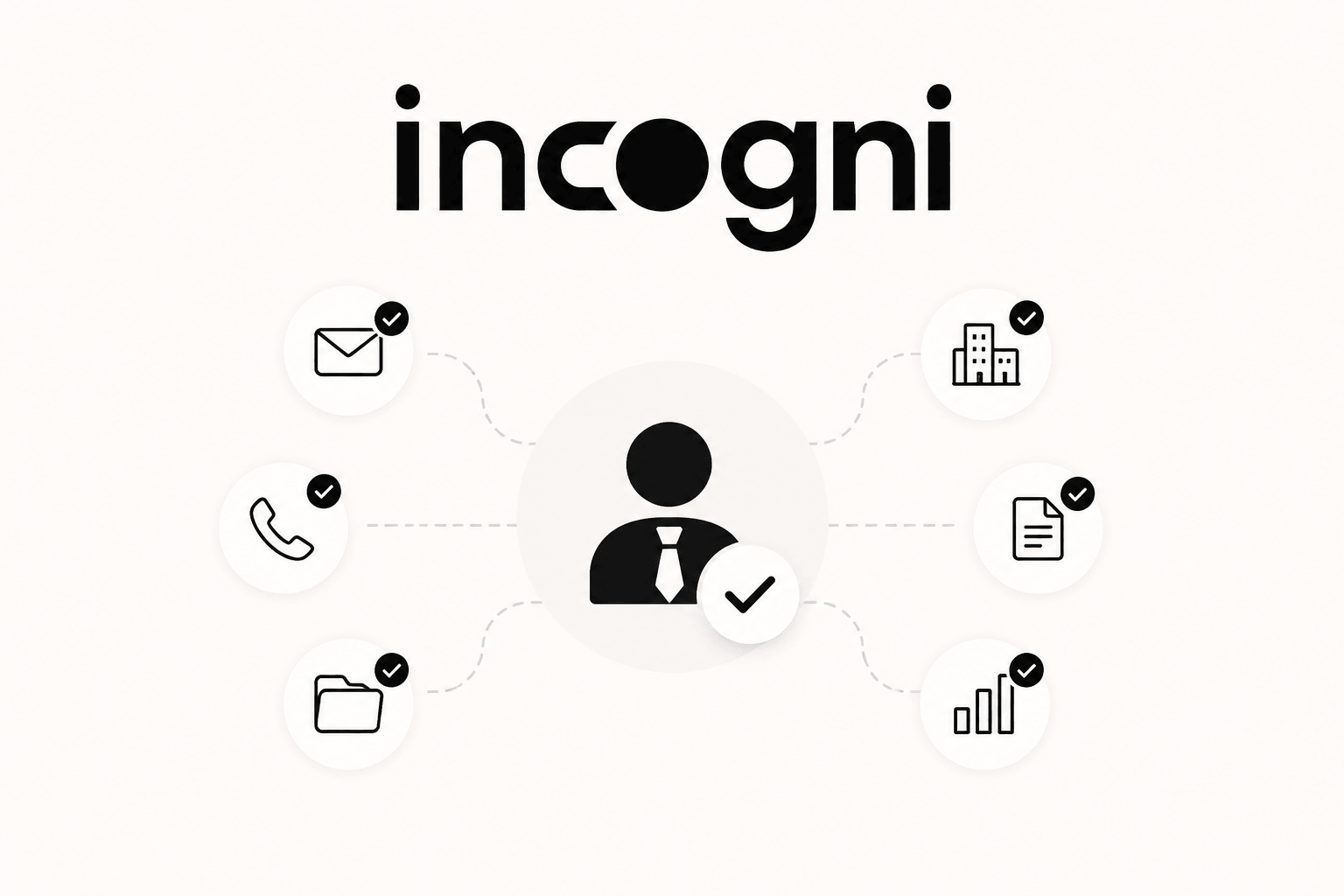
You don’t really “use” Incogni every day.
You hire it.
It goes away.
Contacts hundreds of companies.
Follows up.
Keeps track.
Reports back.
It felt less like learning software…
And more like hiring someone to do weeks of paperwork we’d never want to do ourselves.
The Dashboard Told A Story
This is different.
Normally dashboards measure performance.
Revenue.
Sales.
Marketing.
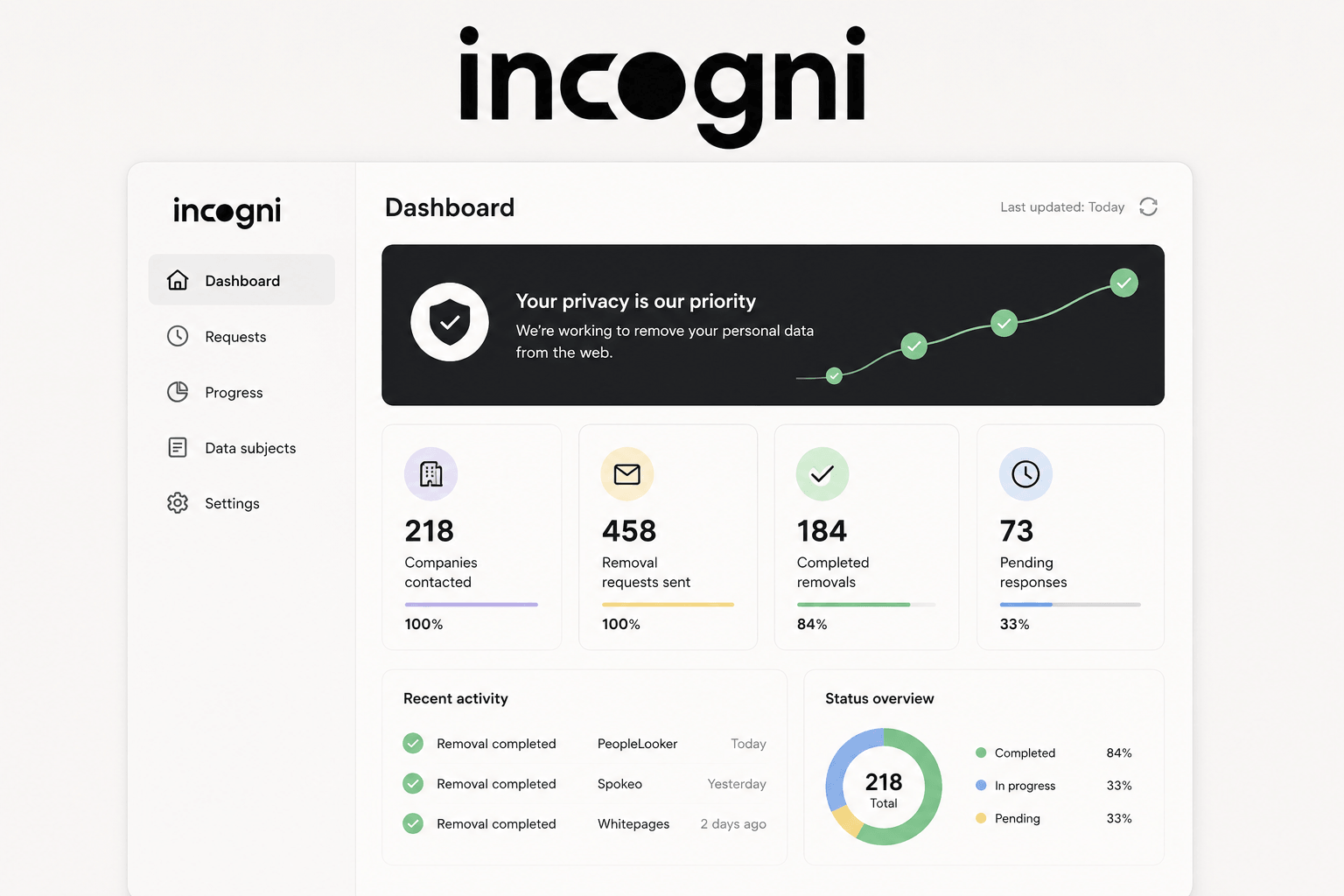
This dashboard measured something unexpected.
Progress.
Companies contacted.
Removal requests.
Completed removals.
Pending responses.
Instead of watching numbers grow…
We were watching pieces of our digital footprint slowly disappear.
The Invisible Internet Became Visible
This can become one of the strongest sections.
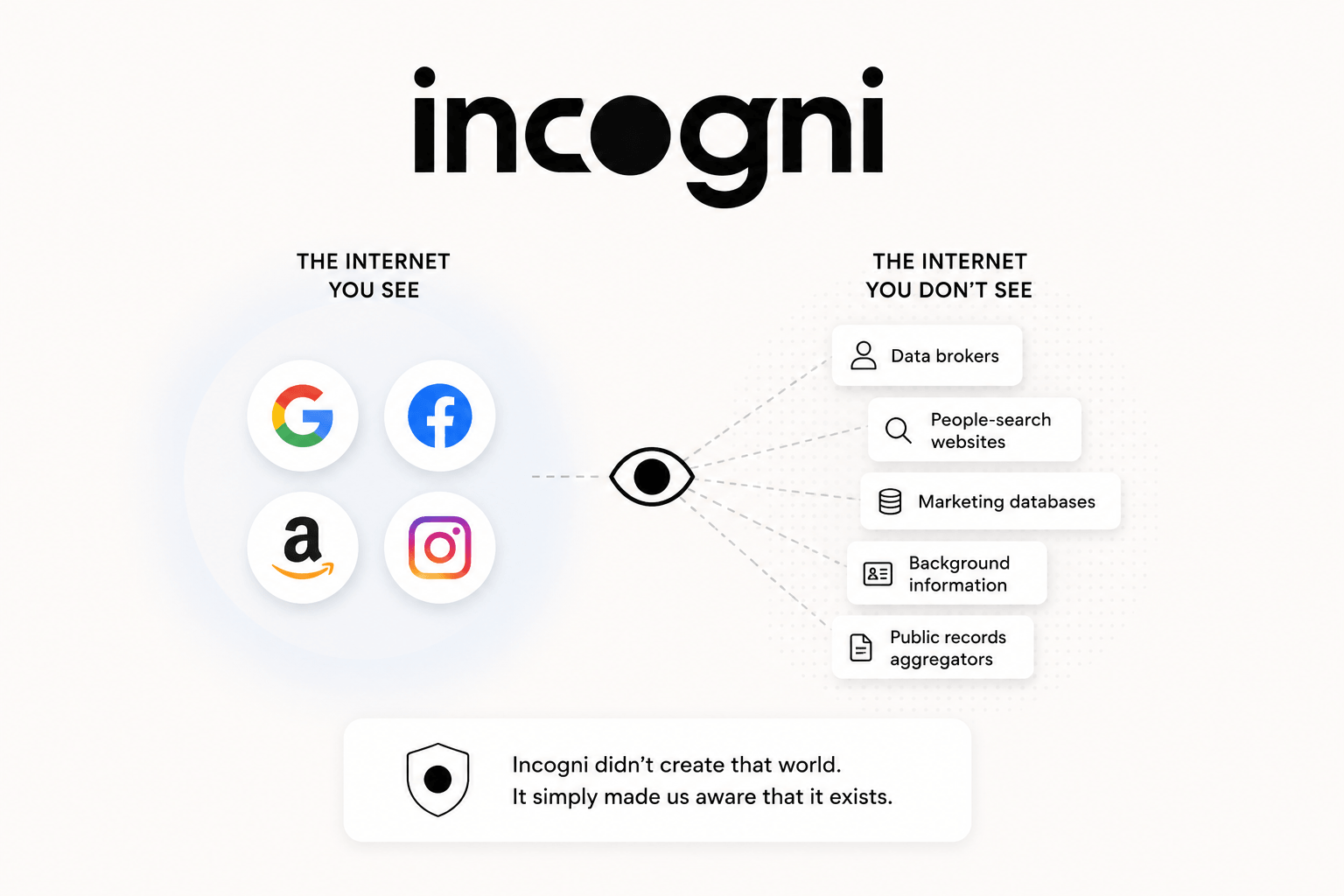
Most of the internet is obvious.
Then there’s the internet most people never think about.
Data brokers.
People-search websites.
Marketing databases.
Background information.
Public records aggregators.
Incogni didn’t create that world.
It simply made us aware that it exists.
Privacy Started Feeling Like Maintenance
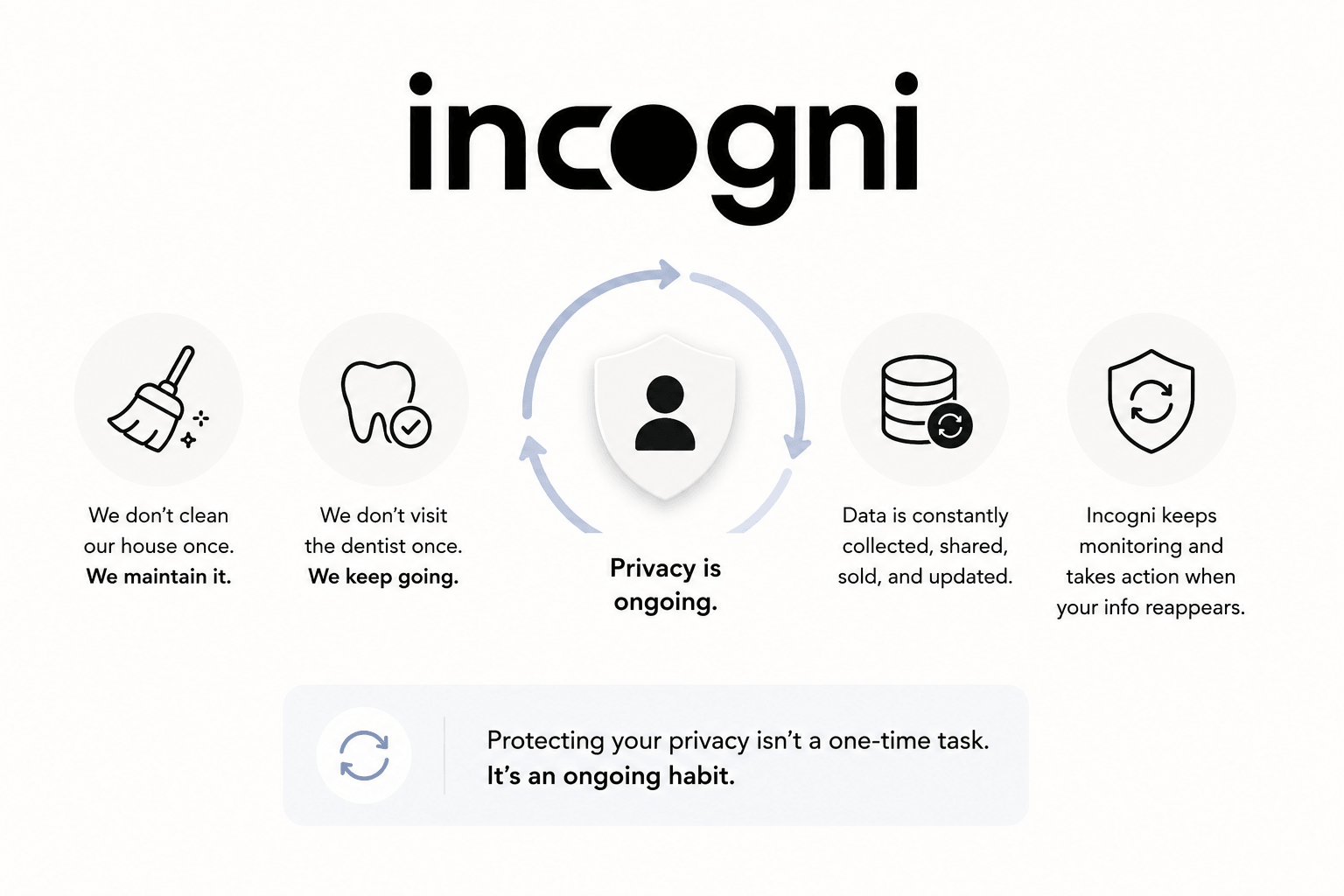
Great unique angle.
We don’t clean our house once.
We maintain it.
We don’t visit the dentist once.
We keep going.
Privacy felt similar.
Data constantly gets collected.
Shared.
Sold.
Updated.
Which means protecting it isn’t a one-time task.
It’s an ongoing habit.
That’s why Incogni continues monitoring and can send new removal requests if your information reappears.
The Biggest Benefit Wasn’t What Disappeared
Interesting section.
The biggest benefit wasn’t simply removing information.
It was knowing someone was actively looking after it.
That peace of mind became surprisingly valuable.
A Few Things Worth Knowing Before You Start
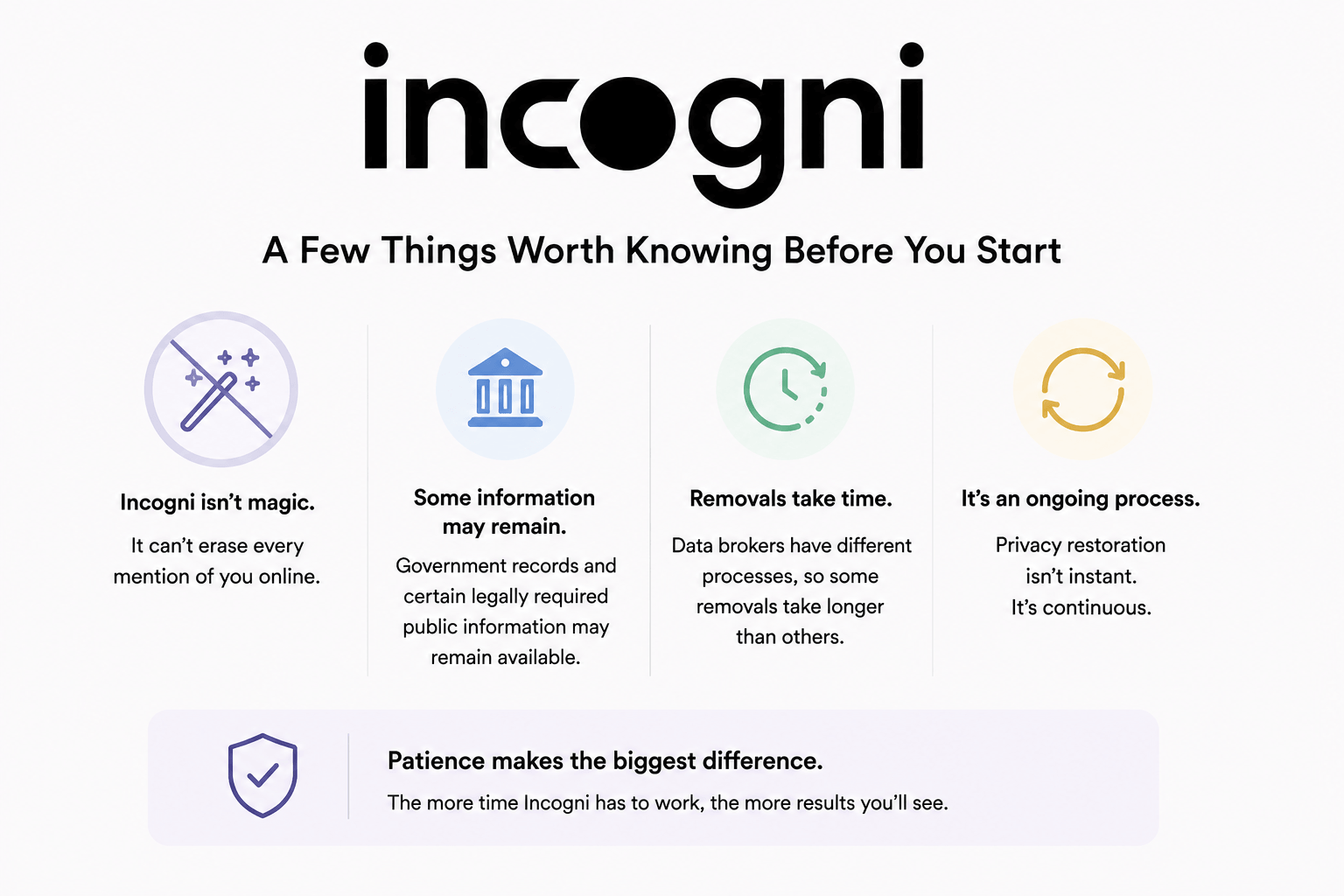
Balanced section.
Incogni isn’t magic.
It can’t erase every mention of you online.
Government records and certain legally required public information may remain available, and some removals take time because brokers have different response processes.
It also works best if you’re patient.
Privacy restoration isn’t instant.
It’s continuous.
Who We Think Will Get The Most Out Of Incogni
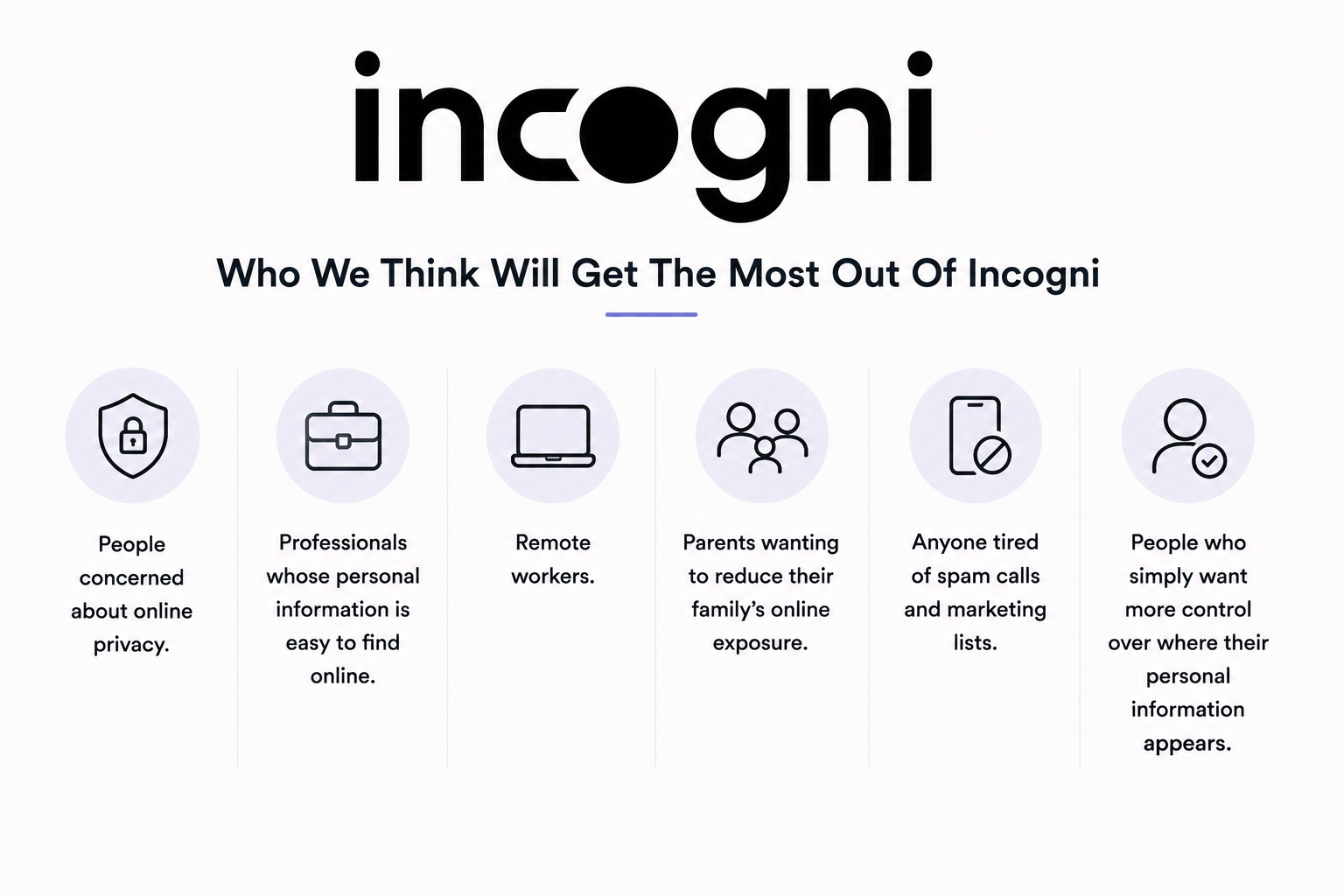
After exploring the service, a few people immediately came to mind.
People concerned about online privacy.
Professionals whose personal information is easy to find online.
Remote workers.
Parents wanting to reduce their family’s online exposure.
Anyone tired of spam calls and marketing lists.
People who simply want more control over where their personal information appears.
Final Thoughts: We Didn’t Leave Thinking About Privacy
This should hit emotionally.
By the time we finished exploring Incogni…
We realized something.
We weren’t thinking about data brokers anymore.
Or removal requests.
Or privacy laws.
Instead…
We were thinking about ownership.
Who should control our information.
How easily personal details spread online.
How many companies quietly collect pieces of our digital lives.
That’s what ultimately stood out most about Incogni.
It doesn’t simply remove your information from data brokers.
It quietly gives you something many people don’t realize they’ve lost.
A little more control over your own digital identity.
And sometimes…
That’s worth far more than simply disappearing from another database.