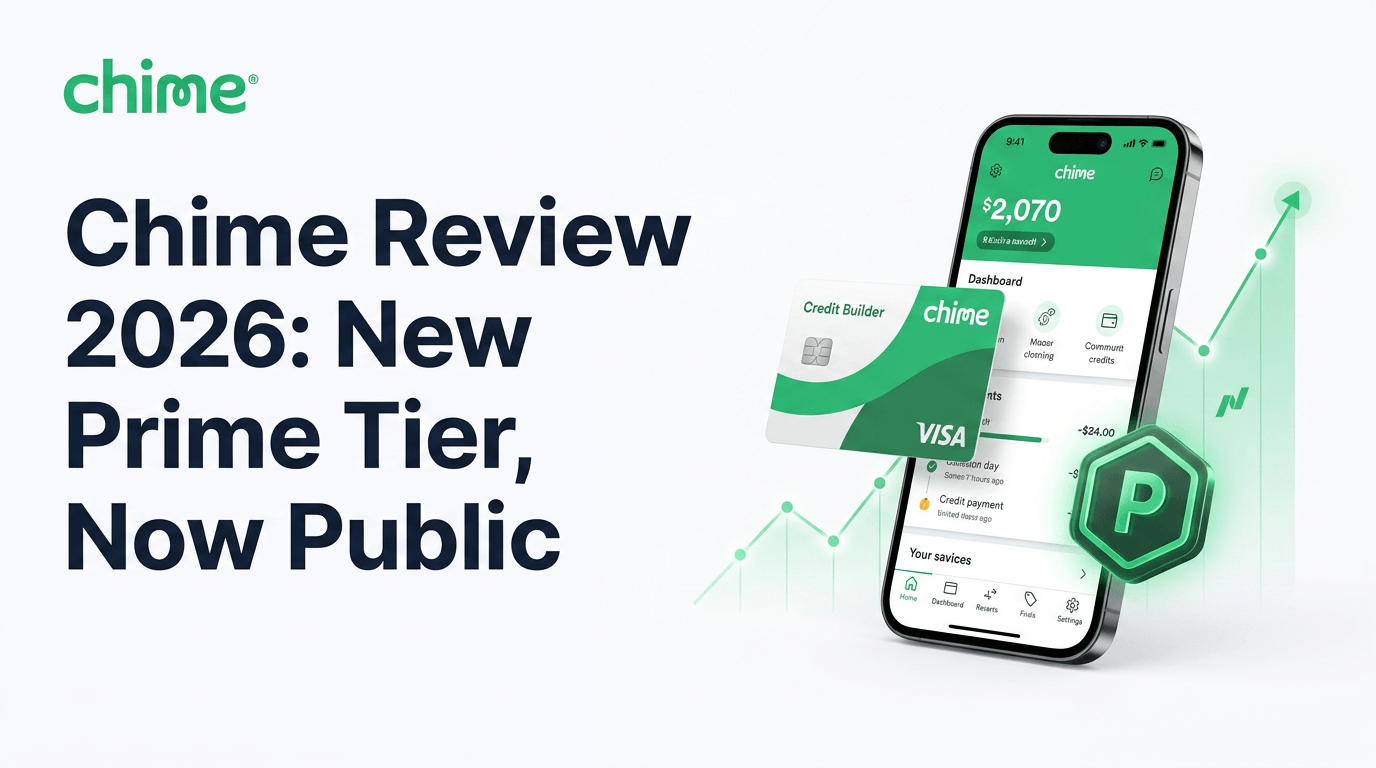
A lot has changed at Chime since most people last looked at it closely. The company went public on the Nasdaq in 2025, and 2026 brought a genuinely different lineup, a premium membership tier, an actual investing product, and real profits instead of just growth numbers. This review breaks down what’s new, and whether the no-fee pitch still holds up.
What’s New at Chime in 2026
Chime listed on the Nasdaq under CHYM in mid-2025, and its first full year public brought real numbers behind the marketing, revenue up 31% year over year to $2.2 billion, membership past 9.5 million, and its first GAAP-profitable quarter in early 2026.
The bigger news is Chime Prime, a premium membership announced in April 2026 layering 5% cash back and a 3.75% APY on top of the standard account, at no added cost for members who make Chime their primary bank. In July, Chime launched Chime Invest, commission-free stock and ETF investing built into the app, with a $1 minimum and a choice between self-directed or managed portfolios. The company has also partnered with Junior Achievement and hosted the Compound Combine event with Invest America on financial literacy.
Chime vs. SoFi Checking & Savings
| Parameter | Chime | SoFi Checking & Savings |
|---|---|---|
| Premium Tier | Chime Prime, 5% cash back and 3.75% APY, no added fee | No direct equivalent tier |
| Investing | Chime Invest, commission-free, $1 minimum | Built-in investing and broader wealth tools |
| Banking Features | Checking, savings, Credit Builder card | Combined checking and savings, wider financial ecosystem |
| Fees | No monthly fees, no overdraft fees | No monthly fees, no overdraft fees |
| Best User Type | Fee-averse gig workers and everyday users wanting rewards | Users wanting one app for banking, investing, and lending |
The addition of Chime Invest narrows the gap that used to separate the two apps, SoFi’s biggest edge was always built-in investing, and that’s no longer a Chime gap. SoFi still holds an advantage in ecosystem depth, lending products and a chartered bank structure among them, but for someone who just wants fee-free banking with real rewards, Chime Prime changes the math meaningfully.
Key Benefits of Chime
- No monthly maintenance fees on eligible accounts, still true post-IPO
- Chime Prime adds 5% cash back and 3.75% APY at no extra cost
- Chime Invest brings commission-free investing into the app, starting at $1
- Early direct deposit posts paychecks up to two days ahead of schedule
- Credit Builder helps eligible users build credit with no credit check required
About Chime: Company Overview
Chime was founded in 2012 and still isn’t technically a bank itself, it partners with The Bancorp Bank and Stride Bank for FDIC-insured accounts while running entirely through its app. Going public didn’t change that structure, deposits still route through the same partner banks, and the no-branch, mobile-only model remains why fees stay low.
What has changed is the balance sheet. A publicly traded, profitable company brings a different level of stability than the pre-IPO version, worth noting for anyone previously wary of parking a paycheck with an unproven fintech.
Accounts, Pricing, and the New Prime Tier
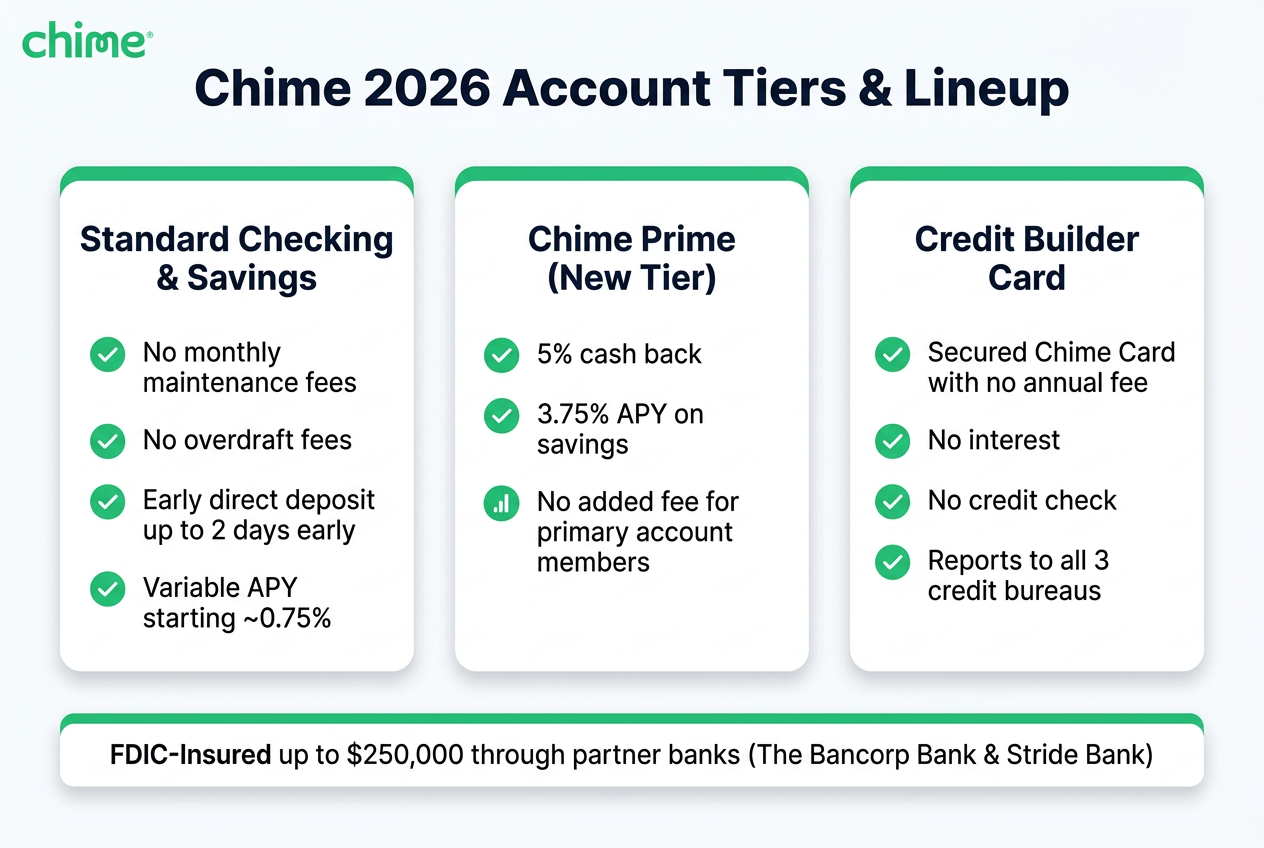
Standard Checking and Savings
The core lineup is still simple, one checking account and one savings account, no joint accounts or CDs. Savings pays a variable APY starting around 0.75%, with Chime+ members getting access to a higher rate.
Chime Prime
The new tier bundles 5% cash back with a 3.75% APY on savings, rewarding members who route their full paycheck through Chime rather than treating it as secondary. There’s no extra monthly cost beyond meeting that primary-account requirement, a genuinely aggressive offer compared to traditional bank rewards tiers.
Credit Builder Card
The secured Credit Builder card, now branded simply the Chime Card for new applicants, still carries no annual fee, no interest, and no credit check. It reports to all three credit bureaus, and consistent users typically see a real score improvement within months.
Chime Invest: The New Investing Option
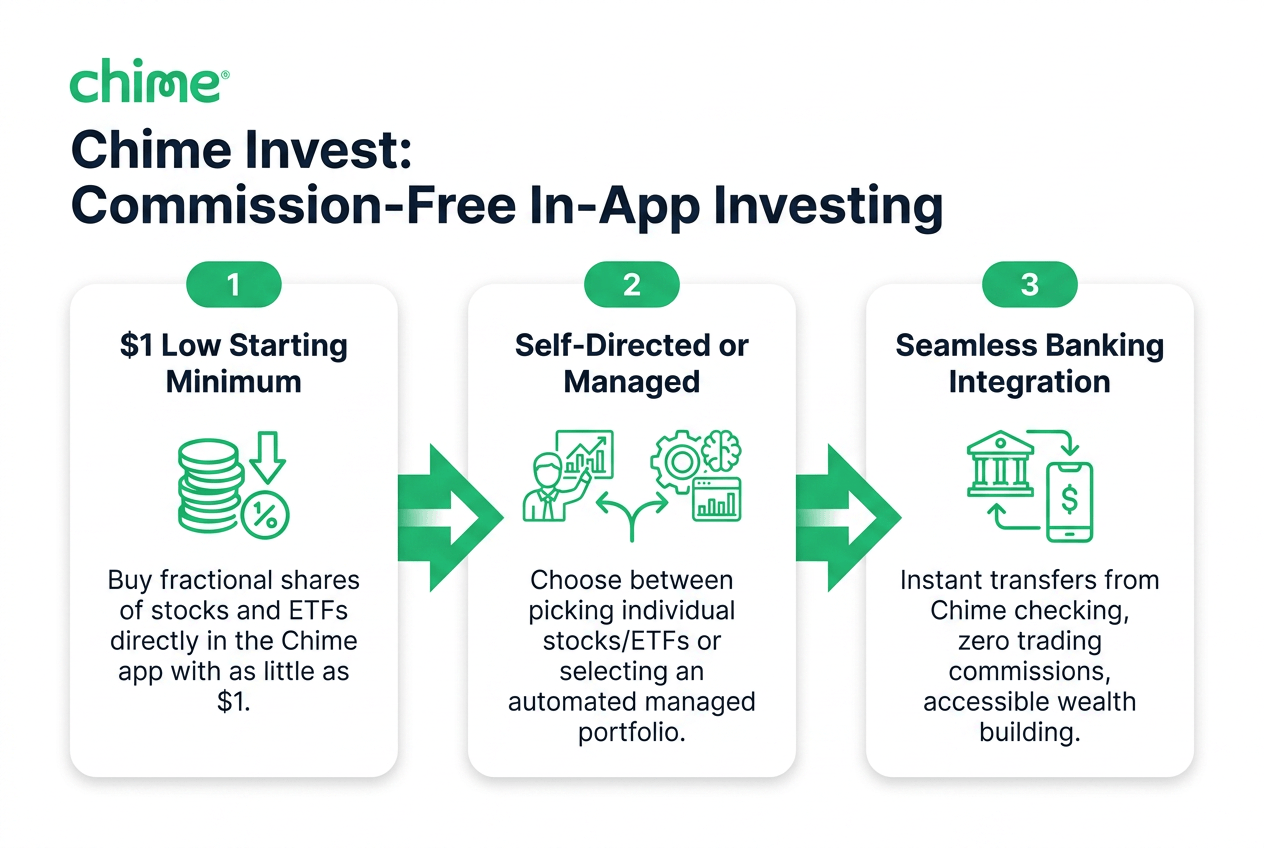
This is genuinely the biggest structural addition to the platform. Chime Invest lets members buy stocks and ETFs commission-free directly inside the same app used for everyday banking, with as little as $1 to start. Members can choose self-directed investing or a managed portfolio for a more hands-off approach.
For a user base historically earning under $100,000 a year, the low minimum matters, it removes the barrier of needing a few hundred dollars just to open a position. It’s not a full-featured platform for active traders, but folded into an app people already check daily, it closes a real gap that used to send Chime users elsewhere.
Mobile Experience, ATM Access, and Security
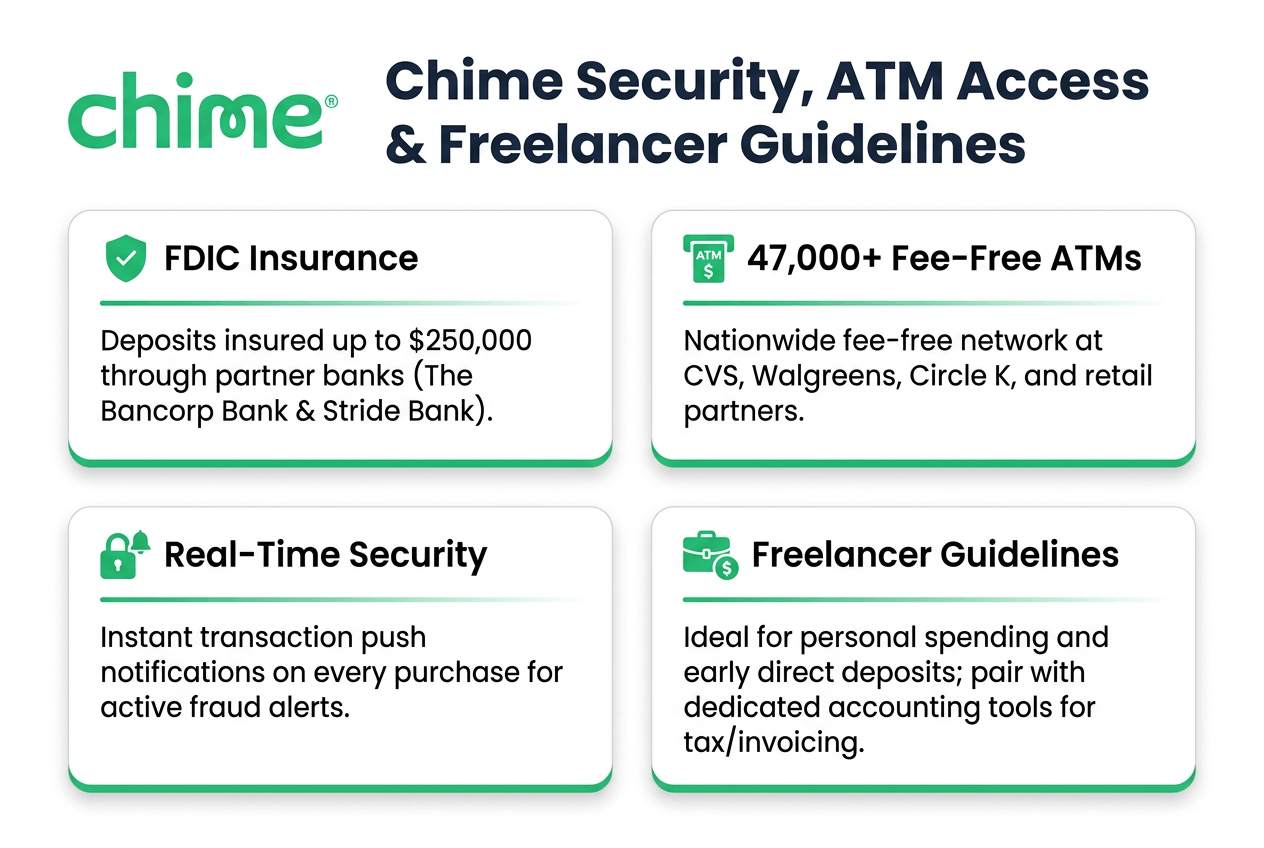
The app still handles everything, deposits, transfers, spending tracking, and now investing, and reviewers consistently praise how clean the interface stays even with more features layered on. Fee-free ATM access spans more than 47,000 locations nationwide, including CVS, Walgreens, and Circle K, though stepping outside that network brings fees quickly.
Deposits remain FDIC-insured up to $250,000 through Chime’s partner banks, unchanged by the IPO. Real-time transaction alerts flag every purchase as it happens, still one of the more genuinely useful fraud-prevention features baked into the free tier.
Is Chime Good for Freelancers?
Freelance payments still land in a Chime account without issue through direct deposit or standard transfer, though payments routed through platforms like PayPal or Venmo don’t always qualify for early-deposit perks. Chime still wasn’t built with business bookkeeping in mind, no invoicing tools, no expense categorization for tax season, so freelancers treating it as a full accounting solution will hit a wall eventually.
Once freelance income turns into a real, consistent business, a dedicated business account with actual bookkeeping tools makes more sense than stretching Chime past its intended use; that guidance hasn’t changed with the 2026 updates.
Chime Pros and Cons
| Pros | Cons |
|---|---|
| Chime Prime adds real rewards with no added monthly cost | Prime requires making Chime your primary bank account |
| Chime Invest brings investing into the same familiar app | Still not a chartered bank, runs through partner banks |
| No monthly fees, no minimum balance requirement | No business banking or bookkeeping tools |
| Now backed by a publicly traded, profitable company | Limited account types, no joint accounts or CDs |
| Large fee-free ATM network nationwide | Investing platform lacks tools for active traders |
Frequently Asked Questions
What is Chime Prime?
A premium membership launched in 2026 giving 5% cash back and a 3.75% APY on savings at no added cost, as long as Chime is your primary bank account.
Can I actually invest through Chime now?
Yes, Chime Invest launched mid-2026, offering commission-free stock and ETF investing starting at $1, with self-directed and managed portfolio options.
Is Chime a real, chartered bank?
No, it’s still a fintech partner with The Bancorp Bank and Stride Bank, both FDIC-insured, unchanged by going public.
Did going public change how safe my money is?
No, insurance still runs through the same partner banks up to $250,000. The IPO mainly brought financial stability, not a change to account protection.
Is Chime good for freelancers in 2026?
For personal spending, yes. For bookkeeping and invoicing, it still isn’t built for that, pair it with dedicated accounting tools instead.
Final Verdict
Chime’s 2026 lineup is a genuine step up from where the platform sat a year ago. Chime Prime adds real, no-cost rewards for members willing to make it their main account, and Chime Invest finally closes the investing gap that used to send users to competitors like SoFi for a more complete financial app.
The core pitch hasn’t changed though, no monthly fees, early direct deposit, and credit-building without a credit check. Freelancers should still treat it as a personal account rather than business infrastructure, and anyone chasing a fully chartered bank with lending products may still prefer SoFi’s broader ecosystem. For everyday fee-averse users, Chime just got a lot harder to pass up.
Learn More