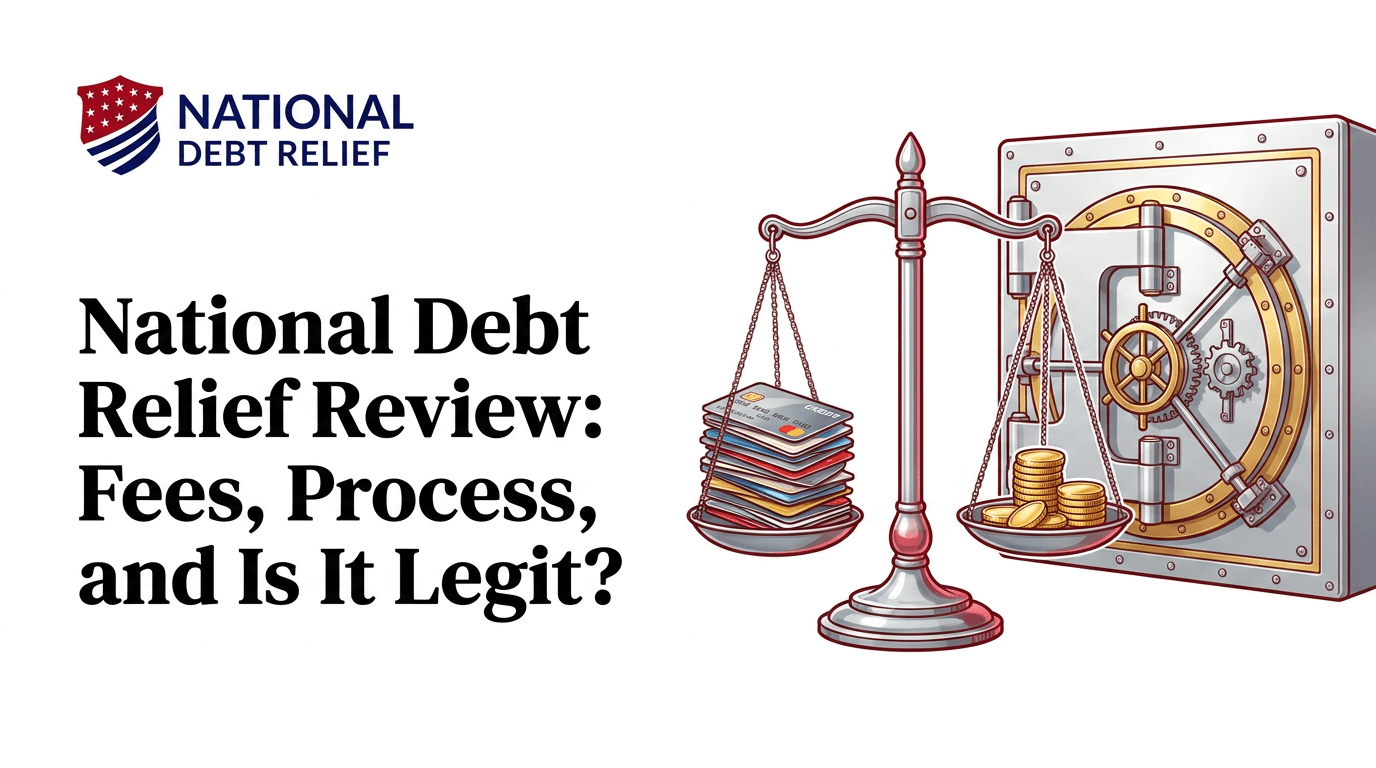
The National Debt Relief Company is considered one of the best choices for individuals struggling to manage their credit card debts despite timely minimum payments. The program operates on a clear premise: rather than paying creditors, clients deposit funds into a dedicated account, enabling negotiators to seek settlements for reduced amounts. However, this strategy involves significant financial trade-offs and substantial credit implications. This review evaluates the associated costs, procedural steps, and overall history to help you make an informed decision about enrollment.
Get a Free Debt Relief Consultation
Key Benefits of National Debt Relief
- No upfront fees; you’re only charged after a settlement is successfully reached
- A+ rating with the Better Business Bureau and a 4.7-star average on Trustpilot
- Available in more states than several major competitors
- Negotiators certified through the International Association of Professional Debt Arbitrators
- Free, no-obligation consultation with no impact on your credit to get a quote
About National Debt Relief
Company Overview
National Debt Relief is an organization that was founded in 2009 and has developed to become one of the most renowned brands in the debt settlement industry. The organization has settled many billions of dollars worth of debts. The company is a debt settlement company and not a law firm, credit counseling firm, or a lending institution. The company doesn’t offer a mobile app or online dashboard; account management runs through phone-based debt coaches instead.
Who It’s Built For
The program is aimed at people carrying at least $7,500 in unsecured debt, including credit cards, personal loans, and medical bills, who can’t realistically pay it down through minimum payments alone and want to avoid bankruptcy. It’s not a fit for anyone who can still manage payments through a balance transfer or a standard debt consolidation loan.
How the Program Works
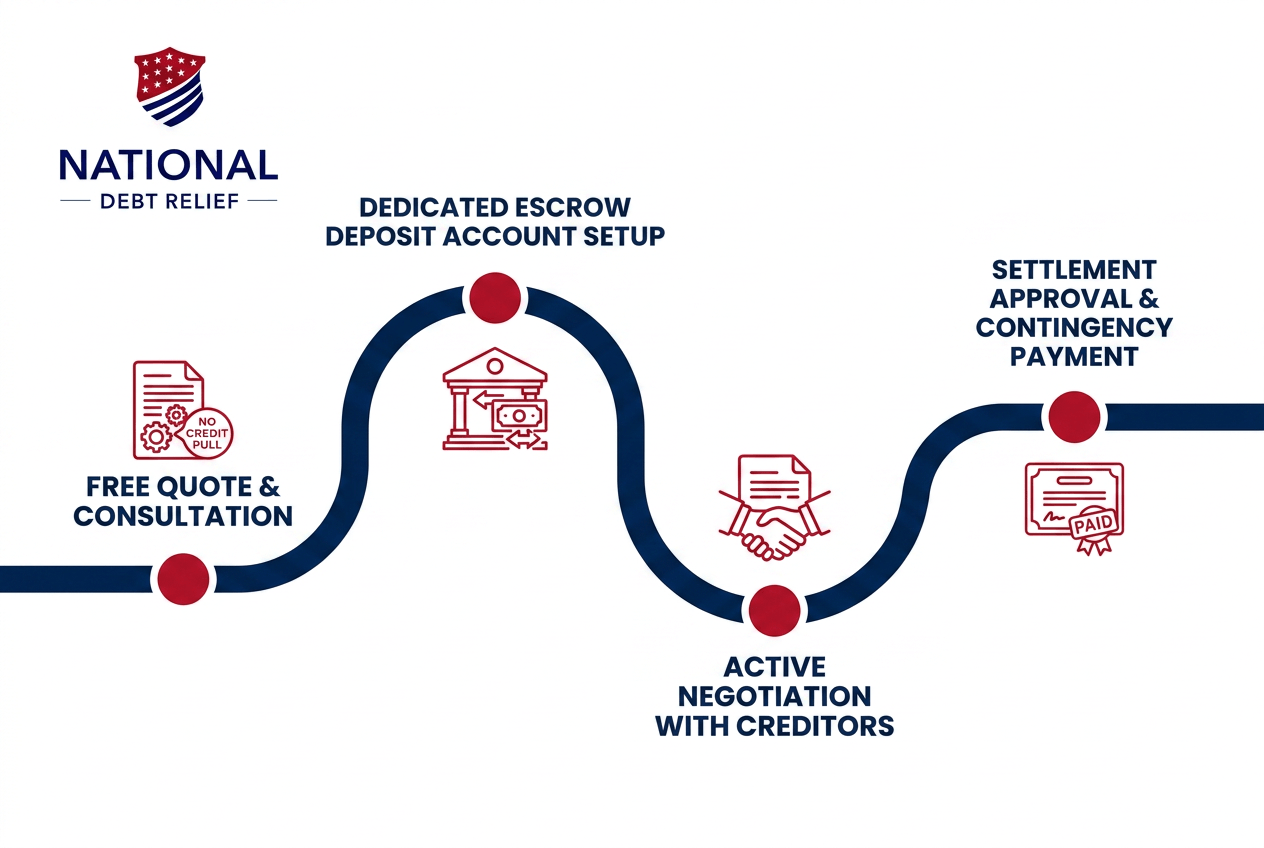
- Free consultation: A debt coach reviews your unsecured debt and proposes an estimated savings and monthly deposit amount, with no credit pull required.
- Dedicated account setup: You stop paying creditors directly and instead deposit funds into a third-party escrow account on a schedule you agree to.
- Negotiation: Once enough funds accumulate, National Debt Relief contacts creditors to negotiate a reduced lump-sum payoff, typically starting 4 to 6 months in.
- Settlement and payment: You approve each settlement before funds are released; the program fee is deducted only once a settlement closes.
See If You Qualify for Debt Relief
Fees & Program Costs
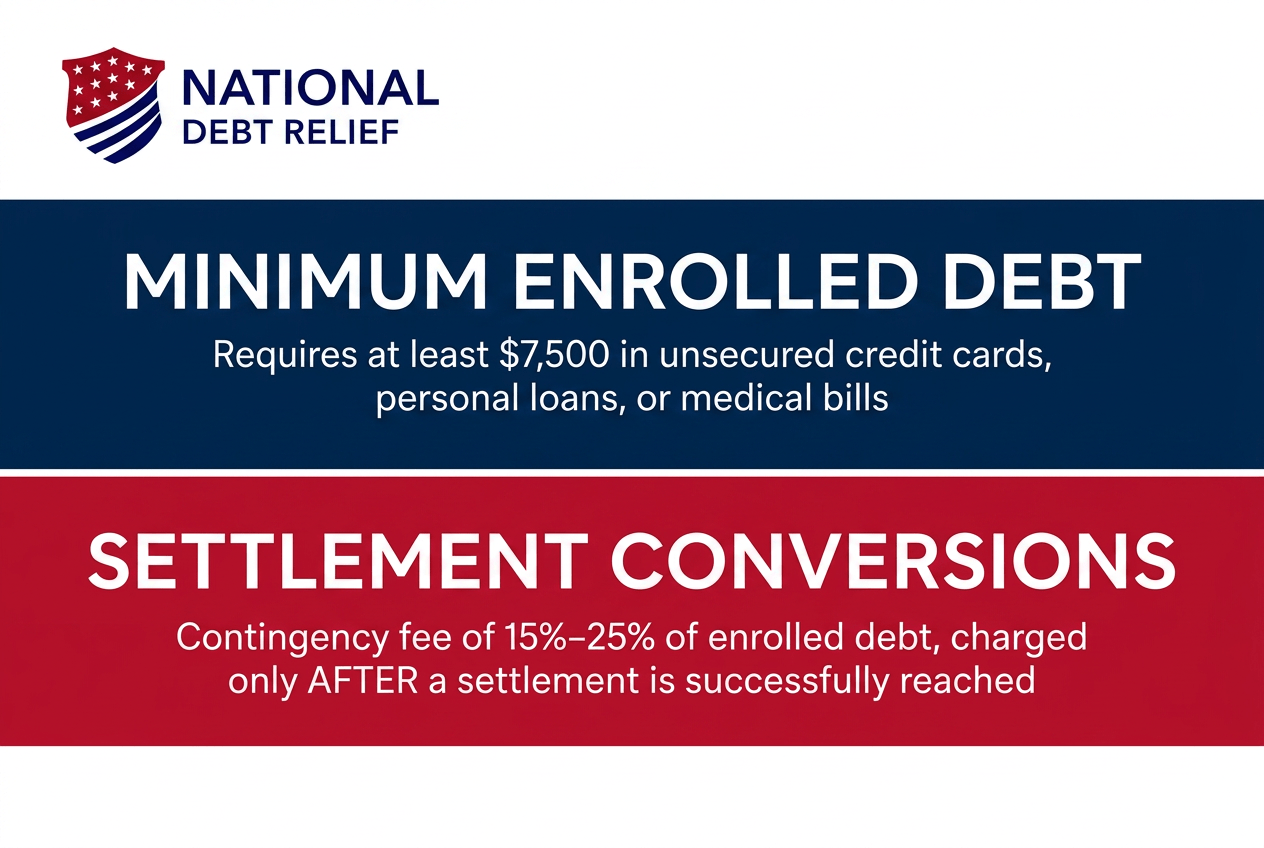
National Debt Relief uses a contingency-style fee model: nothing is owed until a debt is actually settled.
| Item | Typical Cost |
|---|---|
| Minimum enrolled debt | $7,500 in unsecured debt |
| Settlement fee | 15%–25% of enrolled debt, charged only after a settlement is reached |
| Upfront fees | None disclosed by National Debt Relief itself |
| Program length | 24 to 48 months, depending on total debt and savings pace |
| First settlement offer | Typically 4 to 6 months after enrollment |
On a $20,000 balance, fees could run $3,000–$5,000. National Debt Relief states clients who settle all enrolled debts save roughly 45% before fees, 20–25% after, though results vary.
Credit Score & Tax Impact
Read this closely: stopping direct creditor payments means missed-payment marks that can cut your score 100+ points and stay on your report seven years. Creditors can still sue during enrollment. The debt that is forgiven may be considered taxable income (Form 1099-C) unless there is a claim of insolvency.
Customer Support & Reputation
Support runs seven days a week by phone. An A+ BBB rating and 4.7-star Trustpilot average back that up, though complaints cite credit damage, longer timelines, and under-disclosed setup fees.
Pros and Cons
| Pros | Cons |
|---|---|
| No upfront fees; you pay only after a settlement is reached | Enrolling can drop your credit score by 100 points or more |
| A+ BBB rating and a 4.7-star average on Trustpilot | Fees of 15%–25% of enrolled debt reduce your net savings |
| Available in more states than several competitors | Creditors can still sue you while you’re enrolled |
| Accredited by the American Association for Debt Resolution and IAPDA-certified negotiators | Forgiven debt may be reported to the IRS as taxable income |
| No minimum credit score required to apply | Only about two-thirds of clients complete the program |
National Debt Relief vs Freedom Debt Relief
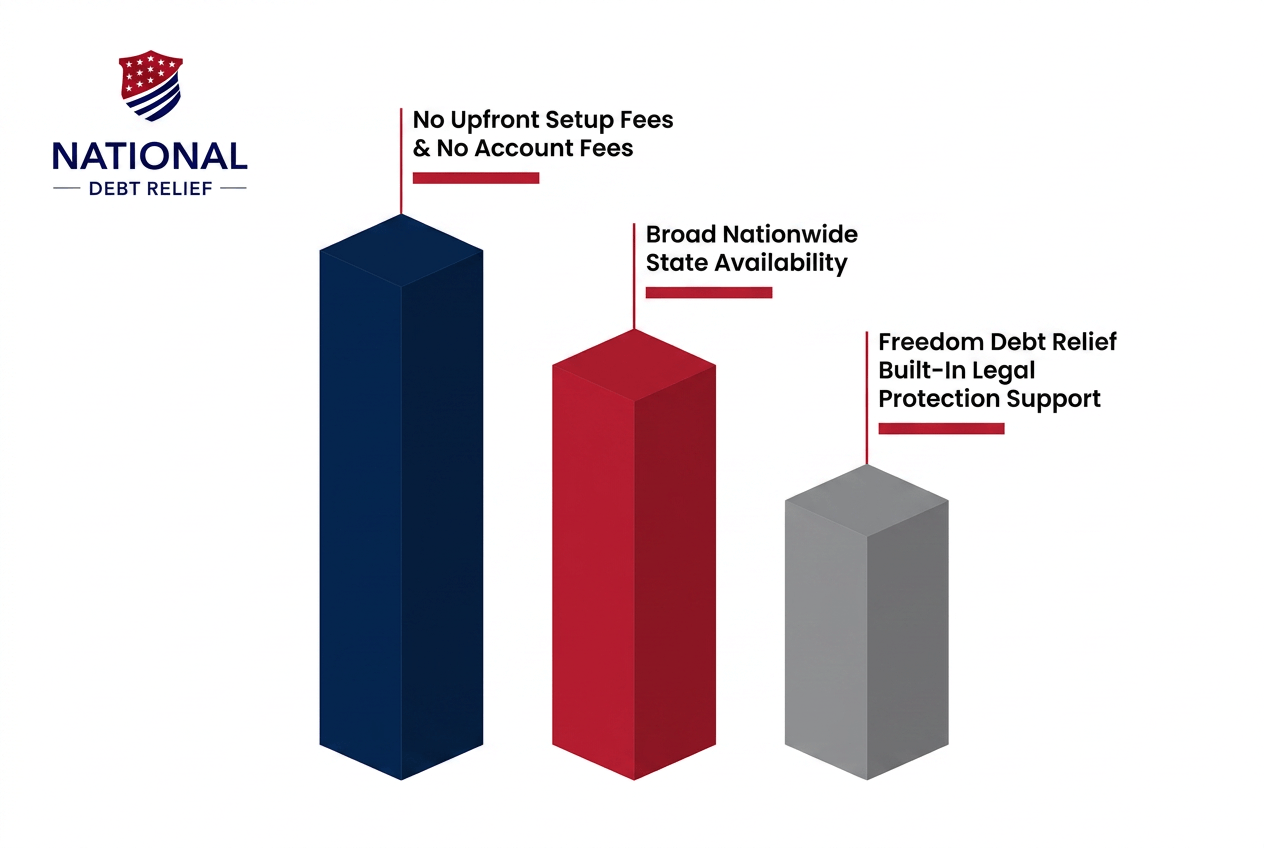
Freedom Debt Relief is the other major name in this category, and the two companies are more alike than different on paper.
| Factor | National Debt Relief | Freedom Debt Relief |
|---|---|---|
| Minimum enrolled debt | $7,500 | $7,500 |
| Settlement fee | 15%–25% of enrolled debt | 15%–25% of enrolled debt |
| Account setup / monthly fee | None disclosed by the company | $9.95 setup plus $9.95 monthly |
| State availability | Broader nationwide coverage | Not available in 8 states plus D.C. |
| Legal support if sued | Not offered | Available for enrolled clients |
| Best for | Borrowers who want to avoid extra account fees | Borrowers who want legal backup if creditors sue |
Neither company wins outright. National Debt Relief tends to fit borrowers who want broader state availability and no added account fees. Freedom Debt Relief tends to fit borrowers who specifically want legal support built in if a creditor files a lawsuit during the program.
Alternatives Worth Considering First:
Debt settlement isn’t the only option. Nonprofit credit counseling can set up a debt management plan without requiring default. A consolidation loan may work if your credit still qualifies for a lower rate. For genuinely unmanageable debt, a bankruptcy consultation is worth having alongside a settlement quote, not instead of one.
Is National Debt Relief Worth It? Worth considering if you have $7,500+ in unsecured debt, can’t pay it down through minimum payments, and accept credit damage for a lower payoff. Less compelling if you still qualify for a consolidation loan or balance transfer, or if near-term credit matters more than reducing your balance. The free consultation is a reasonable first step either way.
FAQs
Is National Debt Relief legit?
Yes. It’s a BBB A+ rated company that’s operated since 2009 and is accredited by the American Association for Debt Resolution, though debt settlement itself carries real credit and financial trade-offs.
How much does National Debt Relief cost?
Fees run 15% to 25% of your enrolled debt, charged only after a settlement is reached, not upfront.
Will National Debt Relief hurt my credit score?
Yes, typically. Since the program requires you to stop paying creditors directly, expect a drop of 100 points or more during enrollment.
How long does the program take?
Most clients complete the program in 24 to 48 months, depending on total debt and how quickly funds accumulate for settlements.
Is National Debt Relief better than Freedom Debt Relief?
Depends on your priorities: National Debt Relief offers broader state coverage and no added account fees, while Freedom Debt Relief includes legal support if you’re sued.
Final Verdict
National Debt Relief is a legitimate, well-reviewed option in a category where legitimacy genuinely varies. The no-upfront-fee structure, broad state availability, and strong BBB and Trustpilot record set it apart from less reputable settlement companies.
That said, debt settlement is a serious financial decision, not a quick fix. The credit score damage, lawsuit risk, and tax implications are real, and they apply here just as they would with any settlement provider. For borrowers who’ve genuinely exhausted consolidation and counseling options, National Debt Relief is a reasonable company to get a free quote from before deciding on a path forward.
Start Your Free Debt Analysis Today