Introduction
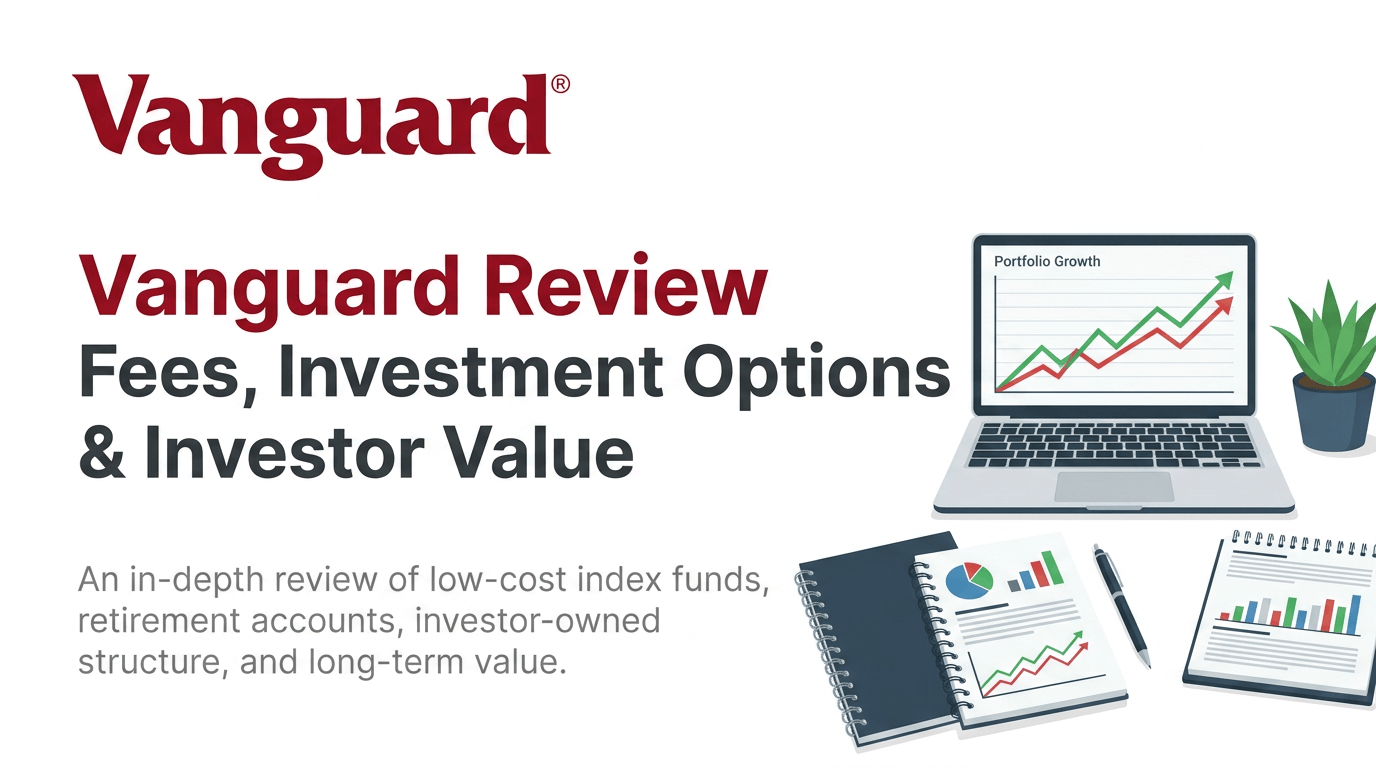
Pick the wrong investment platform and it doesn’t blow up your account overnight. It just quietly costs you, year after year, in fees you barely notice and returns that never quite compound the way they should’ve. That’s why the platform actually matters, maybe more than people give it credit for. Vanguard built its whole reputation on one idea: keep costs low and let time do the rest.
This review gets into what that reputation actually looks like in practice. Fees, account types, how it stacks up against Fidelity, and who Vanguard genuinely fits.
Why Investors Continue Choosing Vanguard
A Long-Term Investing Mindset
Vanguard was never built for people trying to time the market or chase whatever’s hot this quarter. It’s built around staying invested, decade after decade, and letting compounding do the heavy lifting instead of constant trading.
Investor-Owned Company Structure
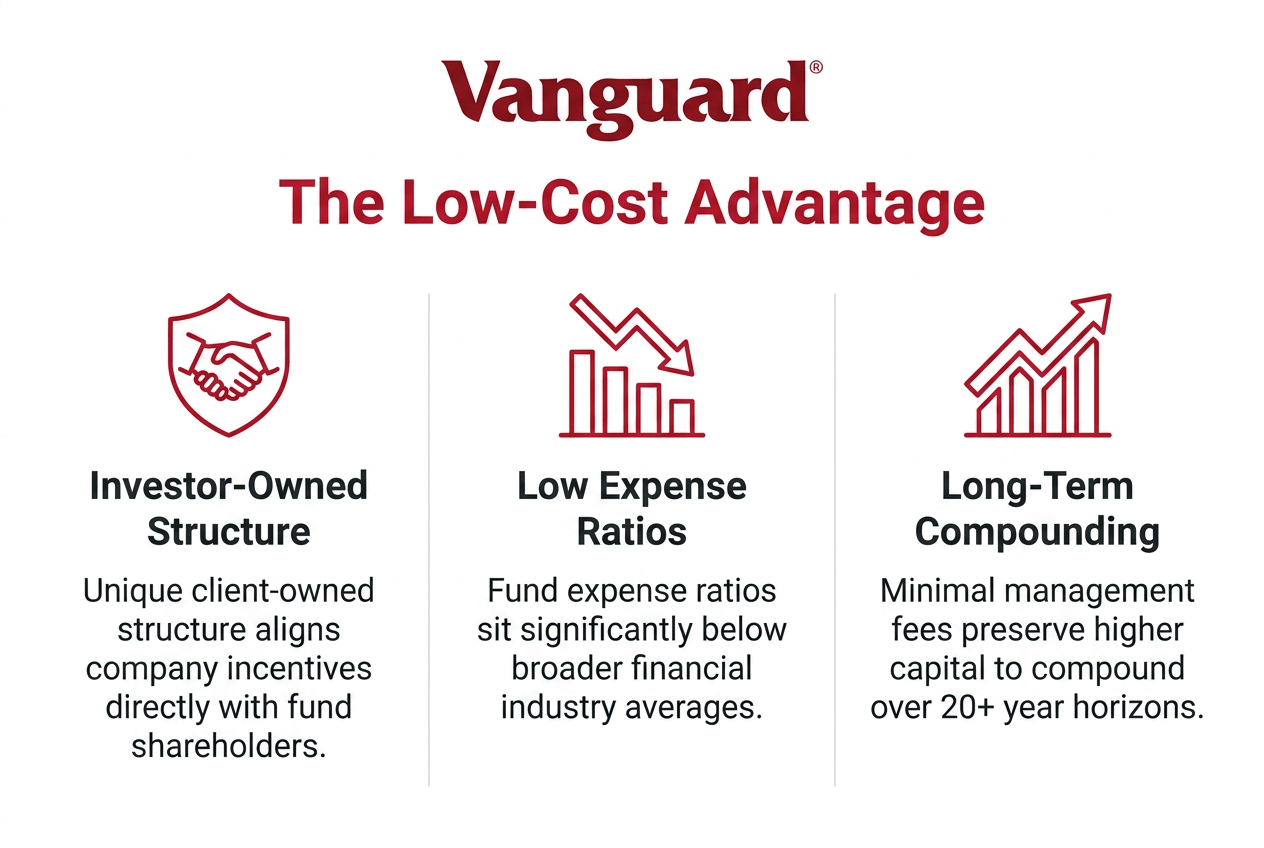
Here’s the part that’s genuinely unusual. Vanguard is owned by its own U.S. funds, and those funds are owned by the investors in them. No outside shareholders pulling profit out the other end. That structure lines up the company’s incentives with the people actually putting money in, at least in theory, and it mostly holds up in practice too.
Focus on Keeping Investment Costs Low
Founder John C. Bogle built the company around a fairly stubborn belief: costs matter more than most investors realize. Small fees look harmless in year one. Over 20 or 30 years, they eat into returns in a way that’s honestly hard to overstate.
Understanding Vanguard‘s Investment Philosophy
Passive Investing Explained
Vanguard didn’t invent index investing, not exactly, but it’s the firm most responsible for making it mainstream. Instead of trying to beat the market, passive funds just track it. Lower costs, less guesswork, and historically, pretty solid long-term results.
Why Index Funds Matter
Actively managed funds try to outperform an index and mostly fail to, once fees get factored in. Index funds skip that whole bet. You get the market’s return, minus a very small fee, and that’s really the entire pitch.
Staying Invested Through Market Cycles
Markets dip. They always have. Vanguard’s whole philosophy leans on staying invested through the rough stretches instead of jumping out and trying to time a re-entry, which almost nobody actually pulls off well.
Building a Diversified Portfolio with Vanguard
ETFs
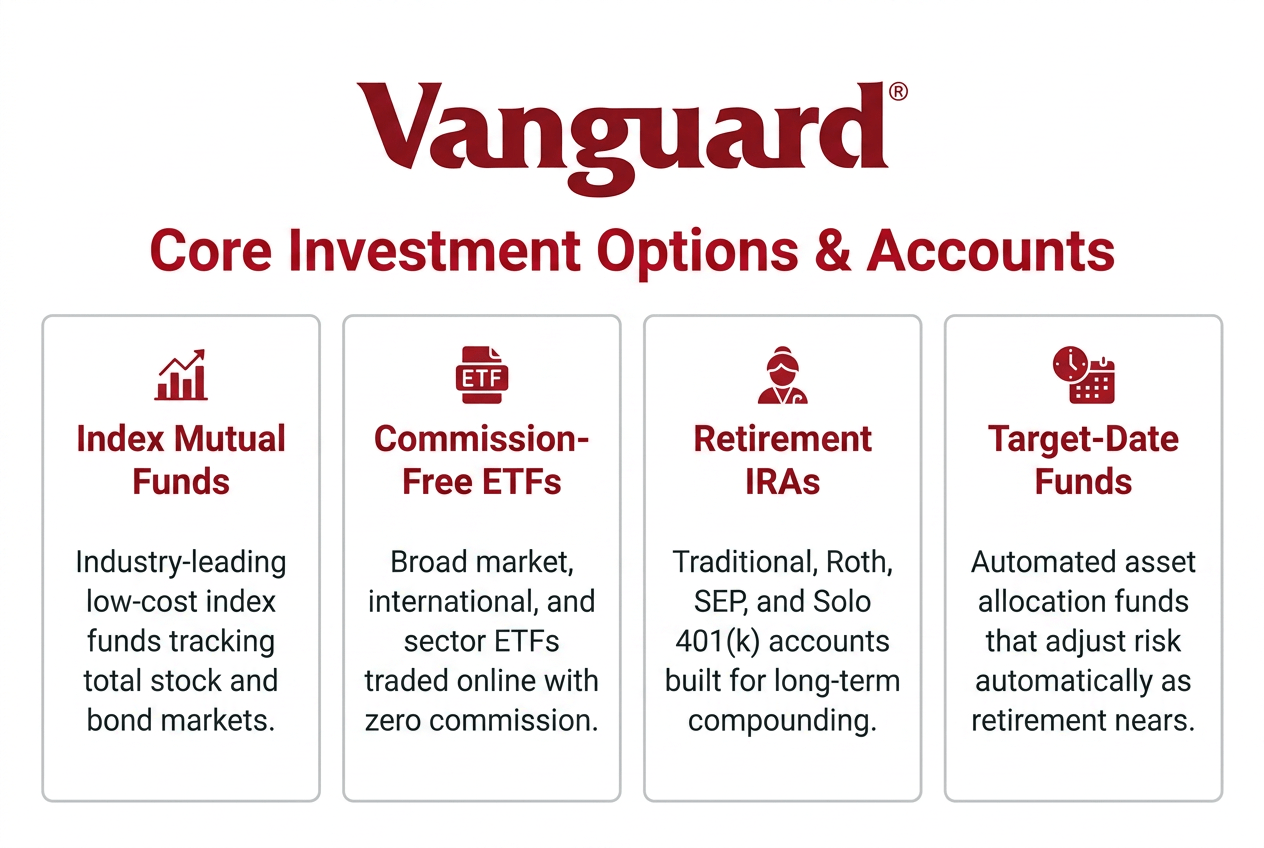
Vanguard’s ETF lineup covers pretty much everything. Broad U.S. market funds, international exposure, sector-specific bets if that’s what someone wants. Most trade commission-free online, which matters more than it sounds once you’re rebalancing regularly.
Mutual Funds
The mutual fund side is where Vanguard built its name, honestly. Index funds tracking the S&P 500, total market funds, bond funds, target-date retirement funds that shift the mix automatically as someone gets older.
Retirement Accounts
Traditional IRA, Roth IRA, SEP IRA, and Solo 401(k) options are all available, though what’s available can vary depending on the specific account and situation. For long-term retirement savers, this is arguably where Vanguard’s low-cost approach compounds the most benefit.
Brokerage Accounts
Individual, joint, trust, custodial, Vanguard covers the standard account types most investors actually need. The platform’s not flashy. But it does the job without a lot of friction.
Understanding Vanguard’s Cost Advantage
Expense Ratios
This is really where Vanguard separates itself. As of early 2026, Vanguard’s average expense ratio across its fund lineup sits around 0.06 percent. The broader industry average runs closer to 0.44 percent, sometimes higher depending on the category. That gap sounds small written as a percentage. Over decades, it isn’t.
Trading Costs
Online trades of Vanguard ETFs are commission-free. Trading by phone can trigger a commission, and non-Vanguard ETFs traded online are typically commission-free too, though the specifics depend on the account and the security involved.
Advisory Service Fees
Vanguard offers advisory services for investors who want more hands-on guidance, and fees there vary based on the level of service and the assets involved. Not something to assume is free just because the fund fees are so low.
Why Lower Costs Matter Over Time
A fraction of a percentage point doesn’t feel like much in a single year. Stretched across a 30-year retirement horizon, it can mean a meaningfully different account balance at the end. That’s the entire argument Vanguard’s built its business around, and the numbers mostly back it up.
Vanguard Pros and Cons for Long-Term Investors
Vanguard isn’t the right fit for every kind of investor, and it’s worth being upfront about where it falls short too.
| Pros | Cons |
|---|---|
| Among the lowest expense ratios in the industry, well below the average | Platform and tools feel less polished compared to some competitors |
| Investor-owned structure aligns incentives with account holders | Customer service has a reputation for slower response times at times |
| Broad lineup of ETFs, mutual funds, and retirement account options | Less suited to active traders wanting advanced charting or fast execution |
| Strong educational resources for long-term, buy-and-hold investors | Account minimums and fees vary and can be confusing to sort through upfront |
Vanguard vs Fidelity: Which Investment Style Fits You?
| Factor | Vanguard | Fidelity |
|---|---|---|
| Core philosophy | Passive, long-term, low-cost investing | Broad, mixed approach with strong active options |
| Ownership | Investor-owned | Privately held company |
| Platform feel | Functional, less feature-heavy | More modern interface, more built-in tools |
| Best fit | Buy-and-hold, retirement-focused investors | Investors wanting more platform features and flexibility |
Investment Philosophy
Vanguard leans hard into passive, index-based investing. That’s the whole identity, really. Fidelity has index funds too, plenty of them, but it doesn’t stop there. It keeps pushing into active management, research tools, the stuff traders actually poke around in. Different crowd, basically.
Costs
Fees on both sides have come down a lot over the last ten years. The gap that used to separate them? Mostly closed. Vanguard still comes out slightly ahead on average expense ratios across its broader lineup. Individual funds swing around though, so it’s not a blanket rule.
Platform Experience
Fidelity’s platform feels newer. More built out, charting tools, research baked in everywhere you look. Vanguard’s the opposite really, plain, no-frills, and people are split on that. Some like it that way. Others open it up and think it looks stuck in 2015.
Best Choice by Investor Type
If someone just wants to set it and mostly forget it, retirement money, decades-long horizon, no interest in fiddling with the platform, Vanguard fits. Fidelity’s the better call for the investor who wants more under the hood. Research tools, some active trading on the side, that kind of thing.
When Vanguard May Not Be Your Best Option
Investors Who Benefit Most
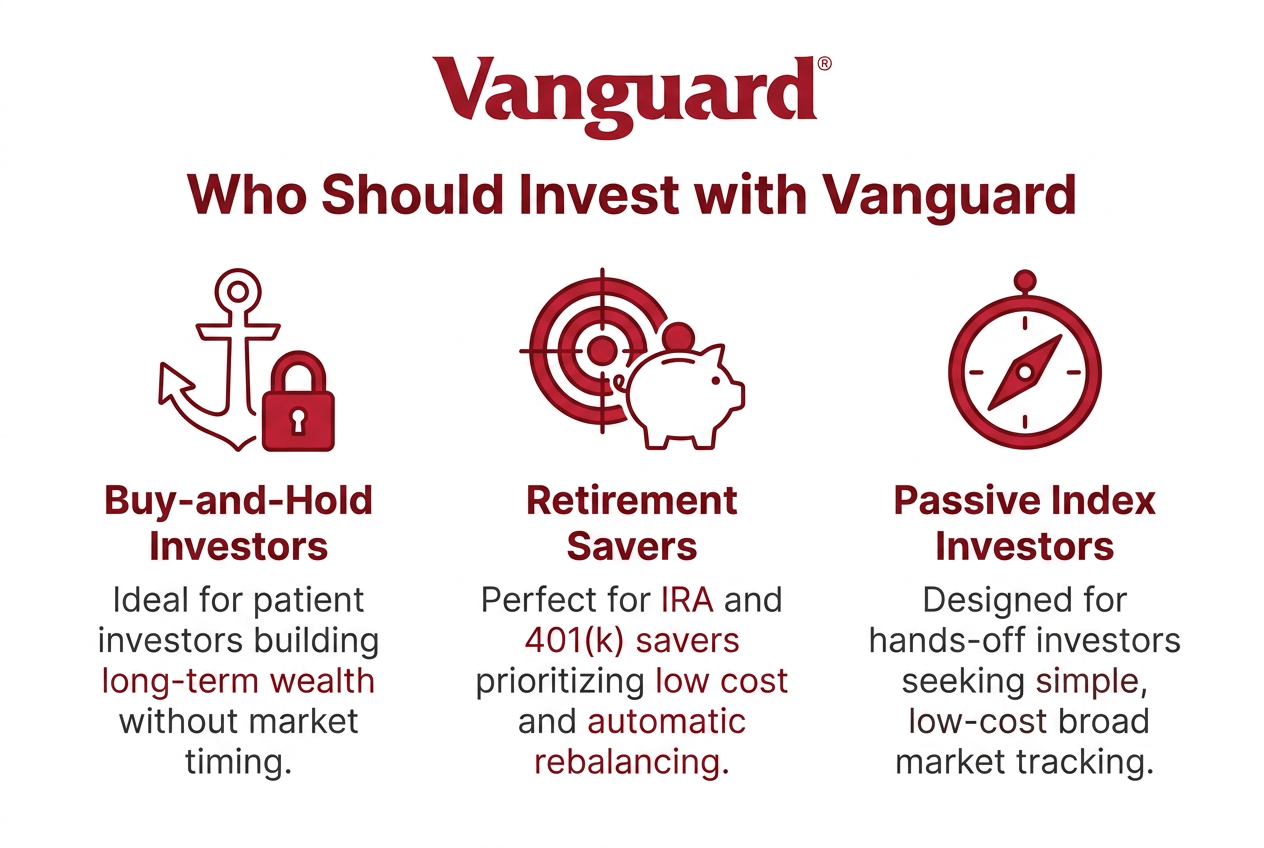
Retirement savers get the most out of Vanguard, plain and simple. Anyone who can put money in and just leave it alone for years without checking the balance every week.
When Active Traders May Prefer Another Platform
Day traders will probably get frustrated fast. No advanced charting to speak of, execution’s fine but nothing snappy, and the whole interface just wasn’t built with active trading in mind.
Choosing Based on Financial Goals
A 30-year retirement horizon and a weekly trading habit just aren’t the same problem. They need different tools. Vanguard was built for the first one, not really the second, and it shows.
About Vanguard
Company History
John C. Bogle started Vanguard back in 1975. He’s the one credited with pioneering the index fund, and the whole reputation grew out of one thing, keeping costs down for regular investors, not just big institutions with the leverage to negotiate better deals.
Global Presence
Mostly a U.S. operation. There’s some international presence too, serving investors and institutions outside the States, but the core business lives here.
Commitment to Investors
The investor-owned thing keeps coming up because it’s genuinely central to how Vanguard positions itself. Long-term account holders come first. Not outside shareholders looking to squeeze out a quarterly profit.
Frequently Asked Questions
Is Vanguard good for beginners?
Pretty much, yeah. Index funds and target-date funds do most of the thinking for you. The website navigation itself, that’s a different story, it’s not exactly built with newcomers in mind.
Is Vanguard better than Fidelity?
Better isn’t really the word. Cheaper on average, more aligned with a hands-off philosophy. Fidelity just does more, more tools, more research, more to click around in.
Why is Vanguard popular?
Low fees mostly. That, plus the investor-owned setup, plus decades of people trusting the index fund approach enough to just stay put.
What are Vanguard’s fees?
Around 0.06 percent on average as of early 2026. Industry average sits way higher than that. Specific numbers still shift depending on the fund and the account, so check before assuming.
Is Vanguard safe?
It’s a long-established, regulated brokerage, and SIPC protections apply depending on what’s in the account. Worth double-checking the specifics for your own situation rather than assuming blanket coverage.
Should You Invest Through Vanguard?
If someone’s patient, saving for retirement, comfortable just holding on through the dips, Vanguard tends to make sense. The costs stay low year after year, and that compounds into real money by the time retirement actually shows up. The investor-owned structure isn’t just a talking point either. It genuinely lines up with how the company behaves.
Active traders should probably look elsewhere. Fidelity, or something with heavier research tools, is going to fit that style better. But for a long-horizon investor who just wants to build wealth without getting nickel-and-dimed along the way, Vanguard still holds up.
Open a Vanguard Account