Introduction
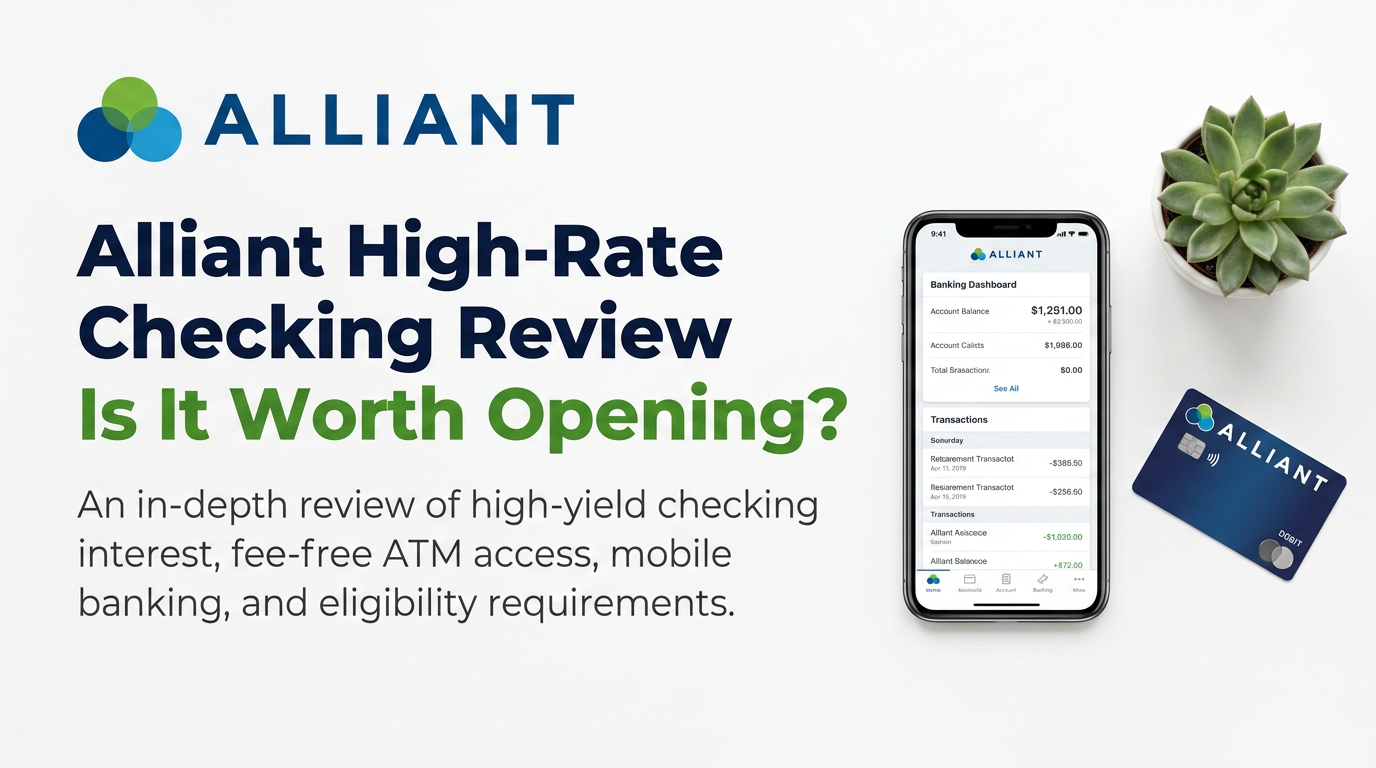
Most checking accounts pay next to nothing. Some pay literally nothing, and people just accept that because checking accounts have never really been about earning money, they’re about moving it around. Alliant’s High-Rate Checking pushes back on that assumption a bit. It’s a checking account that actually pays interest, no monthly fee attached, and no minimum balance to worry about either.
This review walks through what that interest actually requires to earn, what everyday banking feels like on the account, and where it lands next to something like SoFi Checking.
Why High-Yield Checking Is Different from Traditional Checking
Where Traditional Checking Falls Short
A lot of checking accounts at big banks pay 0.01% APY, if that. Money just sits there, doing nothing, while the bank uses it elsewhere. Cash flow convenience, sure, but zero growth.
Earning Interest on Everyday Cash
High-yield checking flips that. Same everyday spending account, but the balance actually earns something instead of sitting flat. Not huge money, but it’s not nothing either.
Who Benefits Most from High-Yield Checking
Freelancers keep a bigger cushion in checking. Remote workers who like one account instead of juggling three. Anyone who wants a little yield without locking cash into a separate savings account they’ll forget about.
Earning More with Your Everyday Cash
Interest Rate & Qualification Requirements
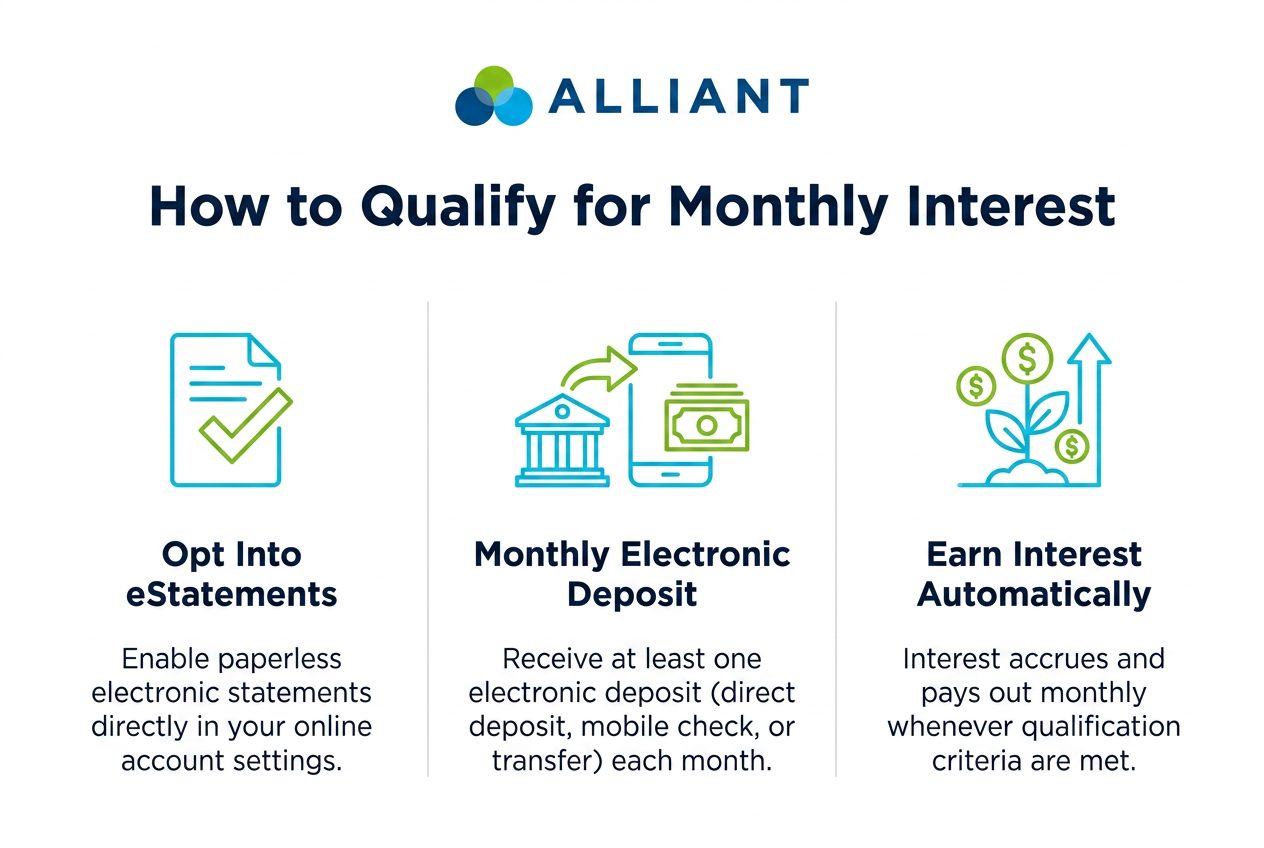
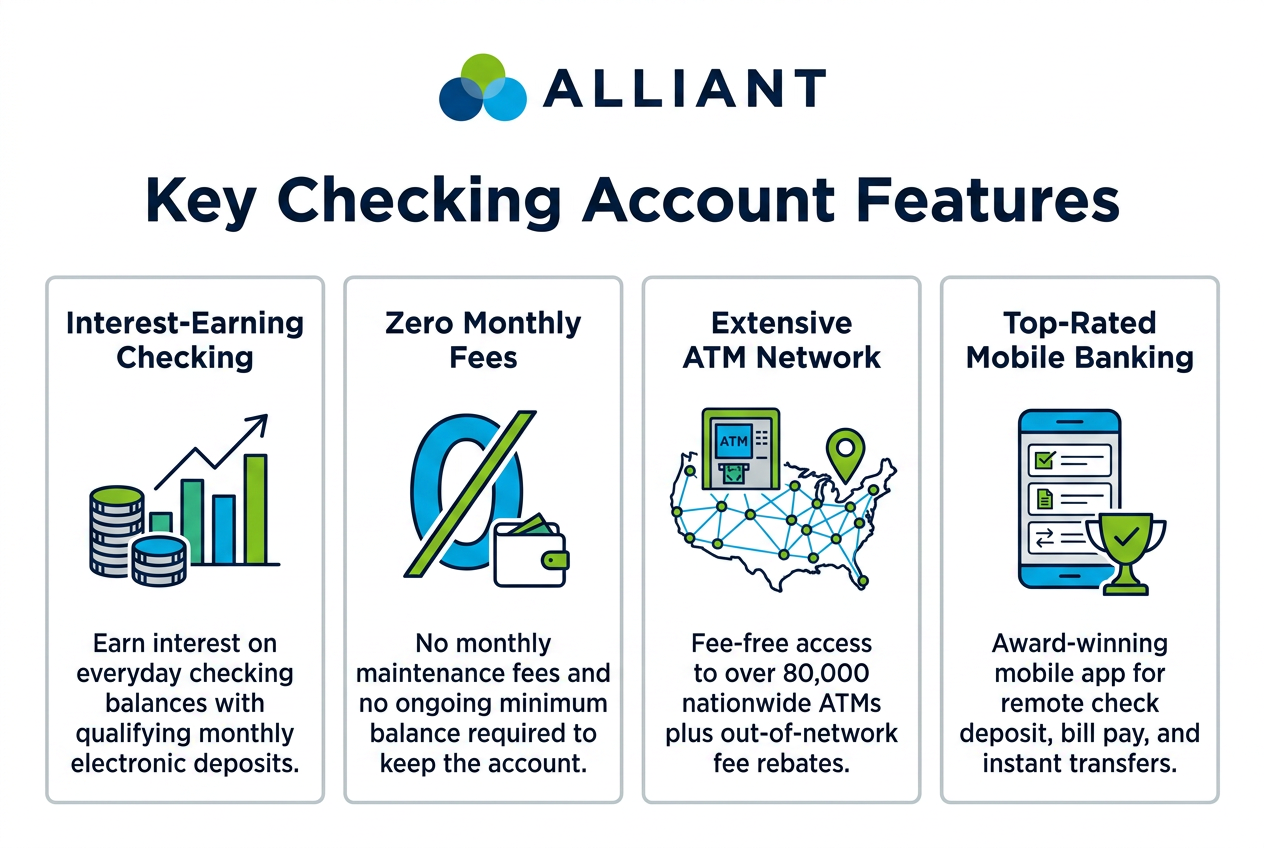
Alliant‘s High-Rate Checking currently pays 0.25% APY. Not massive, worth being upfront about that. To actually earn it though, the account needs eStatements turned on, plus at least one electronic deposit landing each month, direct deposit, mobile check deposit, a transfer in, any of those counts.
Maintaining Eligibility
Miss that monthly deposit and the account just doesn’t earn interest that month. No penalty beyond that, no fee, the account keeps working fine. It just sits at zero for the month instead of 0.25%.
Is the Extra Yield Worth the Effort?
Honestly? For most people already getting paid by direct deposit, yes, easily. The requirement basically takes care of itself. For someone paying themselves irregularly, it takes a bit more attention to keep qualifying every month.
Managing Everyday Banking with Alliant
Online & Mobile Banking Experience
Alliant runs as a fully digital credit union, no physical branches. The mobile app handles deposits, transfers, bill pay, the usual. It’s been recognized for its mobile banking a few years running, which says something about how it holds up day to day.
ATM Access and Cash Withdrawals
Around 80,000 fee-free ATMs through the network, plus a rebate on out-of-network ATM fees. For a branchless institution, that’s a genuinely large footprint.
Everyday Spending and Debit Card Usage
Standard debit card, works the way any debit card works, tap to pay, ATM withdrawals, the works. Nothing flashy here, it just functions.
Understanding the Real Cost of the Account
Monthly Fees
None. No monthly maintenance fee on this account, full stop.
Minimum Balance Requirements
None either, at least not to avoid a fee. Opening the account does require an initial deposit, per current terms, but there’s no ongoing minimum balance tied to keeping the account fee-free.
Other Banking Costs to Consider
Overdraft situations can still cost money depending on how they’re handled, and international transactions carry the usual foreign transaction fee. Read the specifics before assuming everything is free just because the headline fees are zero.
Alliant High-Rate Checking Pros and Cons
Advantages
No monthly fee, no minimum balance, and an APY that actually beats most big-bank checking accounts by a wide margin. Add a large fee-free ATM network and a genuinely solid mobile app, and there’s a lot to like for someone comfortable banking entirely online.
Limitations
The 0.25% APY is fairly modest next to some high-yield checking competitors, and it depends entirely on hitting that monthly deposit requirement. No physical branches either, which rules it out for anyone who wants in-person banking.
Alliant High-Rate Checking vs SoFi Checking
| Factor | Alliant High-Rate Checking | SoFi Checking |
|---|---|---|
| APY | 0.25% | 0.50% with qualifying direct deposit |
| Monthly fee | None | None |
| Minimum balance | None | None |
| ATM access | Around 80,000 fee-free ATMs | Large fee-free network plus reimbursements |
Interest Earnings
SoFi pays a higher rate on checking, but it requires actual qualifying direct deposit to hit that number. Alliant’s bar is a bit lower, any electronic deposit counts, though the ceiling on what it pays is lower too.
Banking Convenience
Both are fully digital. SoFi leans a bit more into an all-in-one app experience with budgeting tools built in. Alliant keeps things simpler, banking basics done well, without trying to be a full financial dashboard.
Which Account Fits Your Banking Style?
Someone who already has direct deposit set up and wants the higher rate might lean SoFi. Someone who wants a lower bar to clear, or values Alliant’s ATM network specifically, might prefer sticking with Alliant instead.
When Another Checking Account May Be a Better Fit
If You Rarely Meet Qualification Requirements
Irregular income, inconsistent deposits, someone in that boat might end up missing the interest most months anyway. A flat-rate account without conditions could make more sense.
If You Prioritize Branch Banking
No branches here. Anyone who wants to walk in and talk to a person needs a traditional bank or a credit union with physical locations instead.
If a High-Yield Savings Account Better Matches Your Goals
Money that’s not needed for daily spending usually earns more sitting in a dedicated high-yield savings account rather than a checking account, even a high-yield one.
About Alliant Credit Union
Credit Union Background
Alliant is a large, digital-first credit union with hundreds of thousands of members and billions in assets, built around online and mobile banking rather than physical branches.
Membership Eligibility
Membership is open to pretty much anyone willing to join, not restricted to a specific employer or region the way some credit unions are.
Digital Banking Focus
Everything runs through the app and website. That’s the whole model, and it’s part of how Alliant keeps fees low enough to offer accounts like this one.
Frequently Asked Questions
Is Alliant High-Rate Checking worth it?
For most people who already get paid electronically, sure. The interest is modest but the fee structure is hard to beat.
How do you qualify for the advertised interest rate?
Turn on eStatements, get at least one electronic deposit into the account each month. That’s really it.
Does Alliant charge monthly maintenance fees?
No, there’s no monthly maintenance fee on this account.
Can anyone join Alliant Credit Union?
Yes, membership is open to the public, no employer or location restrictions involved.
Is Alliant High-Rate Checking better than SoFi Checking?
Depends what matters more. SoFi pays a higher rate with direct deposit. Alliant’s easier to qualify for and backs it with a bigger ATM network.
Should You Open an Alliant High-Rate Checking Account?
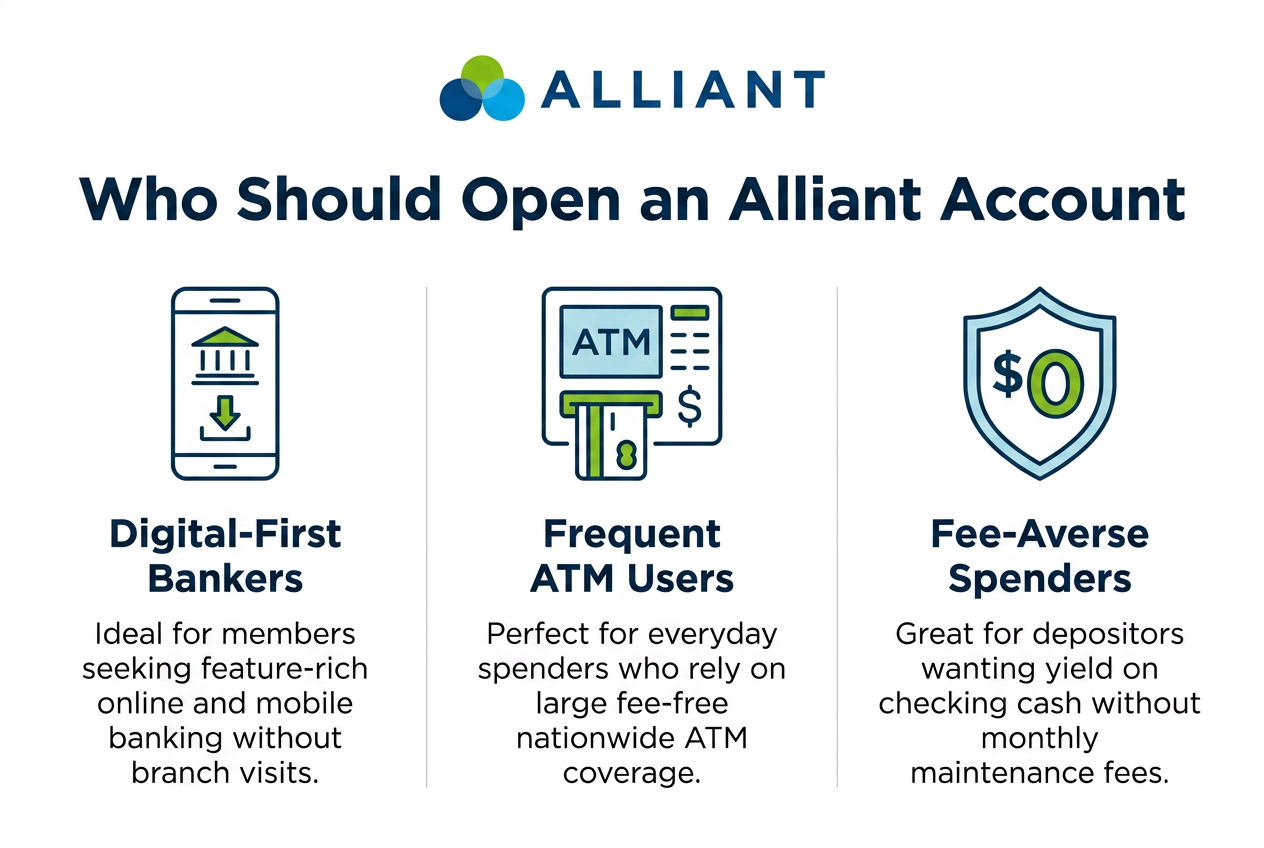
Anyone already banking mostly online, getting paid electronically, and tired of a checking account that pays nothing, this is a solid fit. No fees, no minimum balance, and interest that’s easy enough to actually earn most months.
People who want in-person banking, or who might not hit the monthly deposit requirement consistently, may find less value here than the headline rate suggests. For the right person though, it’s a low-effort upgrade over a typical checking account.