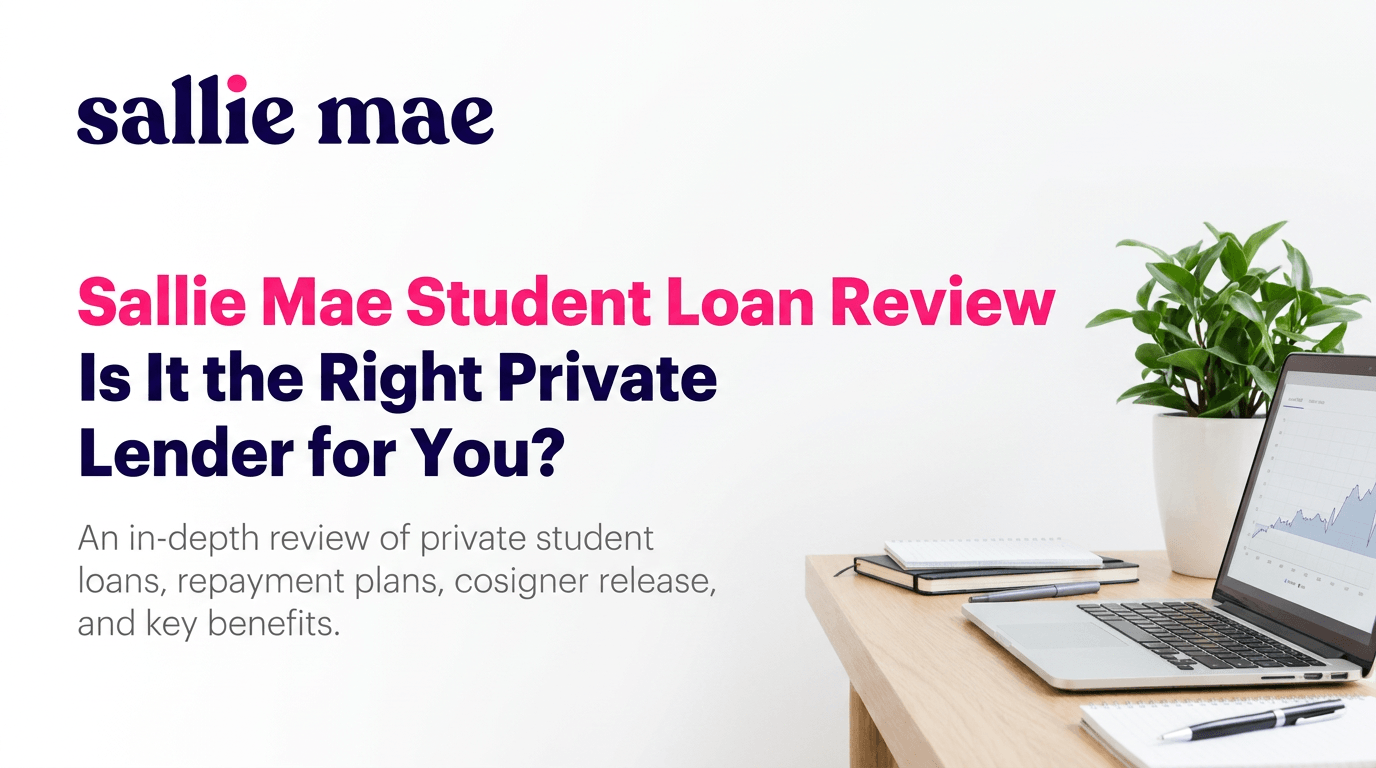
Financial aid from the Federal Government Agency runs out fast once tuition, housing, and books all get added up. That gap is exactly where private lenders like Sallie Mae step in. This Sallie Mae student loan review looks at whether it makes sense as that next step, rates, repayment flexibility, who actually qualifies, before you or your family sign anything. Private loans are a real financial commitment, so worth understanding the details first.
Explore Sallie Mae Student Loan Options
Key Benefits of Sallie Mae Student Loans
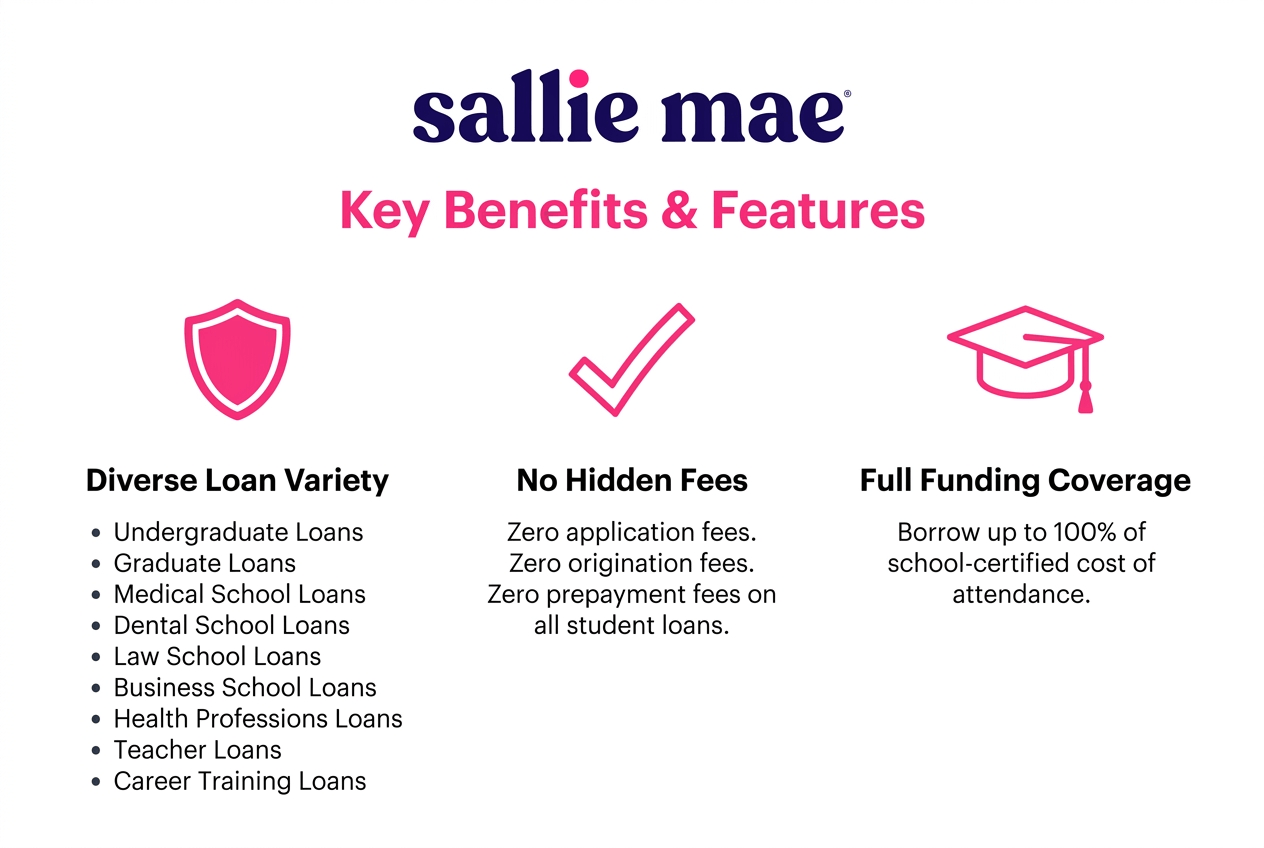
- Loan options for undergraduate and graduate education
- Multiple repayment plans to fit different budgets
- Competitive borrowing options for qualified applicants
- Funding available beyond federal financial aid limits
- Resources to help borrowers understand loan responsibilities
About Sallie Mae
Company Overview
It was 1972, when a government-sponsored entity came into existence as Sallie Mae. It went fully private in 2014. These days it focuses entirely on private student loans, nothing else, backed by Sallie Mae Bank. Nine different loan products cover undergrad, grad, and specialized programs like medical, dental, and law school.
Who Sallie Mae Is Best For
Best fit for students who’ve already maxed out federal aid and still have a funding gap. Parents financing a kid’s education, graduate students in expensive professional programs, K-12 families too, Sallie Mae covers more ground than most private lenders bother with.
Loan Options & Pricing
Available Student Loan Types
Undergrad loans, graduate loans, MBA and law school loans, medical and dental school loans, even K-12 private school loans, are genuinely rare among major lenders. Nine products total, most covering up to 100% of school-certified costs.
Interest Rates & Loan Costs
Sallie Mae interest rates currently run fixed from 2.89% to 17.49% APR, variable from 3.75% to 16.37% APR, both including the autopay discount. Where you land in that range depends heavily on credit, income, and whether you’ve got a cosigner backing the loan.
Repayment Options
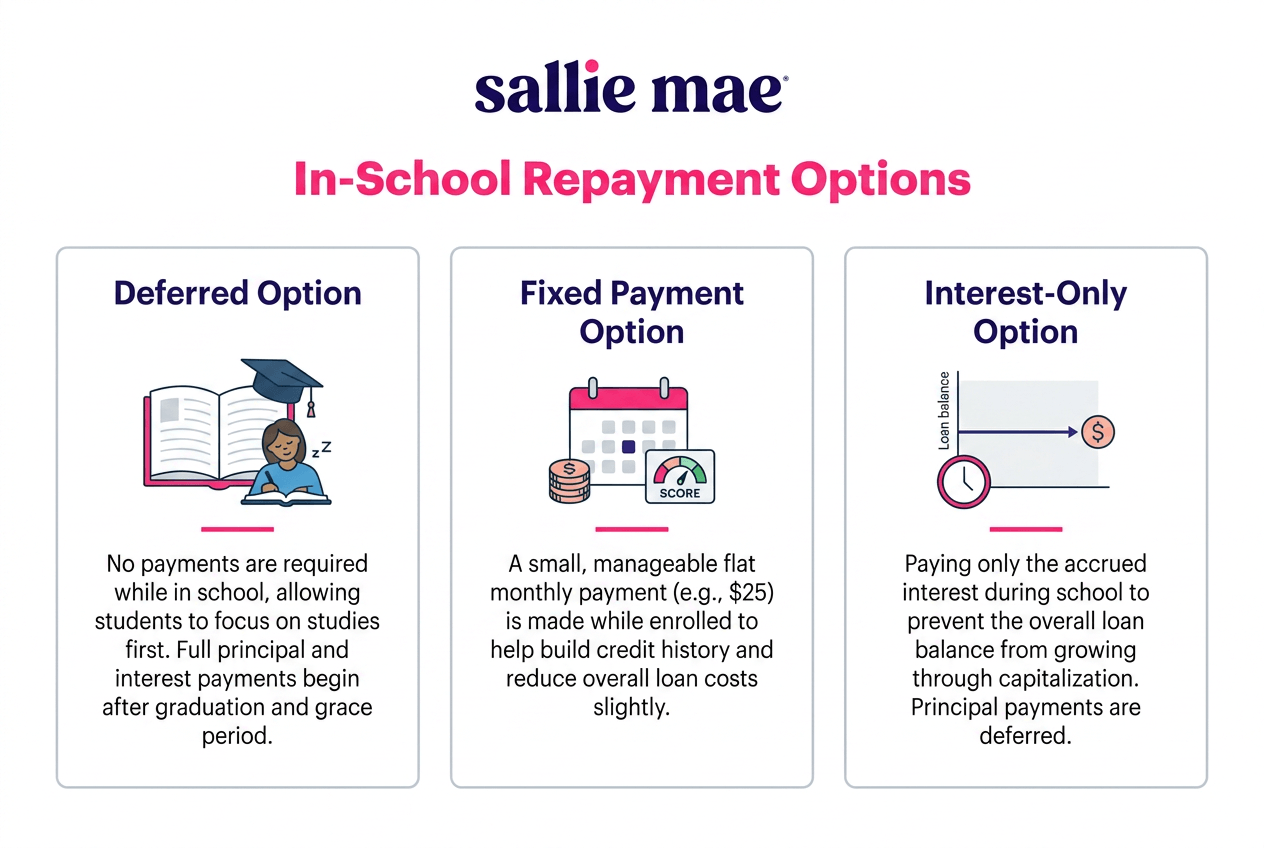
Three Sallie Mae repayment options exist while you’re still in school. Deferred means no payments at all until after graduation. Fixed means a flat $25 a month. Interest-only means paying just the interest, which keeps the total loan cost lower long term. All three lead into a standard six-month grace period after school ends.
Compare Sallie Mae Loan Options
Application & Approval Process
Eligibility Requirements
Applicants need to be enrolled at least part-time, and Sallie Mae runs a full credit check rather than a soft pull, worth knowing since that shows up on your credit report even before approval.
Co-Signer Options
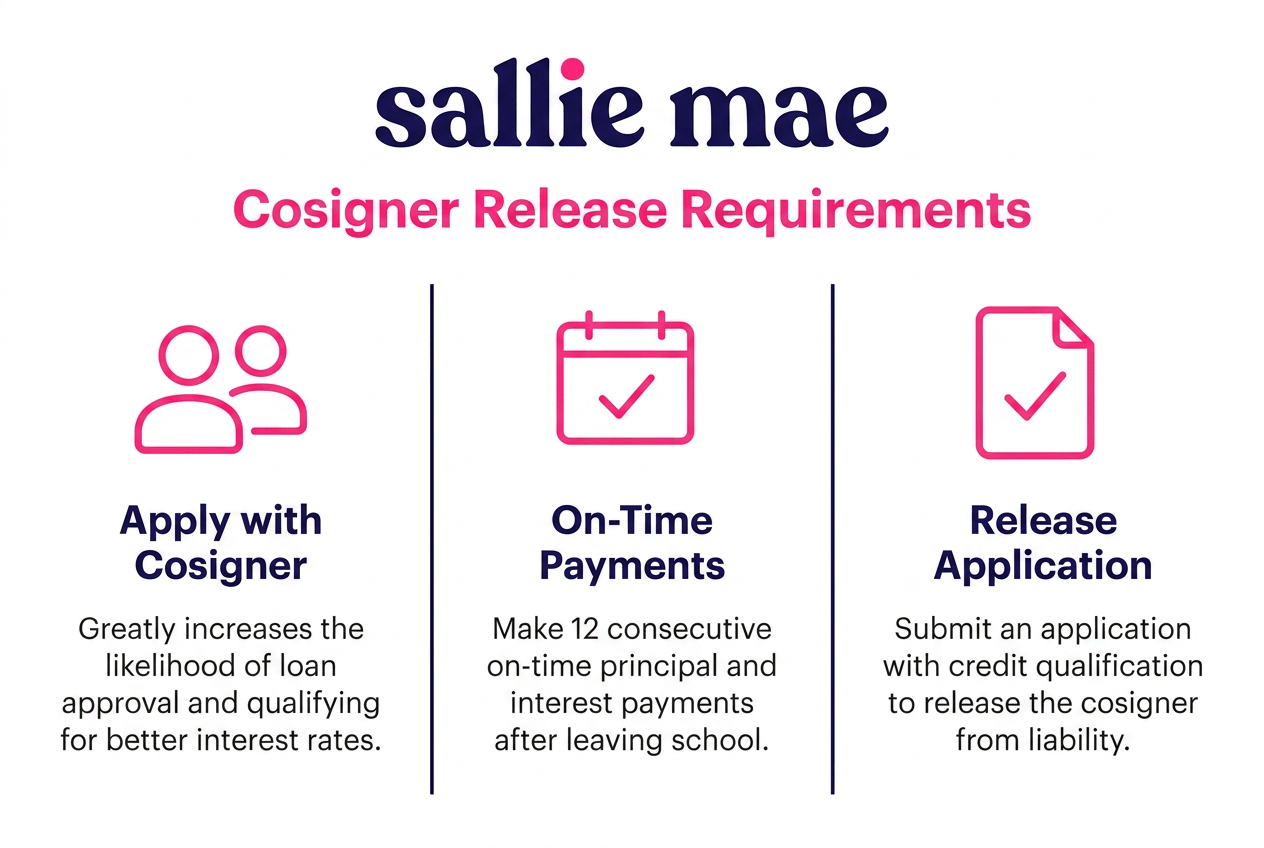
A cosigner isn’t required, but it helps a lot. Sallie Mae reports borrowers were roughly four times more likely to get approved with one attached to the application. The cosigner doesn’t have to be a parent either.
Loan Application Experience
Once approved, cosigners can apply for release after 12 consecutive on-time payments, quicker than a lot of competitors require. The application itself runs online, though the hard credit pull means it’s not something to do casually while comparison shopping.
Borrower Features & Support
Online Account Management
The online dashboard handles most account needs, checking balances, making payments, tracking loan status across multiple loans if you’ve got them.
Customer Support
Support runs through phone and online channels, and borrowers generally report decent responsiveness, though wait times can stretch during peak application season around the start of each semester.
Financial Education Resources
Sallie Mae also publishes budgeting tools and financial literacy resources aimed at students managing debt for the first time. Not groundbreaking, but useful if you’re new to handling loan repayment on your own.
Important Considerations Before Borrowing
Federal vs Private Student Loans
Federal loans currently sit around 6.39% for undergrads and 7.94% for grad students, both well below Sallie Mae’s lowest advertised rates, plus federal loans come with income-driven repayment and forgiveness options private lenders simply don’t offer. Exhaust federal aid first, every time.
Long-Term Repayment Planning
Deferring payments while in school feels easier short term. Sure it does. But interest keeps piling up the whole time you’re not paying, and that adds up. Sometimes thousands extra by graduation. Worth running the actual math before just defaulting to deferred over interest-only.
Choosing the Right Loan Amount
Borrow what covers the actual gap, nothing more, after federal aid, savings, and scholarships get factored in. Rounding up for a cushion sounds smart in the moment. It’s not really though, every extra dollar drags years of added interest along with it.
Pros and Cons
Real trade-offs here. Worth weighing before you sign anything.
| Pros | Cons |
|---|---|
| Nine loan types, including K-12 and professional programs | Hard credit check required to apply |
| Cosigner release after just 12 payments | No soft-pull prequalification available |
| No origination fees, no application fees, no prepayment penalty either | Rates run higher than top federal loan options |
| Covers up to 100% of school-certified costs |
Sallie Mae vs College Ave
Both are major private lenders, but the details split in some pretty meaningful ways.
| Comparison Criteria | Sallie Mae | College Ave |
|---|---|---|
| Loan Options | Nine products, including K-12 loans | Undergrad, grad, and refinancing options |
| Interest Rates | Fixed 2.89% to 17.49% APR | Fixed 2.39% to 17.99% APR |
| Repayment Flexibility | Three in-school repayment plans | Four in-school repayment plans |
| Overall Value | Best for K-12 or niche program funding | Best for fast decisions and soft-pull rate checks |
So is Sallie Mae a good lender compared to College Ave? Depends what matters more to you, honestly. K-12 loans? Faster cosigner release? Sallie Mae takes that one. Want to check your rate without a hard credit pull though? College Ave’s soft-pull option is the clear advantage there.
Is Sallie Mae Worth It?
For borrowers who’ve exhausted federal aid and need a reliable private lender, yes, Sallie Mae worth it comes down to loan variety and manageable cosigner terms. The wide product range covers situations a lot of competitors simply don’t touch. Just don’t skip federal aid first, private loans should always come after, not instead of.
Frequently Asked Questions
Is Sallie Mae a good student loan lender?
Yeah, for the right borrower anyway. Need something beyond a standard undergrad or grad loan, K-12, professional programs, that’s where it really stands out.
What interest rates does Sallie Mae offer?
Fixed sits between 2.89% and 17.49% APR. Variable runs 3.75% to 16.37%. Autopay discounts baked into both those numbers already.
Does Sallie Mae require a co-signer?
Not required, no. Helps a lot though. Approval odds jump noticeably higher with one on the application.
What repayment options are available?
Three, while you’re still in school. Deferred. Fixed at $25 a month. Or interest-only. Each one changes what you end up paying overall, sometimes by a lot.
Is Sallie Mae better than College Ave?
For niche loans, yeah, usually. Want faster rate checks with no hard credit pull instead? College Ave edges ahead there.
Final Verdict
Sallie Mae works best for borrowers needing loan variety. K-12 tuition, medical school, law school, situations most lenders just don’t touch at all. Federal loans should come first regardless, the rates and protections there beat any private lender by a wide margin, no contest.
Once federal aid runs out though, Sallie Mae’s product range and manageable cosigner release terms make it a solid option worth comparing. Overall, B2BMoneyGuides recommends Sallie Mae specifically for borrowers who’ve exhausted federal aid and need flexible private funding to close a real gap.
Visit Sallie Mae's Official Website