Federal funding never fully meets the cost of tuition, and here is where a private lender like College Ave comes into play. The message is simple: there are no origination fees, the process takes only three minutes, and College Ave offers more flexibility in repayments compared to its competitors even when you are a student.
However, while an attractive rate sheet may show you all the benefits, it does not give you the whole picture as far as a borrower and cosigner are concerned. This article will explain everything about College Ave rates and terms of cosigner release.
Check Your Rate with College Ave
Key Benefits of College Ave
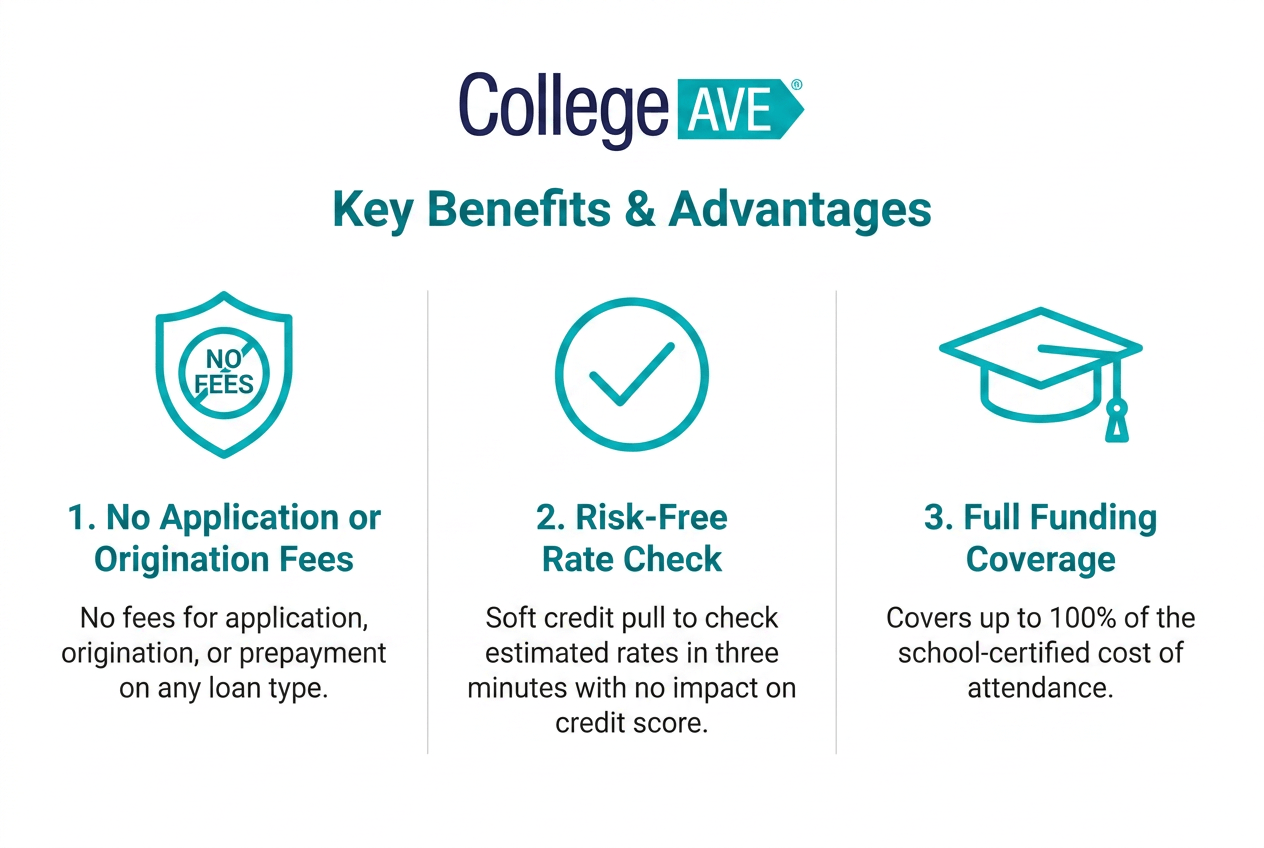
- No application, origination, or prepayment fees on any loan type
- Four in-school repayment options, including a flat $25 monthly payment
- Soft credit pull to check estimated rates, with no impact on your credit score
- Covers up to 100% of the school-certified cost of attendance
- Refinancing available for both existing federal and private student loans
About College Ave
Company Overview
Incorporated in the year 2014 in Wilmington, Delaware, College Ave is a pure player in private student loans, in that it does not offer other banking services and was set up for just student loans, unlike many traditional banks, which have student loans as a side offering.
It is not a bank, but a financial technology firm, and loans are disbursed through Firstrust Bank, First Citizens Community Bank, and BTG Pactual Bank, FDIC-insured.
Interest Rates & Loan Terms
Rates vary by loan type, credit profile, and whether a cosigner is on the application. Here’s the current range across College Ave’s main products, current as of July 2026.
| Loan Type | Fixed APR | Variable APR | Repayment Term |
|---|---|---|---|
| Undergraduate | 2.39%–17.99% | 3.89%–17.99% | 5, 8, 10, or 15 years |
| Graduate / MBA | Slightly higher than undergrad | Slightly higher than undergrad | Up to 20 years |
| Medical, Dental & Law | Competitive, credit-dependent | Competitive, credit-dependent | Up to 20 years |
| Refinance | 6.99%–13.99% | 6.99%–13.99% | 5 to 20 years |
Repayment Options While in School
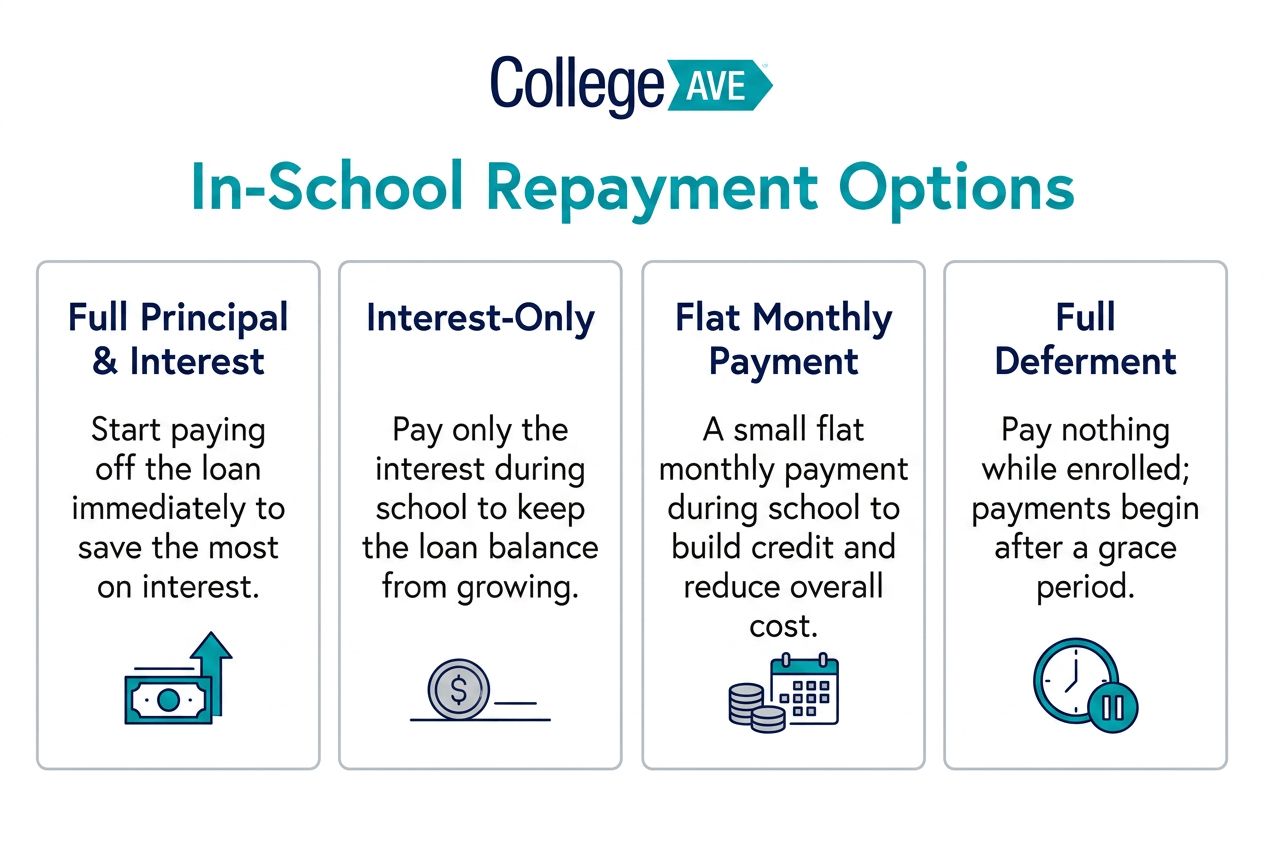
Borrowers choose from full principal and interest, interest-only payments, a flat $25 monthly payment, or full deferment until after graduation. That range is genuinely wider than most private lenders offer, and it matters, since the option selected affects both the monthly bill during school and the total interest paid over the life of the loan. A standard six-month grace period follows graduation, with some advanced-degree programs extending it to nine months or longer.
Compare College Ave Repayment Options
Cosigner Release & Refinancing
Releasing a Cosigner
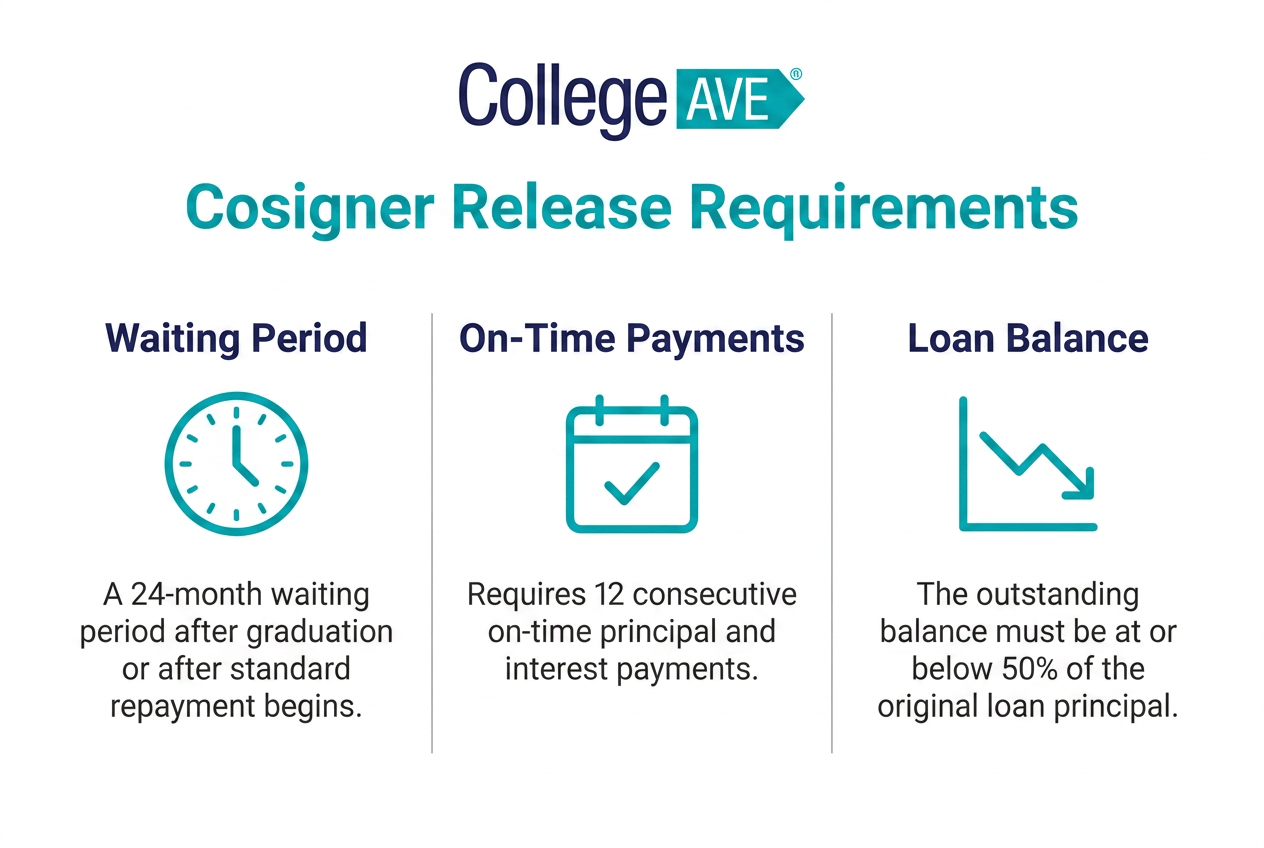
Most undergraduates need a cosigner to qualify for a competitive rate. Removing that cosigner later requires 12 consecutive on-time payments after a 24-month interim period, plus a balance at or below 50% of the original principal, a longer runway than some competitors offer.
Refinancing Existing Loans
College Ave also refinances federal and private loans starting at $5,000, with rates currently at 6.99%–13.99% APR. Unlike consolidation, refinancing can lower your rate or restructure your term rather than just combining balances.
Application Process & Eligibility
Prequalifying takes about three minutes with a soft credit pull, so checking rates won’t affect your credit score. A formal application uses a hard pull and usually returns an instant decision, with funds disbursed in roughly seven to ten business days. A fair credit score is required, and most first-time undergrads will still need a creditworthy cosigner.
Who Should Use College Ave
Undergraduate Borrowers
Students who’ve maxed out federal aid and want a flexible in-school payment option, including the $25 flat payment, get real value from College Ave’s structure.
Graduate & Professional Students
Longer terms and dedicated medical, dental, and law school products make College Ave a reasonable fit for borrowers financing an advanced degree with a predictable post-graduation income path.
Borrowers Refinancing Existing Debt
Anyone holding a federal or private loan at a higher rate can use College Ave’s refinance product to potentially lower their rate or restructure their repayment term.
Pros and Cons
| Pros | Cons |
|---|---|
| No application, origination, or prepayment fees | Rate range tops out high (up to 17.99%) for weaker credit profiles |
| Four in-school repayment options, including a $25 flat payment | Cosigner release takes longer than some competitors |
| Soft credit pull to check rates, no impact on credit score | A hard credit pull is still required to formally apply |
| Refinancing available for existing federal or private loans |
College Ave vs Sallie Mae
Sallie Mae is the other name that comes up constantly in this search, and the two lenders split on a few meaningful points.
| Factor | College Ave | Sallie Mae |
|---|---|---|
| Fixed APR range | 2.39%–17.99% | 2.39%–17.49% |
| Variable APR range | 3.89%–17.99% | 3.75%–16.95% |
| Cosigner release | Requires 12 consecutive on-time payments after a 24-month interim period | Available after just 12 consecutive on-time payments |
| Application | Soft credit pull to prequalify, roughly 3 minutes | Hard credit pull required, roughly 15 minutes, no prequalification |
| Refinancing | Yes, 6.99%–13.99% APR | Not offered |
| Best for | Borrowers who want to check rates risk-free and prefer flexible in-school payments | Borrowers focused on the fastest possible cosigner release |
Is College Ave Worth It?
If rate comparison without impacting your credit score, flexible in-school repayment, or the ability to consolidate an existing loan along with getting a new one are important considerations, then this can be a good choice.
However, if a rapid cosigner release process ranks high on your list of priorities, then perhaps not. If you have studied BBB complaint history for this lender and want a loan from a company with a cleaner dispute process, this is not your best bet.
Frequently Asked Questions
Does checking my credit with College Ave affect my credit score?
No. Prequalification involves a soft credit check. A hard inquiry will only occur upon applying for the loan.
Are there any fees with College Ave?
There are no application fees, origination fees, or prepayment fees on all products, including student loan refinancing.
How do you qualify for cosigner release from College Ave?
You need to make 12 consecutive on-time payments after a 24-month waiting period, and your balance should not exceed 50% of the principal amount.
Is College Ave a bank?
No. College Ave is a fintech platform that works with FDIC banks, and loans are serviced by College Ave Student Loan Servicing, LLC.
Is College Ave better than Sallie Mae?
It depends on what you prefer because College Ave beats Sallie Mae in ease of application and refinancing, while Sallie Mae beats College Ave in cosigner release.
Final Verdict
College Ave makes a good choice as a no-fee private lender that offers extremely flexible repayment options while you are at school and an extremely easy and risk-free loan estimate. Loan programs from College Ave compare favorably with the largest lenders in this market segment, and their loan refinancing program is quite useful.
For students and families comparing private lenders after exhausting federal aid, College Ave is worth a serious look; just don’t skip reading the cosigner release terms before you sign.
Get Your College Ave Rate in 3 Minutes