A business getting paid in three currencies and paying suppliers in five more runs into a problem most banks were never built to solve. Airwallex built its pitch around fixing that. This review gets into what the platform does, what it costs, and how it stacks up against Wise, the alternative most people compare it to anyway.
What Is Airwallex?What Is Airwallex?
Founded in Australia in 2015, Airwallex gives businesses one account to hold, send, and receive money across dozens of currencies, so nobody has to open a separate bank account in every country they operate in.
It has grown a lot since then. A payment gateway now. Corporate cards. APIs for companies that want Airwallex baked into their own product rather than bolted on. At this point it looks less like a transfer app and more like a full financial operations layer.
Key Features
Business Accounts
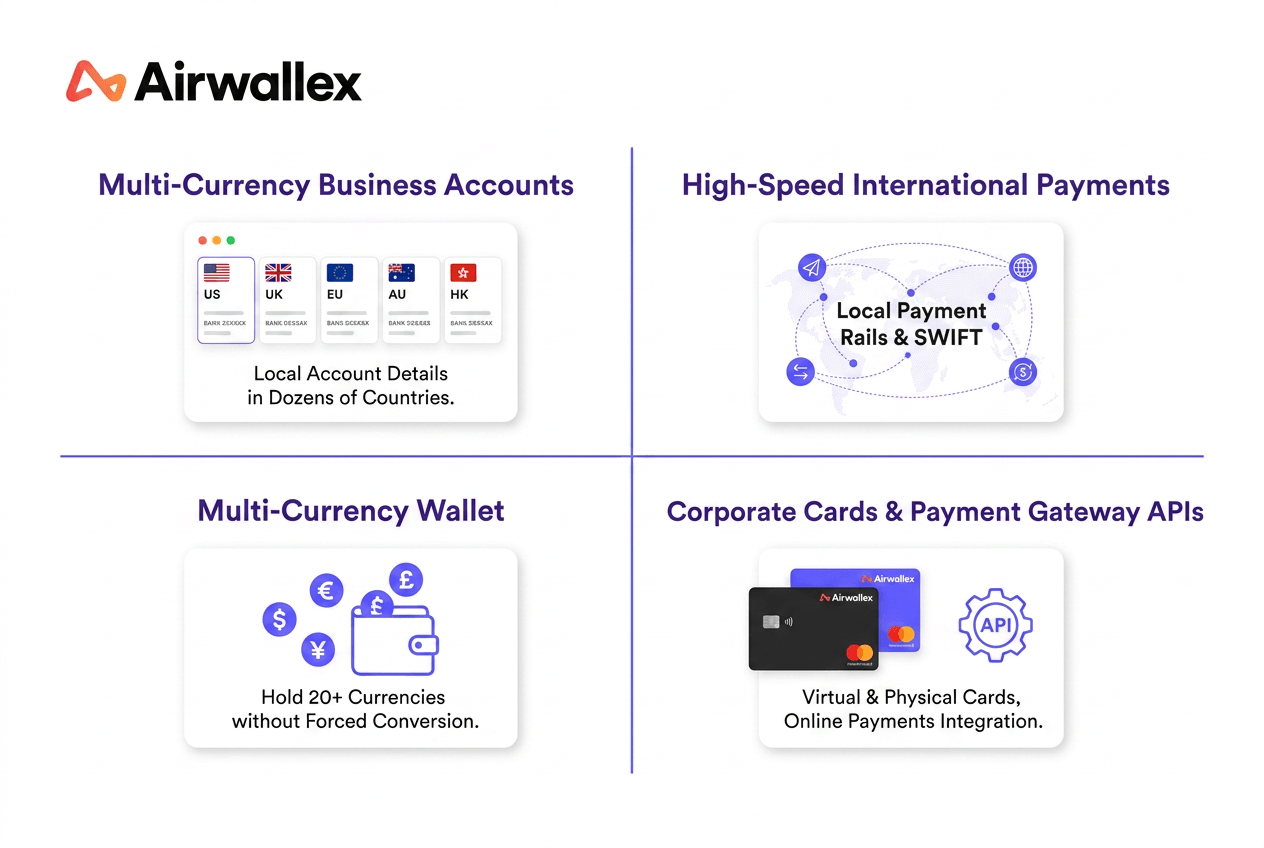
The Airwallex business account sits at the center of everything else. One login covers multiple currencies, local account details in a long list of countries, so a client abroad can pay you like a local company. Fewer wire fees on the sender’s end, faster settlement on yours.
International Payments
Send money to well over 150 countries, and a good chunk of those routes use local payment rails instead of SWIFT, cheaper and quicker. If payroll or supplier payments abroad happen monthly for your business, this is probably the feature doing the most work.
Multi-Currency Wallet
Hold balances in more than 20 currencies without a forced conversion the second money lands. Collect revenue in euros, pay European vendors too. Skipping the conversion on both ends keeps more of the money where it belongs.
Corporate Cards
Visa cards for employees, spend limits set per card, expenses tracked through a dashboard instead of a shoebox of receipts at month end. Plenty of fintechs do this now. Airwallex does it well, tied into the rest of the platform rather than sitting off on its own.
Payment Gateway & APIs
Selling online opens up the gateway side of things, card payments and local payment methods across a wide swath of countries. Larger companies with development resources can build custom checkout flows on the API rather than settle for a generic widget.
Airwallex Pricing and Fees
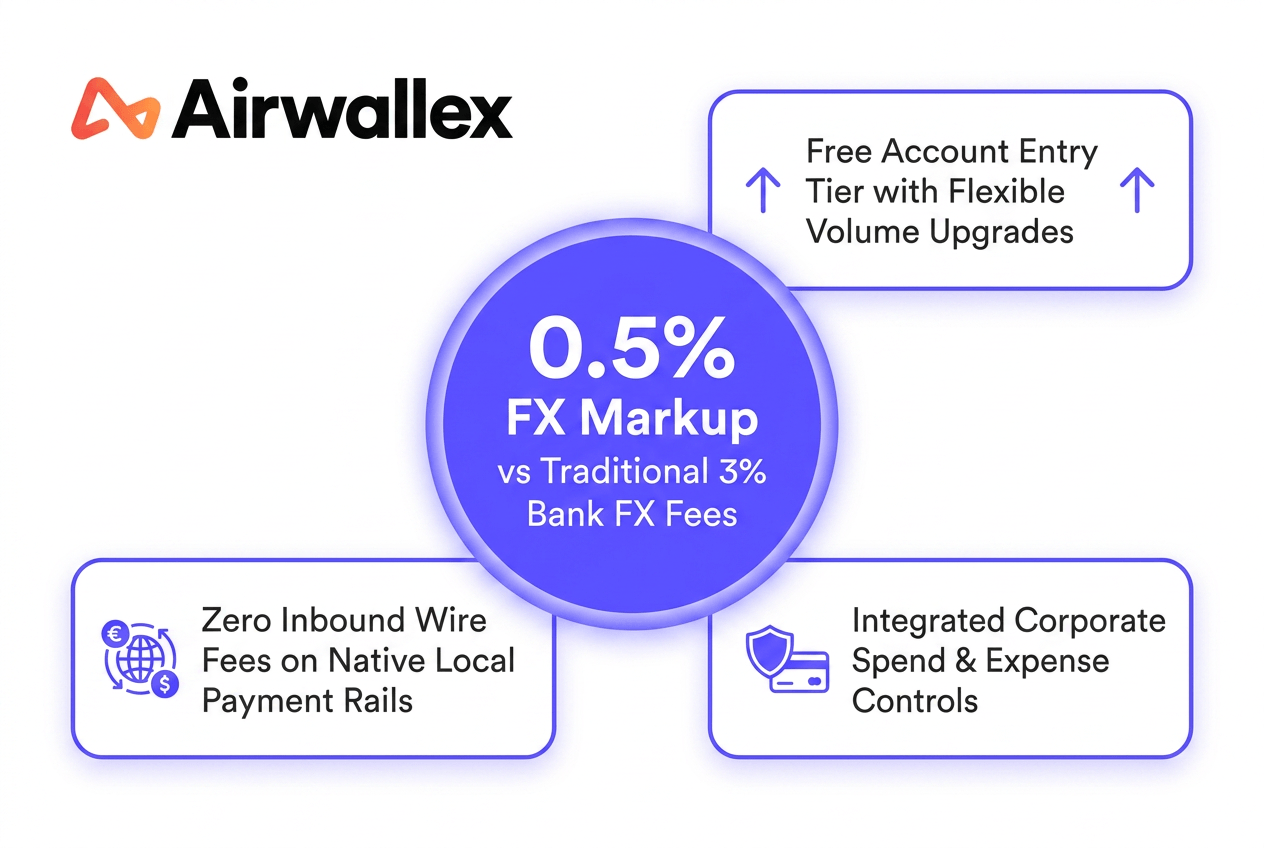
There is a free entry tier. Paid plans sit above it, unlocking higher limits, more cards, multi-user access, deeper expense controls. How much those higher tiers cost depends heavily on region, and in some places it climbs into the hundreds a month. Worth checking your own country’s numbers rather than assuming the free tier covers it.
FX markup runs about 0.5 percent above interbank for the major currencies, USD, EUR, GBP. Closer to 1 percent once you get into less common ones. A traditional bank often lands between 2.5 and 3.5 percent by the time wire fees get folded in, so the gap adds up fast once volume gets real. One fee does not sit front and center on the pricing page, worth flagging here because of that. Some regions charge roughly 0.3 percent on inbound transfers from an account that is not the same business owner. Look at the dashboard itself, not just the marketing page, before signing anything.
Pros and Cons
Pros
Coverage across a wide range of currencies and countries suits real global operations, not just one overseas client. FX rates beat what most traditional banks charge, and that gap compounds fast at volume. Cards, expense tools, and the payment gateway all live under one roof, so nobody is juggling three vendors just to run the money.
Cons
Pricing is not always obvious at a glance. A plan that looks free on the surface can carry costs that only show up once you are using it. Support quality varies by region and slows down when things get busy. Account holds during compliance review keep showing up across independent review sites, often enough to deserve real attention rather than a shrug.
How Airwallex Works
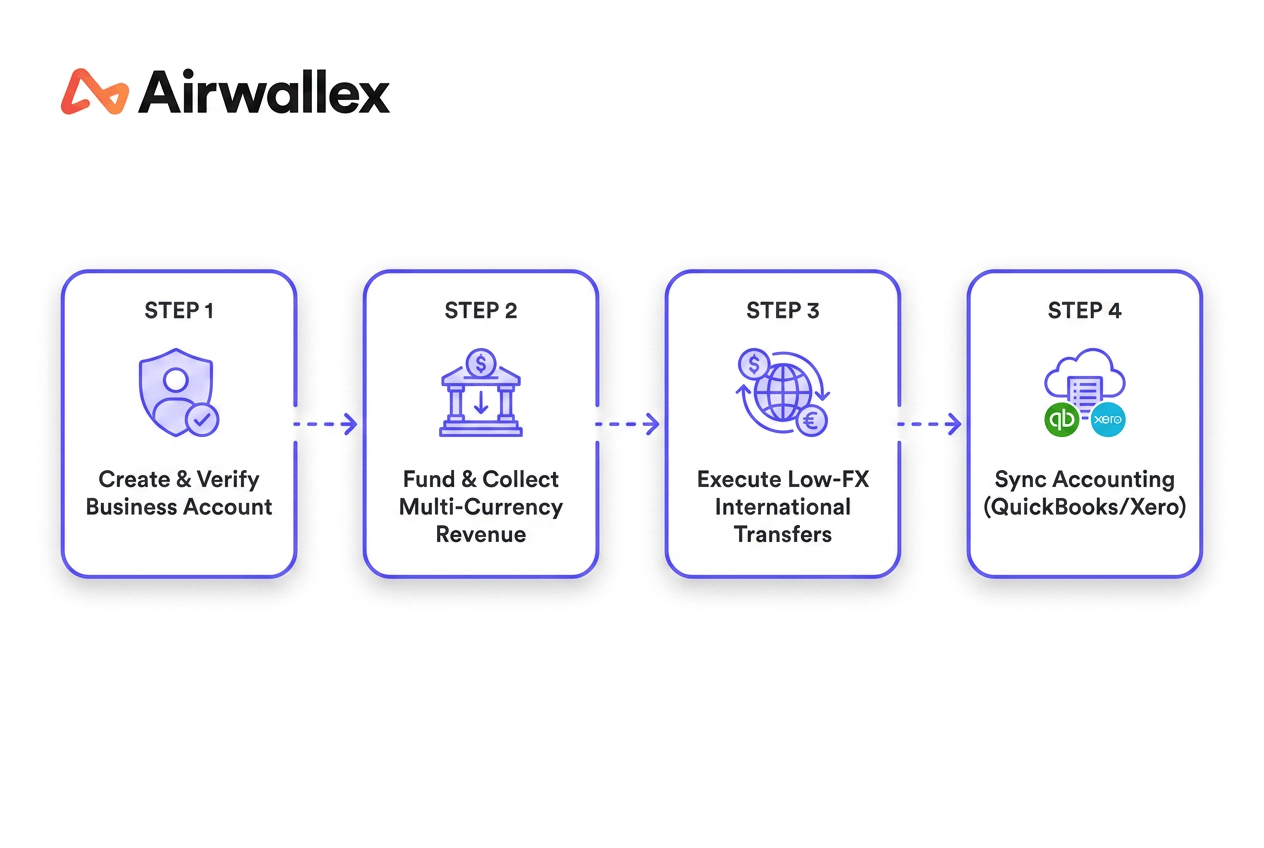
Create an Account
Sign up online using a business email. Nothing to pay just to apply.
Verify Your Business
Registration documents, ID for directors or beneficial owners. A few business days usually, longer if your entity type or country adds extra steps.
Send & Receive Payments
Fund the account from an existing bank once verification clears, then start moving money across whatever currencies and countries you need.
Manage Global Finances
Hook up Xero or QuickBooks. Hand out cards to the team. Everything lands on one dashboard, which beats piecing together five bank statements every month just to see where the business stands.
Customer Reviews and Reputation
The reviews across Trustpilot, G2, and Capterra land in a pretty consistent shape. People like how easy it is to use. They like the API documentation, cleaner than a lot of competitors manage. Plenty of reviewers mention FX rates that genuinely beat what their old bank charged.
Then the other side. Support gets slower during busy stretches, a common complaint but not a dealbreaker on its own. The bigger issue is a pattern of account holds during compliance review that keeps popping up, not from one unhappy customer venting once, but across multiple platforms independently. That repetition is what makes it worth taking seriously.
Is Airwallex Legit?Is Airwallex Legit?
Yes. It is a regulated fintech, licensed as a money service business (or the local equivalent) everywhere it operates, not some unregulated app quietly moving money around. Serious funding raised, real scale, plenty of recognizable business clients.
None of that guarantees a smooth ride, though. The compliance hold pattern above is an operational risk, not a legal one, worth understanding before routing every critical payment through Airwallex alone.
Airwallex vs Wise
Wise keeps things simple. Pay-per-transfer pricing, nothing hidden, no tiers to decode, a narrower feature set built around transfers and holding multiple currencies. Freelancers and small businesses wanting predictable costs without a learning curve tend to land here.
Airwallex asks for more attention up front but gives more back. More countries, more currencies, a payment gateway, real card and expense management. A company that outgrew basic transfers will get more mileage here than Wise offers. Small business sending the occasional wire abroad? Wise wins on simplicity. Scaling fast with money moving in six directions at once? Airwallex makes a lot more sense.
Is Airwallex Worth It?Is Airwallex Worth It?
Comes down to volume, mostly. A business moving frequent cross-border payments, juggling multiple currencies, growing a team that needs cards and real expense controls, that is who Airwallex was built for. The FX savings alone can justify the switch once volume climbs high enough.
A smaller operation with the occasional overseas payment and no real use for a gateway or corporate cards is a different story. All that extra machinery might not earn its keep, and a simpler tool could do the job with less to think about.
Common Questions About AirwallexCommon Questions About Airwallex
Does Airwallex charge monthly fees? Depends on the plan. Free tier exists, higher ones carry monthly costs that shift by region.
Is Airwallex safe for business banking? A regulated fintech, not a bank in the strict sense. Funds are generally safeguarded, though not FDIC insured like a US bank account.
How long does verification take? A few business days typically. Longer if the entity type or country adds extra steps.
Final Verdict
Airwallex earns its place for businesses with genuinely global operations. Wide currency coverage, FX rates that beat most banks, tools well past basic transfers. But pricing takes some digging, and that compliance pattern showing up across review sites is not something to wave off. A smaller business with simple, occasional transfer needs will probably find Wise less of a headache. A growing company moving serious volume across borders should test Airwallex against its actual payment patterns before committing fully.
Get a Quote Today