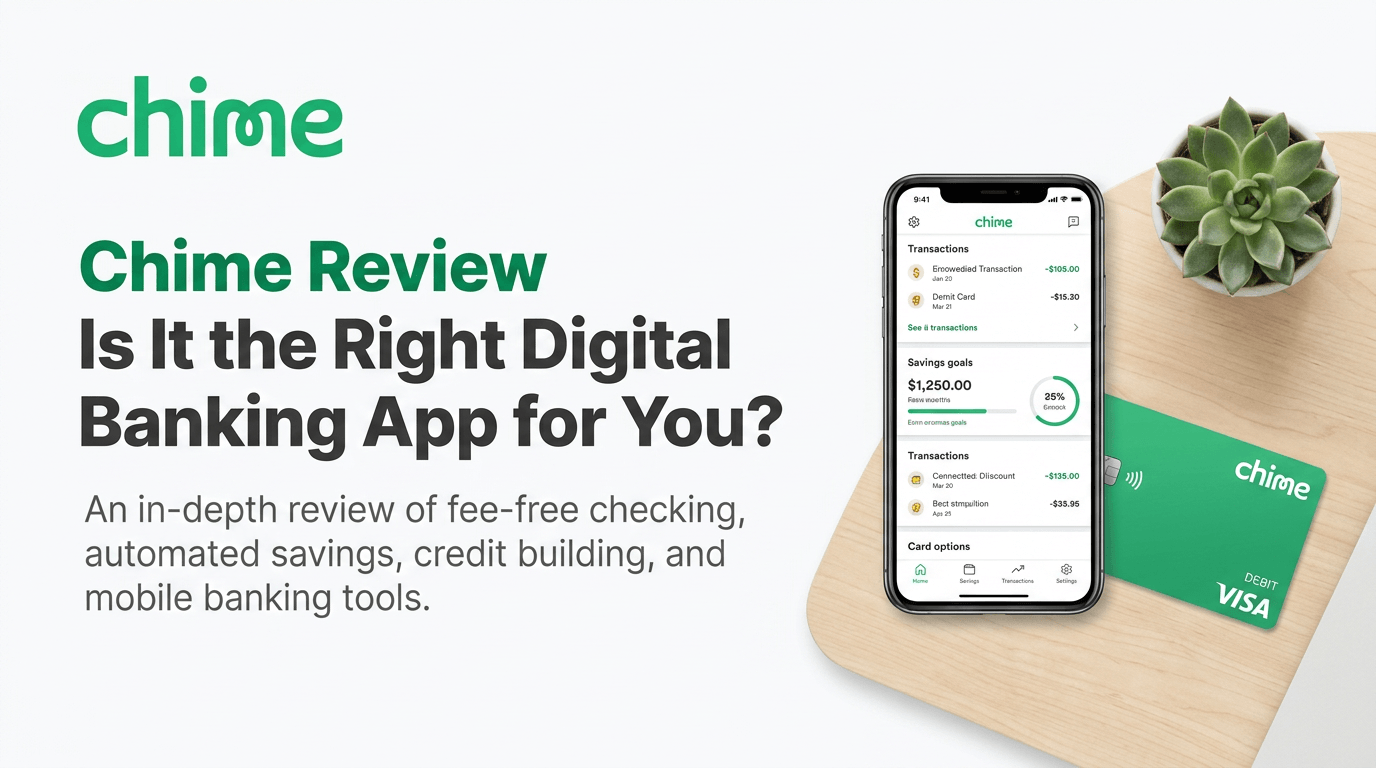
Traditional checking accounts still nickel and dime people over minimum balances and overdrafts that used to run $35 a pop. Chime built its whole reputation on skipping all that.
This Chime review looks at whether the no-fee, mobile-first pitch actually holds up day to day, and whether it works for anyone earning freelance or gig income too. Worth a real look before deciding where your paycheck lands.
Explore Chime Banking Features
Key Benefits of Chime
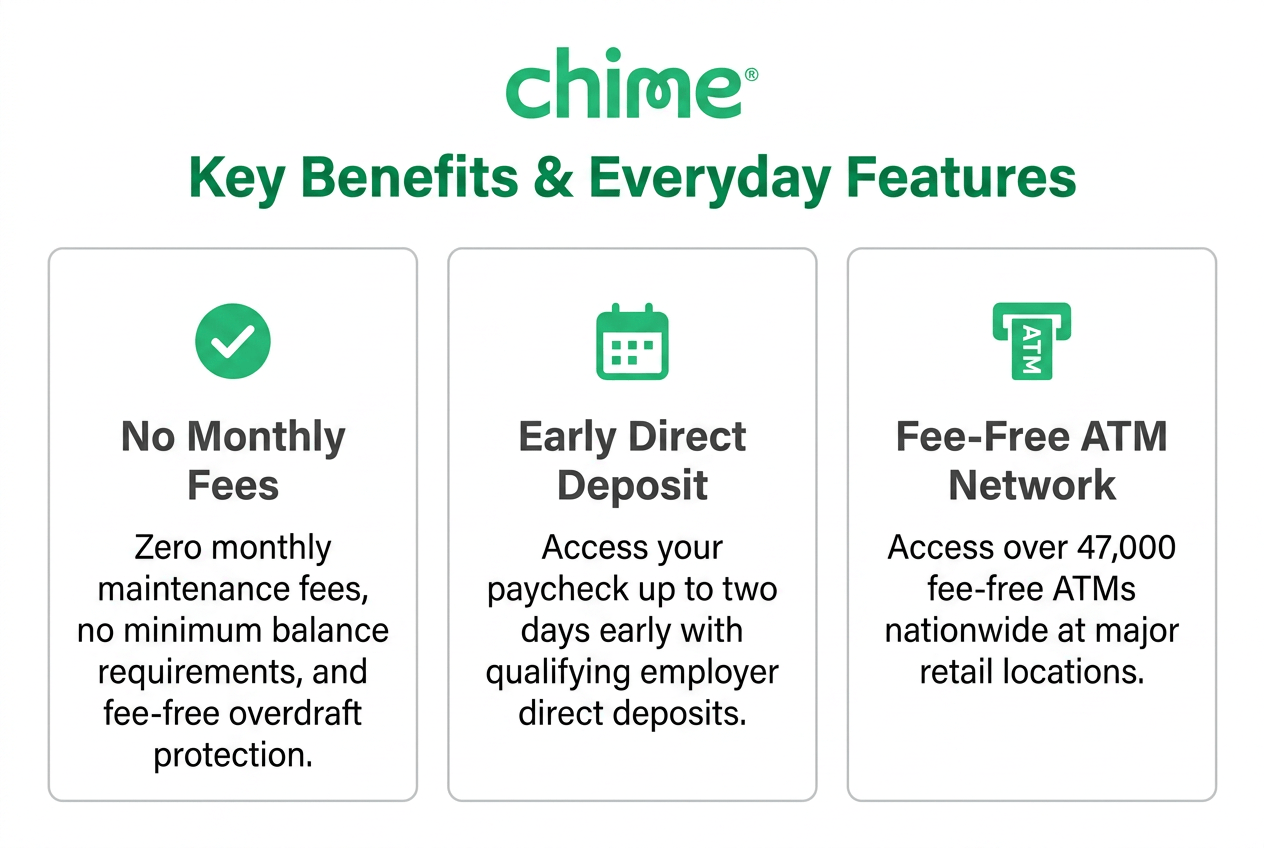
- No monthly maintenance fees on eligible accounts
- Early direct deposit for qualifying direct deposits
- Mobile-first banking with intuitive account management
- Credit Builder helps eligible users build credit
- Automated savings tools encourage consistent financial habits
About Chime
Company Overview
Chime launched in 2013, and it’s not technically a bank itself, it’s a fintech company partnering with The Bancorp Bank and Stride Bank to provide FDIC-insured accounts. No branches anywhere. Everything runs through the app, and that digital-only setup is exactly how Chime keeps fees off the table.
Who Chime Is Best For
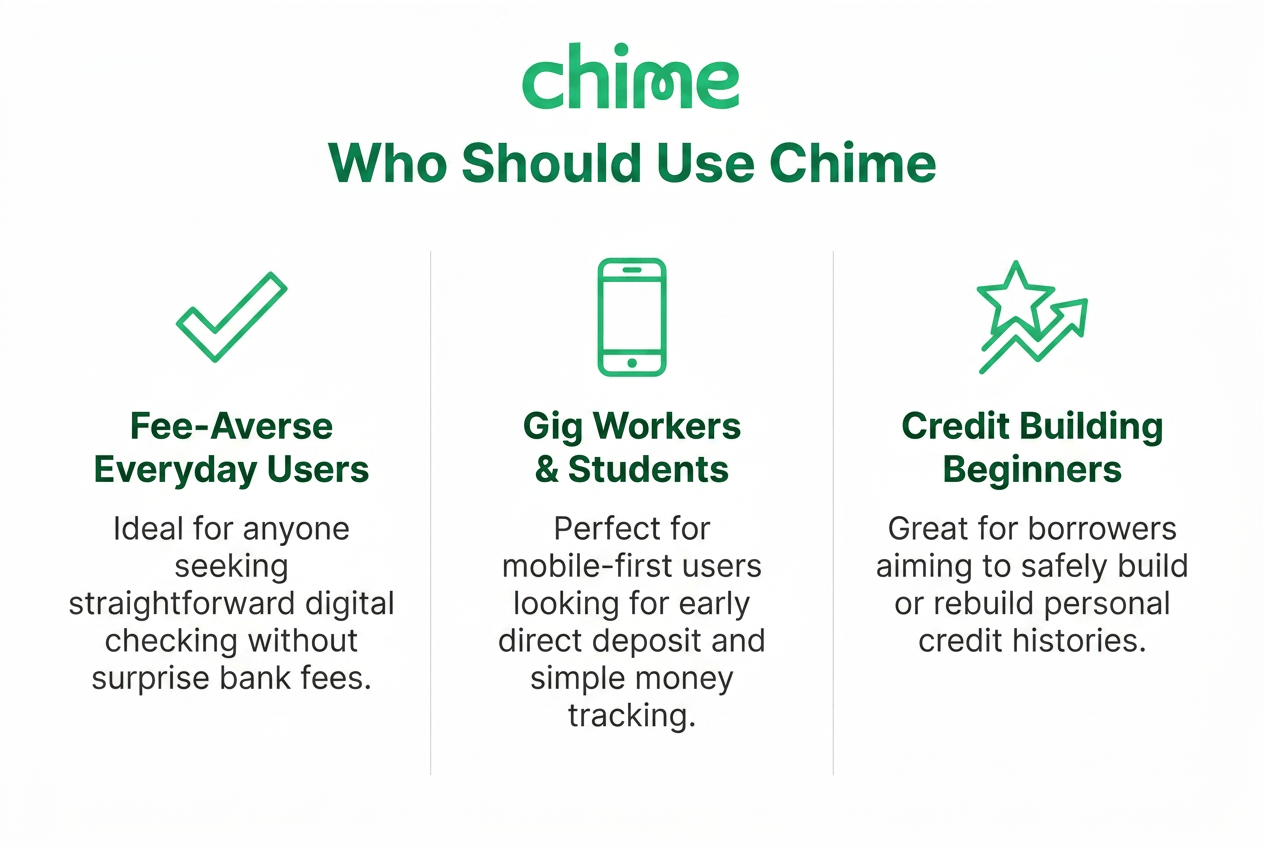
Best fit for people who want simple banking without minimum balances or surprise charges. Gig workers, students, young professionals living paycheck to paycheck, Chime built its whole product around that exact group.
Accounts, Features & Pricing
Checking & Savings Accounts
Chime offers one checking account and one savings account, nothing more complicated than that. No joint accounts, no CDs either, just the basics done simply. Savings pays a variable APY starting around 0.75%, climbing up to 3.75% for eligible Chime+ members with qualifying direct deposit.
Fees & Everyday Banking Costs
Chime fees are refreshingly close to zero, no monthly fee, no minimum balance requirement, no standard overdraft fee. Out-of-network ATM withdrawals are basically the one place you’ll actually get charged.
Credit Builder Features
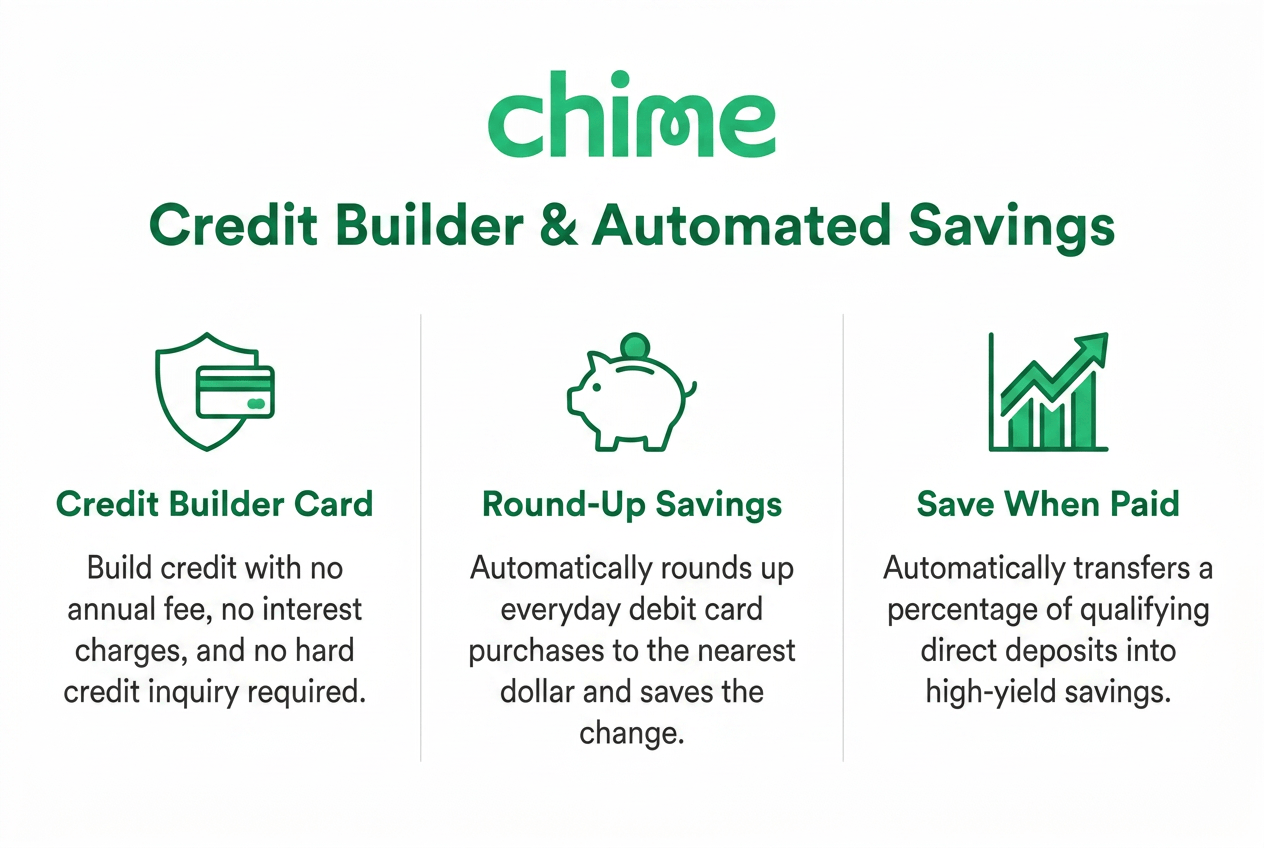
The Chime Credit Builder card, now branded Chime Card for new applicants, works as a secured card with no annual fee, no interest, and no credit check required. It reports activity to all three credit bureaus, and average users see a real score bump within months of consistent use.
Compare Chime Account Features
Mobile Banking Experience
Mobile App & User Experience
The app handles everything, deposits, transfers, spending tracking, and reviewers consistently praise how clean the interface feels. That matters a lot for a bank with zero physical presence to fall back on.
Direct Deposit & Payments
Get Paid Early gets your paycheck up to two days ahead of a traditional bank’s schedule, assuming your employer supports early posting. ACH transfers and bill pay run through the app without much friction either.
ATM Access & Debit Card
Chime gives fee-free access to more than 47,000 ATMs nationwide, CVS, Walgreens, Circle K locations included. Step outside that network though and fees apply fast, so knowing your nearby options actually matters here.
Banking Tools & Financial Features
Savings Tools
Round-Ups moves spare change from every purchase straight into savings, and Save When I Get Paid automatically shifts 10% of qualifying deposits over $500. Small moves, but they add up without requiring any real effort.
Account Security
Deposits are FDIC-insured up to $250,000 through Chime’s partner banks, standard protection despite Chime itself not holding a bank charter. Some users stay wary of the non-bank structure, even though the insurance coverage works the same either way.
Spending Insights & Alerts
Real-time transaction alerts flag every purchase the moment it happens, which helps catch fraud early and just generally keeps spending visible without digging through a statement later.
Is Chime Suitable for Freelancers?
Receiving Business Income
Freelance payments can land in a Chime account fine, direct deposit or transfer both work. Where it gets tricky is payment platforms like Venmo or PayPal, those transfers don’t always qualify for the direct deposit perks Chime advertises.
Bookkeeping Considerations
Chime wasn’t built with business bookkeeping in mind. There’s no built-in invoicing, no expense categorization tuned for tax season, so freelancers relying on it exclusively will likely need a separate tool for actual accounting.
When a Business Account Makes More Sense
Once freelance income becomes a real business, consistent clients, tax complexity, growing revenue, a dedicated business account with bookkeeping tools built in starts making a lot more financial sense than stretching Chime past what it’s designed for.
Pros and Cons
Real trade-offs worth understanding before switching your banking over.
| Pros | Cons |
|---|---|
| No monthly fees, no minimum balance requirement | Not a chartered bank itself |
| Early direct deposit up to two days ahead | No business banking or bookkeeping tools |
| Built-in Credit Builder with no credit check | Limited account types, no joint or CD options |
| Large fee-free ATM network nationwide |
Chime vs SoFi Checking & Savings
Both compete on fees and digital experience, but they come from pretty different starting points.
| Comparison Criteria | Chime | SoFi Checking & Savings |
|---|---|---|
| Banking Features | Checking, savings, Credit Builder card | Combined checking and savings, investing ecosystem |
| Fees | No monthly fees, no overdraft fees | No monthly fees, no overdraft fees |
| Digital Experience | Mobile-only, simple interface | Mobile-first, broader financial app |
| Best User Type | Gig workers and fee-averse everyday users | Users wanting one app for banking and investing |
So is Chime better than SoFi for everyday banking? Depends what you’re actually trying to do here. Just want simple, fee-free banking with credit building tools, Chime handles that well. Want savings, checking, and investing all under one roof with a real bank charter behind it, SoFi’s broader ecosystem probably wins that one.
Is Chime Worth It?
For fee-averse users tired of minimum balances and overdraft charges, yes, Chime’s worth it, especially paired with the Credit Builder card if your credit needs work. It’s not built for business finances though, so freelancers should treat it as a personal account rather than a full bookkeeping solution.
Frequently Asked Questions
Is Chime a real bank?
Not technically, no. It’s a fintech company partnering with The Bancorp Bank and Stride Bank, both FDIC-insured, to hold deposits.
Does Chime charge monthly fees?
No monthly fees, no minimum balance fees, no standard overdraft fees either. Out-of-network ATMs are really the main cost to watch.
Is Chime good for freelancers?
For personal spending, yes. For actual business bookkeeping and invoicing, not really, it just wasn’t built for that.
Can I use Chime for business income?
You can receive payments into it, sure. Just don’t expect built-in tools for expense tracking or tax categorization.
Is Chime better than SoFi?
For simple fee-free banking, generally yes. For an all-in-one app with investing and a chartered bank behind it, SoFi tends to edge ahead.
Final Verdict
Chime works best for everyday users who want zero fees, early direct deposit, and a straightforward way to build credit without a credit check standing in the way.
It’s an excellent choice for gig workers, students, and anyone tired of traditional bank fees eating into a tight budget. Freelancers earning consistent business income should eventually move toward a dedicated business account though, since Chime just doesn’t offer the bookkeeping depth a growing business needs.
Overall, B2BMoneyGuides recommends Chime for personal, everyday banking, not as a substitute for real business financial infrastructure.
Visit Chime's Official Website