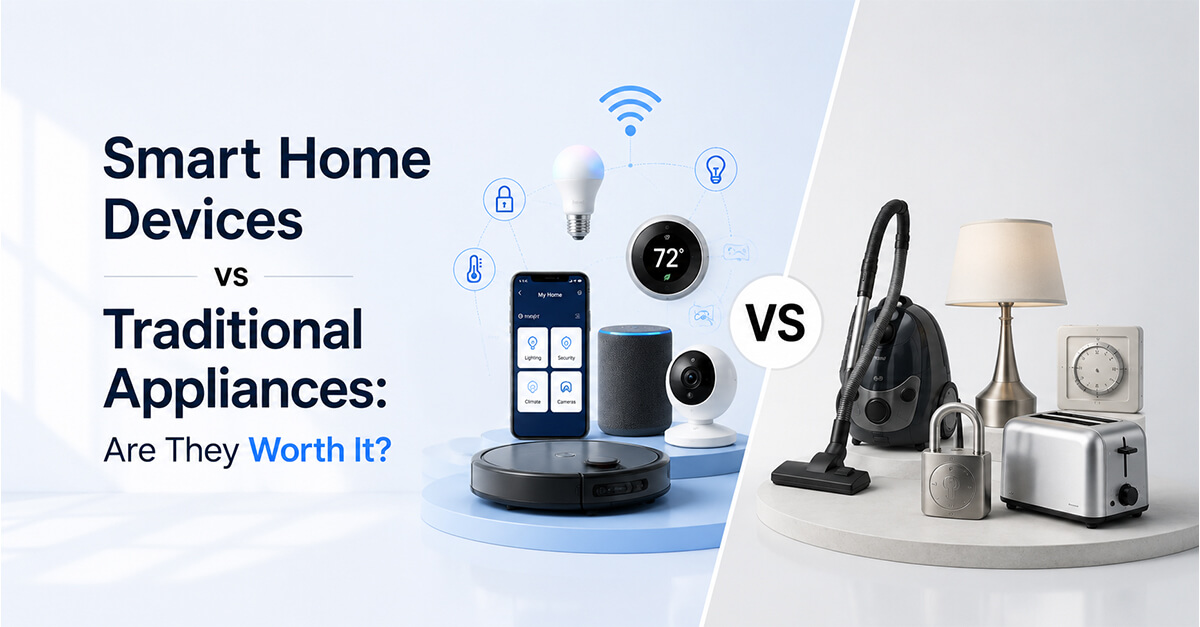
Smart home technology has transformed everything from lighting and security to cleaning and entertainment. Devices that once operated independently can now connect to apps, voice assistants, and automated routines.
While smart home gadgets continue to grow in popularity, many consumers still wonder whether they offer meaningful benefits compared to traditional appliances.
The answer depends on your lifestyle, budget, and expectations.
What Are Smart Home Devices?
Smart home devices connect to a network and can often be controlled remotely through a smartphone app, voice assistant, or automation platform.
Common examples include:
- Smart lights
- Smart plugs
- Robot vacuums
- Video doorbells
- Smart thermostats
- Smart locks
Many of these products can communicate with each other to create automated home routines.
What Are Traditional Appliances?
Traditional appliances perform the same core functions without internet connectivity or advanced automation.
Examples include:
- Standard vacuum cleaners
- Conventional thermostats
- Traditional door locks
- Basic lighting systems
- Standard kitchen appliances
These products generally focus on simplicity and reliability.
Advantages of Smart Home Devices
Smart devices offer several benefits that appeal to modern households.
Convenience
Many devices can be controlled remotely.
For example:
- Turning lights on remotely
- Adjusting temperatures before arriving home
- Monitoring security cameras while traveling
Automation
Smart devices can work together automatically.
Examples include:
- Lights activating at sunset
- Robot vacuums running on schedules
- Security systems responding to motion detection
Energy Efficiency
Some smart devices help reduce energy consumption through automated scheduling and monitoring.
Monitoring and Control
Many products provide real-time information that traditional appliances cannot offer.
Advantages of Traditional Appliances
Despite the popularity of smart technology, traditional appliances still offer important benefits.
Simplicity
Traditional appliances generally require little setup.
Most work immediately after installation without apps or account creation.
Reliability
Products without connectivity features often experience fewer technical issues.
Lower Cost
Traditional appliances frequently cost less than comparable smart alternatives.
Privacy
Many consumers prefer products that do not collect data or connect to online services.
When Smart Devices Are Worth It
Smart home devices often provide the greatest value when:
- Convenience is a priority
- Automation saves time
- Remote control is useful
- Multiple smart devices work together
Busy households may benefit significantly from these features.
When Traditional Appliances Make More Sense
Traditional appliances remain practical when:
- Budget is important
- Simplicity is preferred
- Advanced features are unnecessary
- Reliability is the top priority
Many consumers still find traditional products perfectly adequate for their needs.
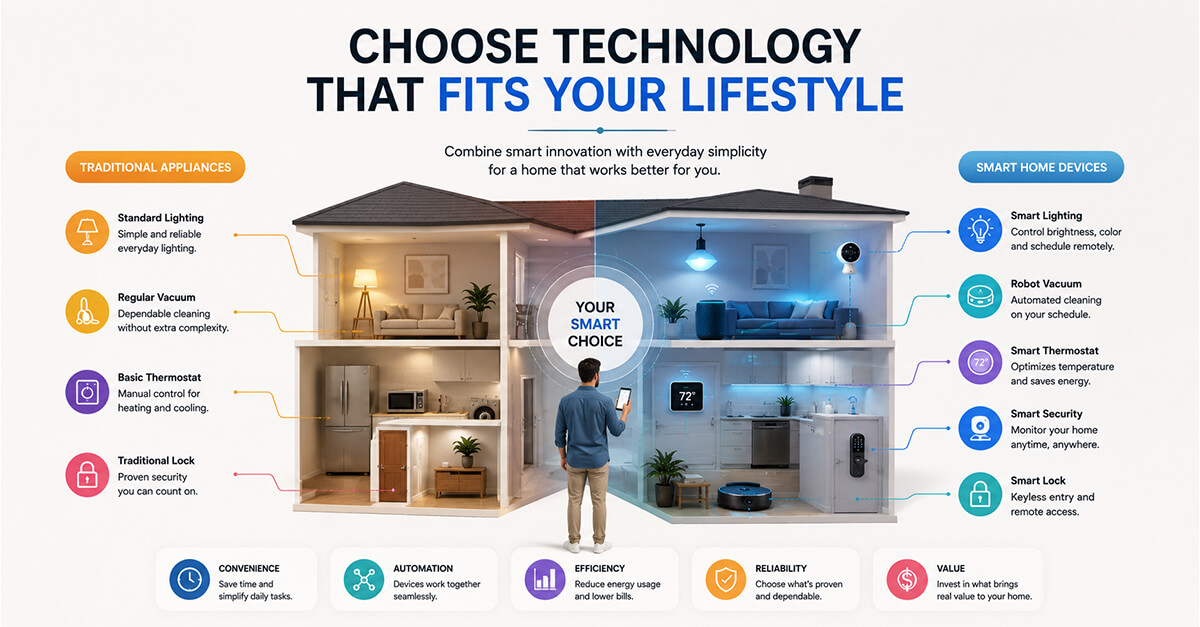
The Best Approach: A Hybrid Home
Many homeowners discover that combining smart and traditional products delivers the best balance.
For example:
- Smart lighting
- Traditional kitchen appliances
- Smart security devices
- Standard cleaning equipment
This approach provides convenience where it matters most while avoiding unnecessary complexity.
Final Verdict
Smart home devices can deliver meaningful benefits when they solve real problems or automate repetitive tasks. However, not every appliance becomes better simply because it connects to the internet.
The most effective strategy is to focus on practical value rather than technology for its own sake. Smart devices that improve convenience, security, or efficiency may justify their cost, while traditional appliances continue to offer dependable performance at lower prices.
Explore Smart Home Devices on Amazon
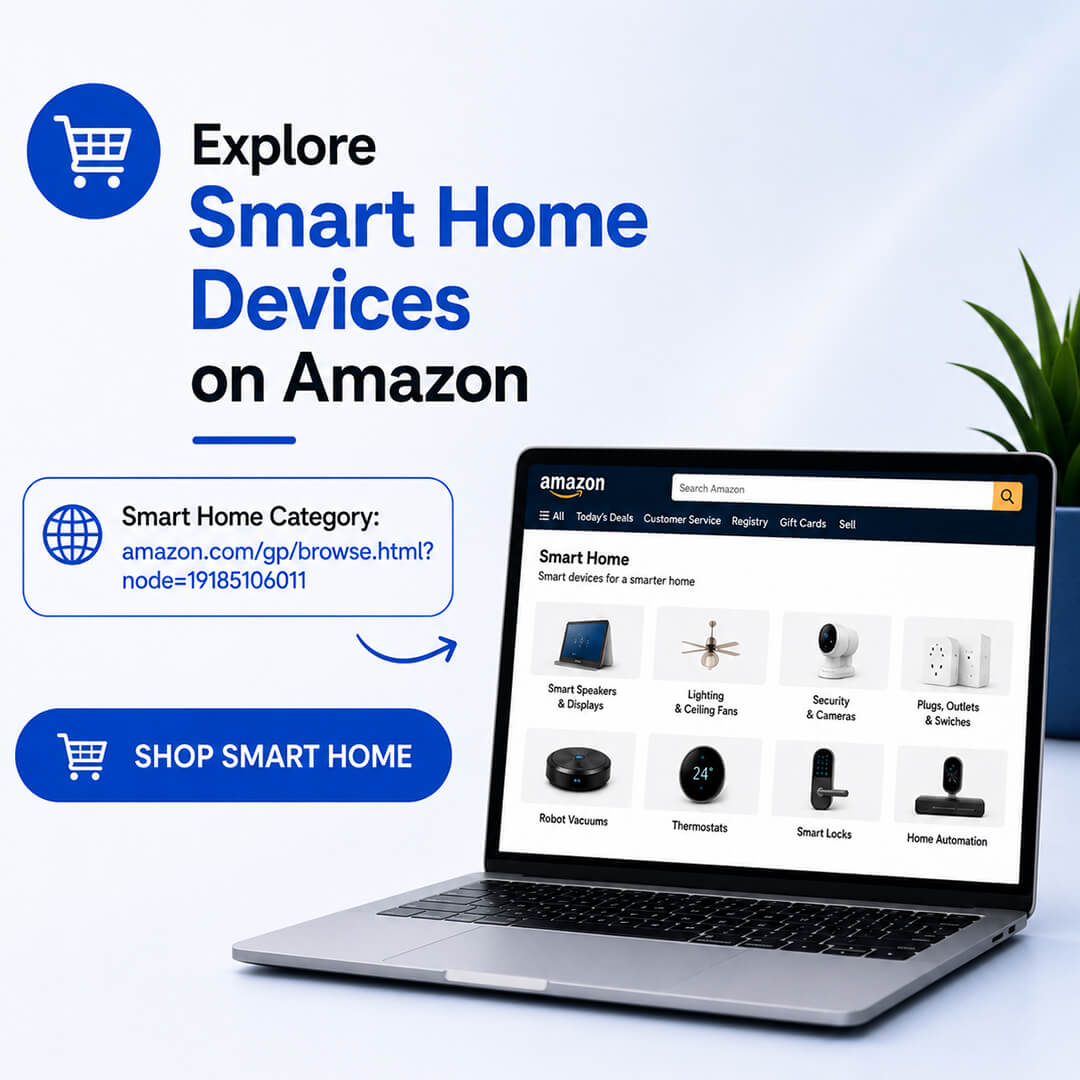
Smart Home Category:
https://www.amazon.com/gp/browse.html?node=19185106011